
Ready to get started?
Easily integrate next-generation payments and financial data into any app. Build powerful products your customers love.
SHARE ARTICLE


 Share link copied!
An operations lead has three payment provider quotes on the desk. They mention a merchant account, acquirer, gateway and payment processor. The quotes from them seem to cover the same service but still the features and costs vary.
These terms refer to different parts of merchant services, which help businesses accept and manage customer payments. Some providers handle the entire payment process, while others offer individual services.
This guide explains each service, what your business may need and how much it could cost. It will also help you understand provider quotes and compare them more confidently.
Key Takeaways
- Merchant services cover the systems businesses use to accept and manage payments.
- Merchant accounts and business bank accounts serve different purposes.
- Gateways, processors and acquirers handle separate parts of a card payment.
- Payment facilitators can bundle several roles into one commercial service.
- Pay by Bank follows bank rails instead of the card-payment chain.
- The effective rate offers a better comparison than headline pricing.
What Are Merchant Services?
Merchant services are the financial services that allow a business to accept customer payments. They connect your checkout, payment provider, card networks and bank account.
For example, when a customer pays by card, several steps happen behind the scenes. The payment details are captured and sent for approval. Once approved, the funds move through the payment system and reach your business bank account.
A merchant-services provider may handle some or all of these steps. Its services can include:
- A merchant account that temporarily holds card-payment funds
- An acquiring agreement that allows the business to accept cards
- A payment gateway that securely sends online payment information
- Payment processing for authorisation, clearing and settlement
- Card terminals for payments made in person
- Payment links for invoices and remote purchases
- Tools for refunds, fraud checks and chargeback management
- Reports and accounting integrations for tracking payments
Providers package these services in different ways. Some offer the full payment setup under one agreement. Others provide a gateway, terminal or acquiring service separately.
How Does a Card Payment Move Through Merchant Services?
Several organisations can support one card payment. Most of the activity happens within seconds, behind the checkout screen.
Consider a customer paying £50 online:
- The gateway securely captures and sends the payment information.
- The processor routes the request through the appropriate card network.
- The customer’s card issuer checks the account and available funds.
- The issuer sends an approval or decline response.
- The result returns to the checkout through the payment chain.
- Approved transactions later move through clearing and settlement.
- The acquirer pays the proceeds into the nominated business account.
Authorisation confirms whether the payment can proceed. Clearing allows participants to exchange the final transaction information. Settlement then moves the resulting funds between the relevant parties.
These stages explain why an approved payment can still await payout. The customer sees confirmation before the merchant receives settled funds.
Acquirer, Processor, Gateway and PayFac Comparison
Payment companies often perform several roles within one product. Understanding each function still helps when comparing contracts and responsibilities.
| Role | What it does | Where you encounter it | Typical commercial relationship |
|---|---|---|---|
| Merchant account | Receives card proceeds before payout | During settlement and payout | Acquirer or payment provider |
| Acquirer | Enables card acceptance and settles merchant funds | Behind every card payment | Acquiring bank or provider |
| Payment processor | Routes messages through the card-payment chain | During authorisation, clearing and settlement | Processor or bundled provider |
| Payment gateway | Securely sends checkout payment information | At an online checkout or payment page | Gateway or bundled provider |
| Payment facilitator | Onboards businesses under a wider acquiring arrangement | During account setup and ongoing payment acceptance | Payment facilitator |
What Merchant Services Does Your Business Need?
A business payment setup depends on how customers buy from you.
For in-person sales, you usually need a card terminal and an acquiring service. Online businesses need a secure checkout, payment gateway and acquiring. A payment facilitator may provide these services through one agreement.
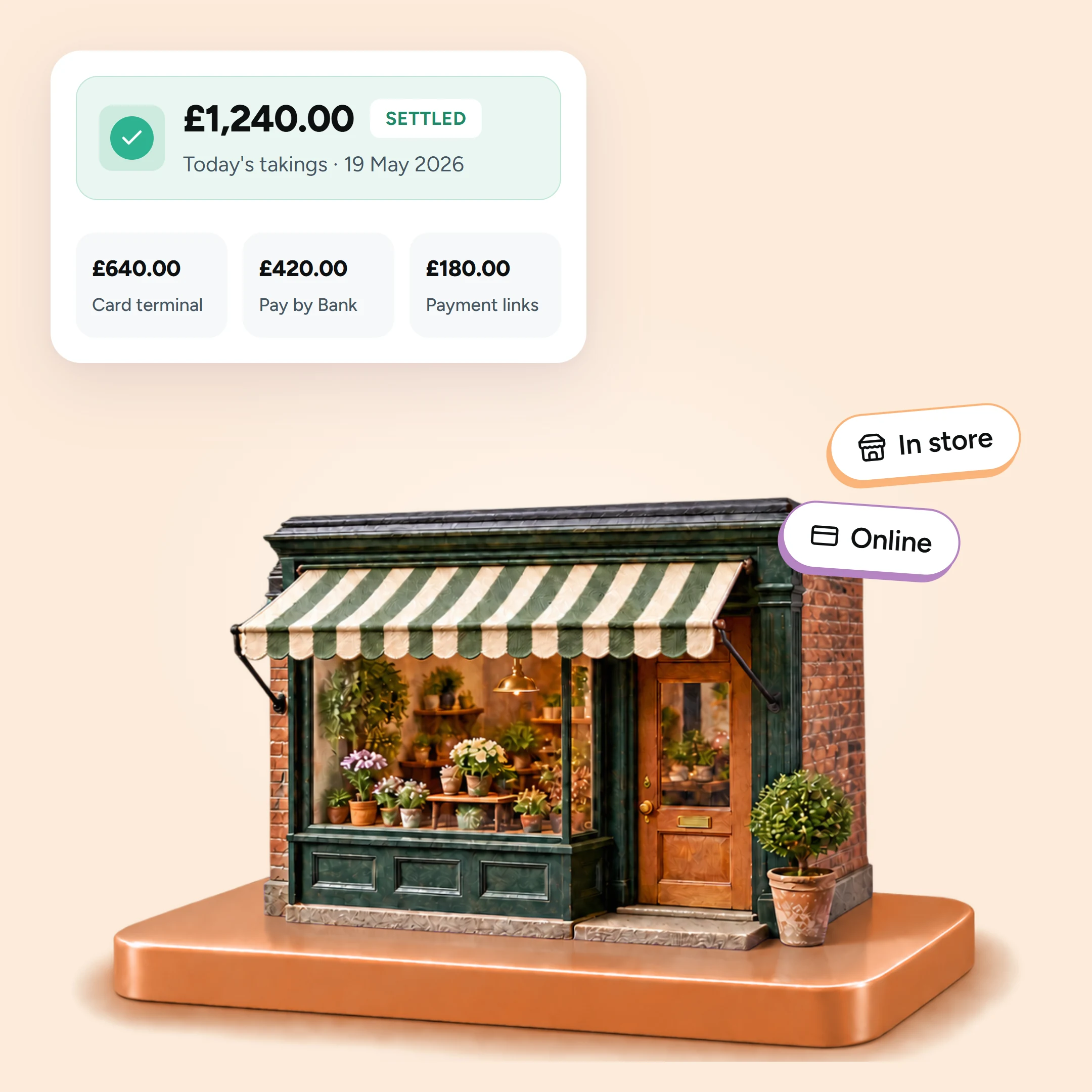
Businesses selling through both channels may benefit from using one provider. This can make reporting, refunds and reconciliation easier to manage.
If you collect payments remotely, payment links can replace a card terminal. Mobile teams can also use portable terminals, QR codes or payment links.
Businesses with several locations should check user permissions and location-level reporting before choosing a provider. Adding these controls later can take more time and effort.
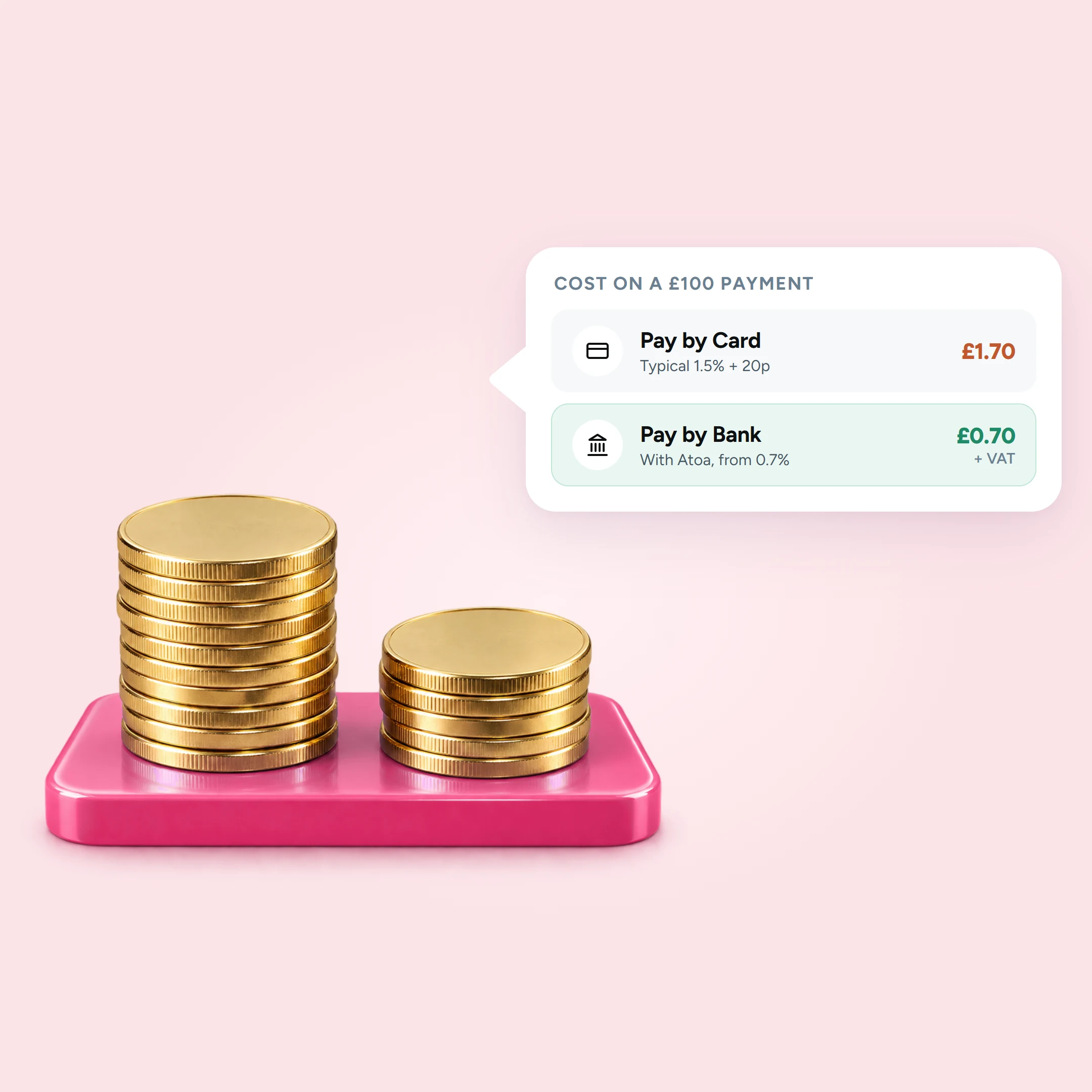
Pay by Bank uses a different payment route. The customer approves the payment through their banking app, and the money moves directly between bank accounts. This removes the need for card acquiring, interchange and card-scheme processing.
What Do Merchant Services Cost in the UK?
Merchant-services pricing usually combines a transaction rate with additional account or equipment charges. The final cost depends on your sales volume, card types and payment channels.
Your provider may charge for:
- Each transaction
- Monthly account access
- Gateway software
- Terminal rental
- PCI compliance
- Refunds and chargebacks
- International cards
- Currency conversion
- Setup or early cancellation
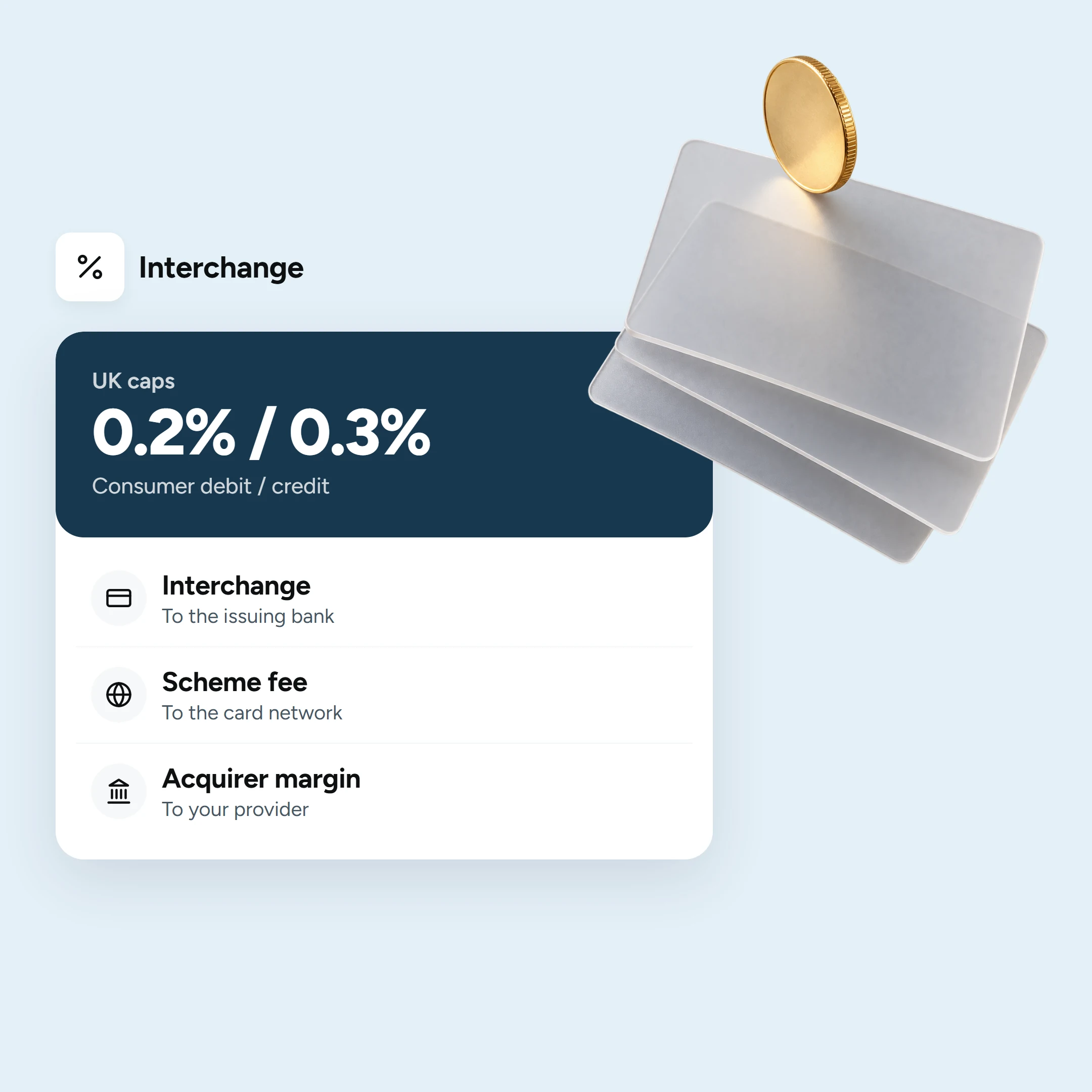
Card providers usually offer blended or Interchange++ pricing. A blended rate combines several card costs into one percentage. Interchange++ shows the interchange fee, scheme fee and provider margin separately.
A quoted rate only tells part of the story. Your effective rate shows what you paid after every charge. Here’s the formula:
Effective rate = total merchant-services charges ÷ total payment value × 100
Suppose a café processes £20,000 monthly at a quoted rate of 1.5%. The transaction charge would equal £300. Account fees, terminal rental and premium-card charges could increase the total to £400. The café’s effective rate would then be 2%.
Use a recent statement when comparing providers. It gives you a clearer picture than the advertised rate alone.
The payment gateway fees guide explains how monthly, authorisation and chargeback fees affect the final bill. You can also explore our card payments and processing fees guide for a closer look at card-pricing models.
How Should You Choose a Merchant Services Provider?
A low advertised rate may catch your eye, but it rarely shows the full cost. The right provider depends on where you sell and how customers prefer to pay. Your existing accounting, ecommerce and EPOS systems also matter.
Here are a few things to check before signing up with a provider:
- The effective rate after monthly fees and other charges
- Settlement times and when funds reach your account
- Support for in-person, online and remote payments
- Integrations with your accounting, ecommerce or EPOS software
- Contract length, cancellation costs and customer support hours
Use recent transaction data when requesting a quote. Your payment volume, card mix and average sale value will give providers a realistic basis for pricing.
Keep an eye on reliable support as well, because quick help becomes especially valuable when payment issues arise during a busy trading period.
Where Does Atoa Fit?
Atoa allows businesses to accept card payments and Pay by Bank through one platform. Payments can be taken in person, online or through payment links.
Its card-payment service supports terminals, online checkouts and remote payments. Rapyd Payments Limited provides the card-acquiring service. Card-payment pricing starts at 1.3%, depending on the transaction.
With Pay by Bank, customers choose their bank and approve the payment in their banking app. Payment confirmation usually arrives within seconds. Atoa charges 0.7% plus VAT for Pay by Bank.
The platform integrates with Xero, QuickBooks, Sage, Shopify, WooCommerce and Magento.
Atoa Payments Limited is authorised by the FCA under FRN 1007647. Rapyd Payments Limited is authorised under FRN 900688.
Conclusion
Merchant services can look complicated because providers package them differently. The right setup depends on where you sell, how customers pay and which systems you use.
Compare the total cost, settlement time, contract terms and included services. Look beyond the advertised rate and use recent transaction data wherever possible.
Business may also add other payment methods like Pay by Bank beyond cards. They can offer both and choose the most suitable route for each sale.
Frequently Asked Questions
What are merchant services?
Merchant services allow businesses to accept and manage customer payments. They may include acquiring, processing, gateways, card terminals, payment links and reporting tools.
Do I need a merchant account to accept card payments?
You need access to an acquiring arrangement. This may involve a dedicated merchant account or a payment facilitator that registers you as a sub-merchant.
What is the difference between a merchant account and a business bank account?
A merchant account receives card proceeds during settlement. Your business bank account holds available funds for wages, bills and other everyday expenses.
How much do merchant services cost in the UK?
Costs depend on your provider, payment volume, card mix and sales channels. Compare transaction rates, monthly charges, equipment costs and contract fees before choosing.
How long does merchant account approval take?
Approval may take several days or a few weeks. The timing depends on the provider’s checks, your business type and expected payment volume.
Is Pay by Bank a merchant service?
Pay by Bank can form part of a wider merchant-services package. It uses open banking to move money between bank accounts instead of card-processing systems.
SHARE ARTICLE
Share link copied!