
Ready to get started?
Easily integrate next-generation payments and financial data into any app. Build powerful products your customers love.
SHARE ARTICLE


 Share link copied!
If you have a business that takes card payments, Merchant Account is one of the first terms you’ll come across, and it’s rarely explained well. So, let’s walk through what a Merchant Account means in practice, how the money actually moves from a customer’s card to the bank, whether a separate account is even still needed, how to get a merchant account if it is, and what the whole thing costs.
A merchant account is a specific type of bank account that a business uses to accept and hold card payments. When a customer pays by card, the money does not go straight into your everyday business bank account. It lands first in a merchant account, where it is held briefly while the payment is processed and cleared, and is then paid out to your business bank account, usually in a batch. So, why is the delay?
The reason this account exists is timing and risk. The card payments are not instant to settle, and someone has to hold the funds and manage the risk in between. Traditionally, that is what a merchant account is for, provided by an acquiring bank.
How a Merchant Account Works?
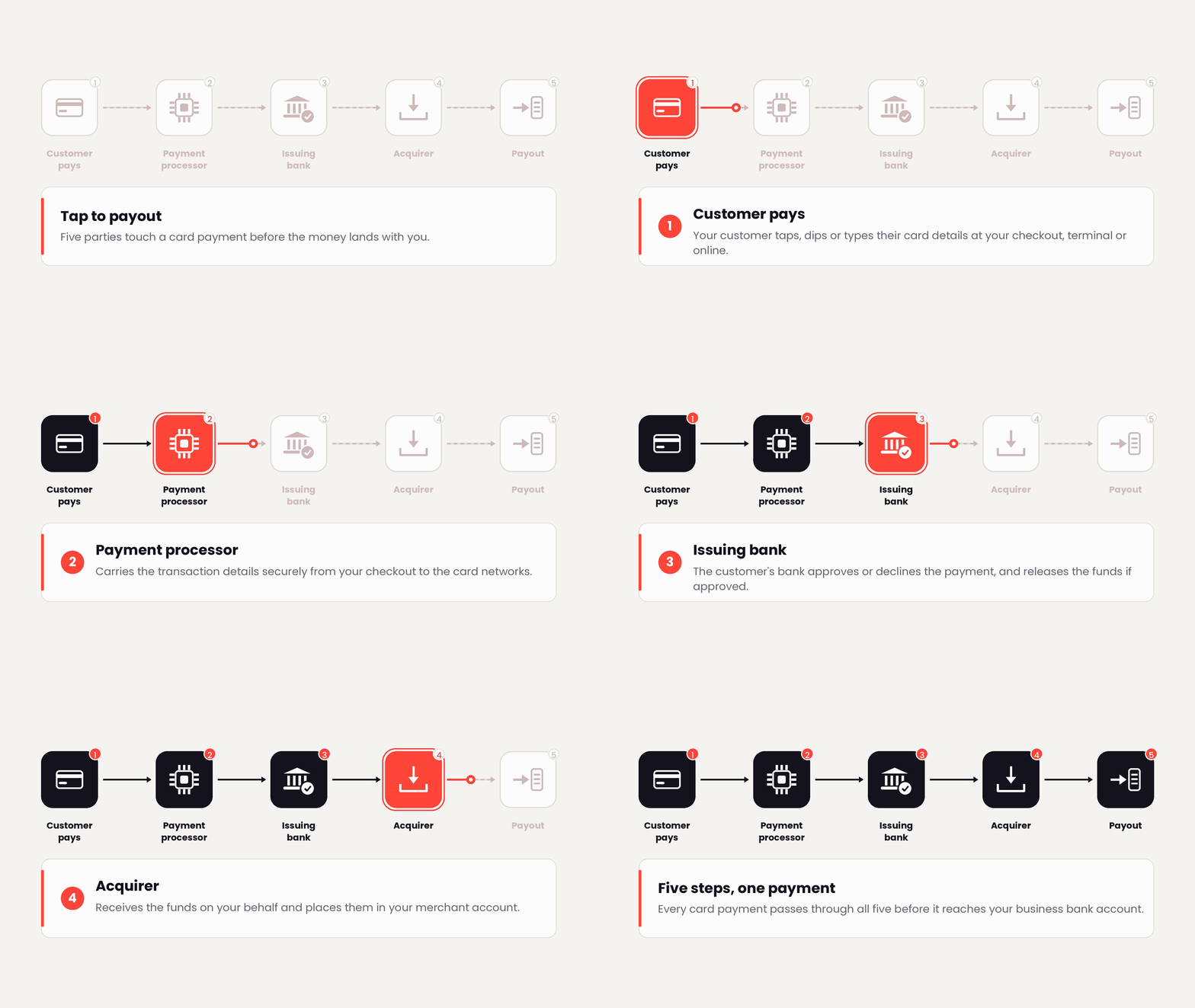
A single card payment passes through several layers. Here’s the order it follows:
- The customer pays with their card at your checkout, terminal or online.
- The payment processor (company that authorizes and processes customer payments between the merchant, banks, and payment networks) carries the transaction details securely to the card networks.
- The issuing bank (the customer’s bank that issues the card and approves or declines the payment) approves or declines the payment and, if approved, releases the funds.
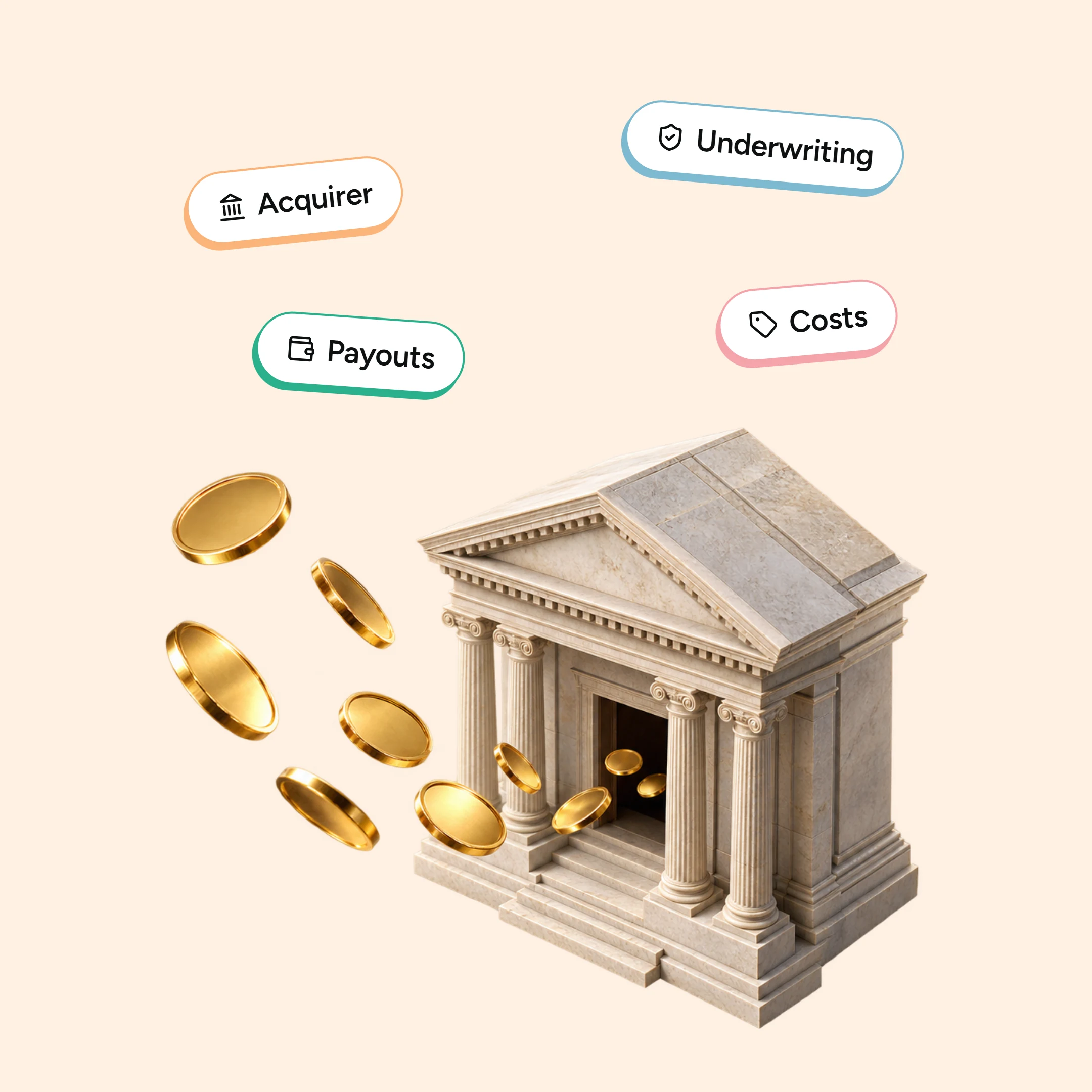
- The acquirer (financial institution that processes card payments on behalf of a merchant) receives the funds on your behalf and places them in your merchant account.
- The payout moves the settled funds from the merchant account to your normal business bank account.
The acquirer and the processor are different roles, and the merchant account is the one that actually holds the money in between.
Merchant Account vs. an All-in-One Provider
Historically, taking cards meant assembling the parts yourself such as a merchant account from an acquiring bank, a payment gateway to connect your checkout, and sometimes a separate processor. It worked, but it was slow to set up and came with several contracts and fees.
That picture looks quite different in the modern market. An all-in-one payments provider bundles the acquiring, processing and gateway together, so you sign up once and start taking payments, often without applying for a separate traditional merchant account at all. This is where Atoa fits, a UK, FCA-authorised payments platform and acquirer that lets a business take both card and Pay by Bank on one platform. For a mid-market business, that means one provider and one dashboard rather than a stack of separate accounts.
Do You Still Need a Merchant Account?
It depends on how your business is set up, and there are two broad models.
A dedicated merchant account sits in the business’s own name. It suits higher transaction volumes, gives more direct control, and can earn better rates at scale, though it takes longer to set up and comes with more admin to maintain.
An aggregated model, used by most all-in-one providers, places your payments under the provider’s arrangement, so you can start quickly without your own separate merchant account. Many larger SMEs and mid-market businesses are comfortable with a modern provider that handles the acquiring for them, which removes the need to open and manage a separate merchant account.
The right answer for whether you need a merchant account depends on volume, how much control a business wants over its own rates and reporting, and how fast it needs to be up and running.
How to Get a Merchant Account or Skip It?
If you want a traditional merchant account, here are steps that are broadly followed everywhere:
- Choose an acquirer or provider that fits the business type and expected volume
- Complete business verification, known as Know Your Business (KYB) checks, on the company and its owners
- Agree pricing and terms with the chosen provider
- Integrate the gateway with the checkout or terminal
Approval can take anywhere from a few days to several weeks, depending on the provider and how the business is structured.
To skip the traditional set-up, you sign up with an all-in-one provider and start taking payments once your account is verified. With Atoa, a UK business completes verification, connects the tools it already uses, and takes card and Pay by Bank without renting a machine or signing a long contract.
What a Merchant Account Costs?
Costs vary by provider and business, so treat any figure as indicative and confirm it directly. Traditional merchant accounts can carry several charges: a setup or application fee, a monthly account or service fee, a per-transaction fee (a percentage plus a fixed amount), a minimum monthly charge, PCI DSS compliance costs, and sometimes terminal or gateway rental. The all-in cost across a month matters more than any single headline rate.
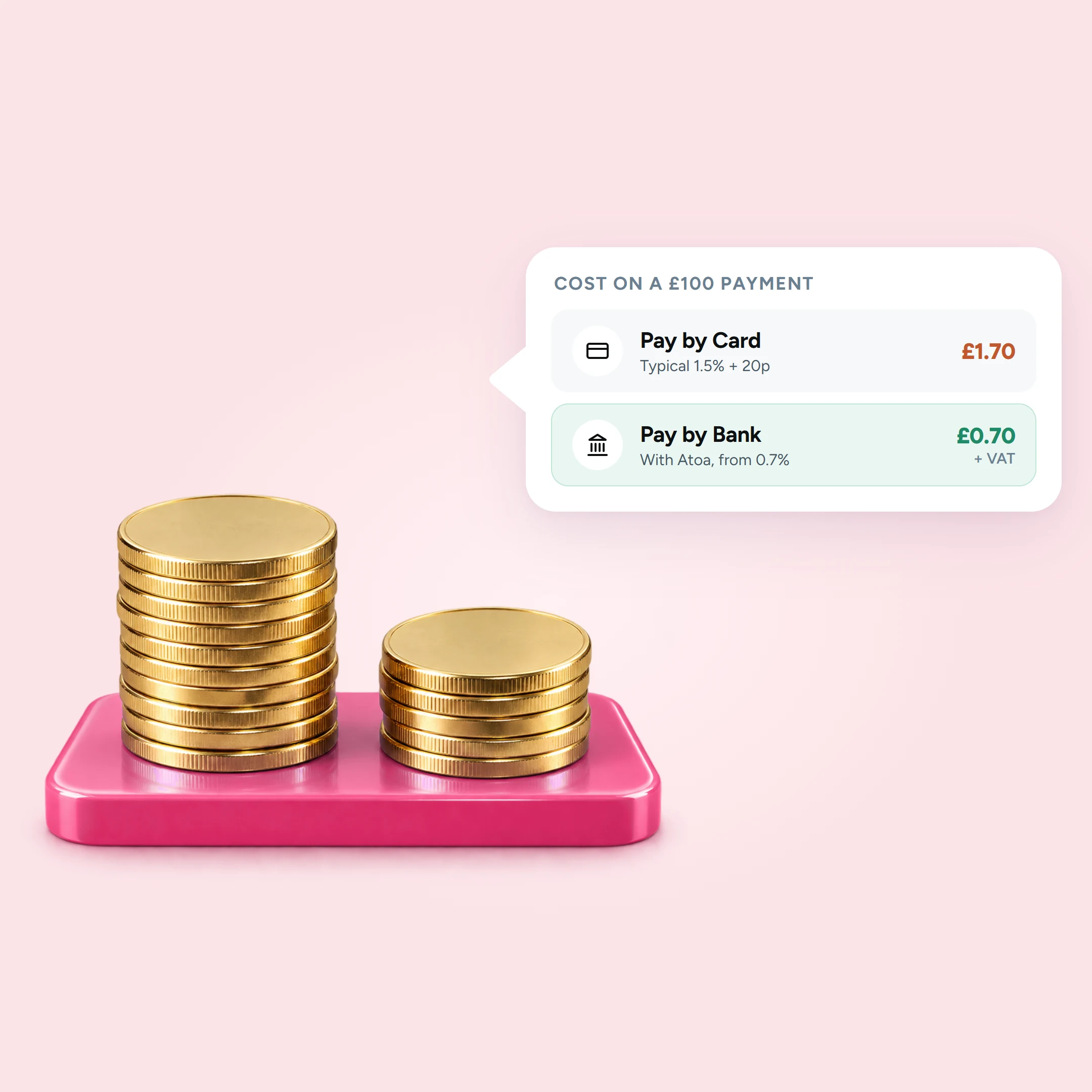
Atoa’s model is simpler: Pay by Bank from 0.7% + VAT and cards from 1.3%, up to 50% lower than typical card fees, with no machine rental and no long contract. See the pricing page for current rates.
Frequently Asked Questions
What is a merchant account?
A merchant account is a type of bank account that lets a business accept card payments and hold the funds briefly before they are paid out to its normal business bank account. It works alongside an acquirer and a payment processor to move the money.
Do I need a merchant account to take card payments?
Not necessarily. You can take card payments through an all-in-one provider that handles the acquiring for you, so you do not have to open a separate traditional merchant account. Larger businesses that want their own dedicated account can still choose one.
What is the difference between a merchant account and a payment processor?
A merchant account holds the card funds after a sale and before payout. A payment processor moves the transaction details between your checkout, the card networks and the banks. They are different roles, and many providers offer both together.
How do I get a merchant account in the UK?
Choose an acquirer or all-in-one provider, complete business verification (KYB checks), agree pricing and terms, and integrate the gateway with your checkout or terminal. With a modern provider you can often start without a separate merchant account once verified.
How much does a merchant account cost?
It varies. Traditional accounts can include setup, monthly, per-transaction and PCI costs, plus possible terminal or gateway rental. Compare the all-in monthly cost, not just the headline rate. Atoa’s Pay by Bank starts at 0.7% + VAT with no machine rental or long contract.
Can I take payments without a merchant account?
Yes. With an all-in-one provider like Atoa, you can take card and Pay by Bank on one platform without opening a separate traditional merchant account, and Pay by Bank settles in 3 to 6 seconds with no chargebacks.
Sources
Atoa Payments Limited is authorised by the Financial Conduct Authority as an Authorised Payment Institution (FRN 1007647); card services are provided by Rapyd Payments Limited (FRN 900688). Atoa is ISO 27001 and SOC 2 certified.
- Card payments and the UK payments landscape: UK Finance
- Card data security requirements (PCI DSS): PCI Security Standards Council
- Payment institution authorisation in the UK: Financial Conduct Authority
- The all-in cost across a month matters: Comparecardfee
SHARE ARTICLE
Share link copied!