
Ready to get started?
Easily integrate next-generation payments and financial data into any app. Build powerful products your customers love.
SHARE ARTICLE


 Share link copied!
A merchant category code, or MCC, tells the card-payment system what type of business is receiving a payment. Restaurants, supermarkets, hotels and petrol stations each have their own classifications.
The code travels with card transaction data and helps acquirers, card schemes and issuers process the payment correctly. It may also influence cardholder rewards, company spending controls, risk checks and eligibility for certain interchange programmes.
This guide covers how MCCs work, who assigns them, and what to do if your code looks wrong.
What Is a Merchant Category Code?
A merchant category code is a four-digit number used to classify a merchant according to its business activity. MCCs are based on the international standard ISO 18245:2023, alongside the detailed rules maintained by card schemes such as Visa and Mastercard.
For example:
| MCC | Business category |
|---|---|
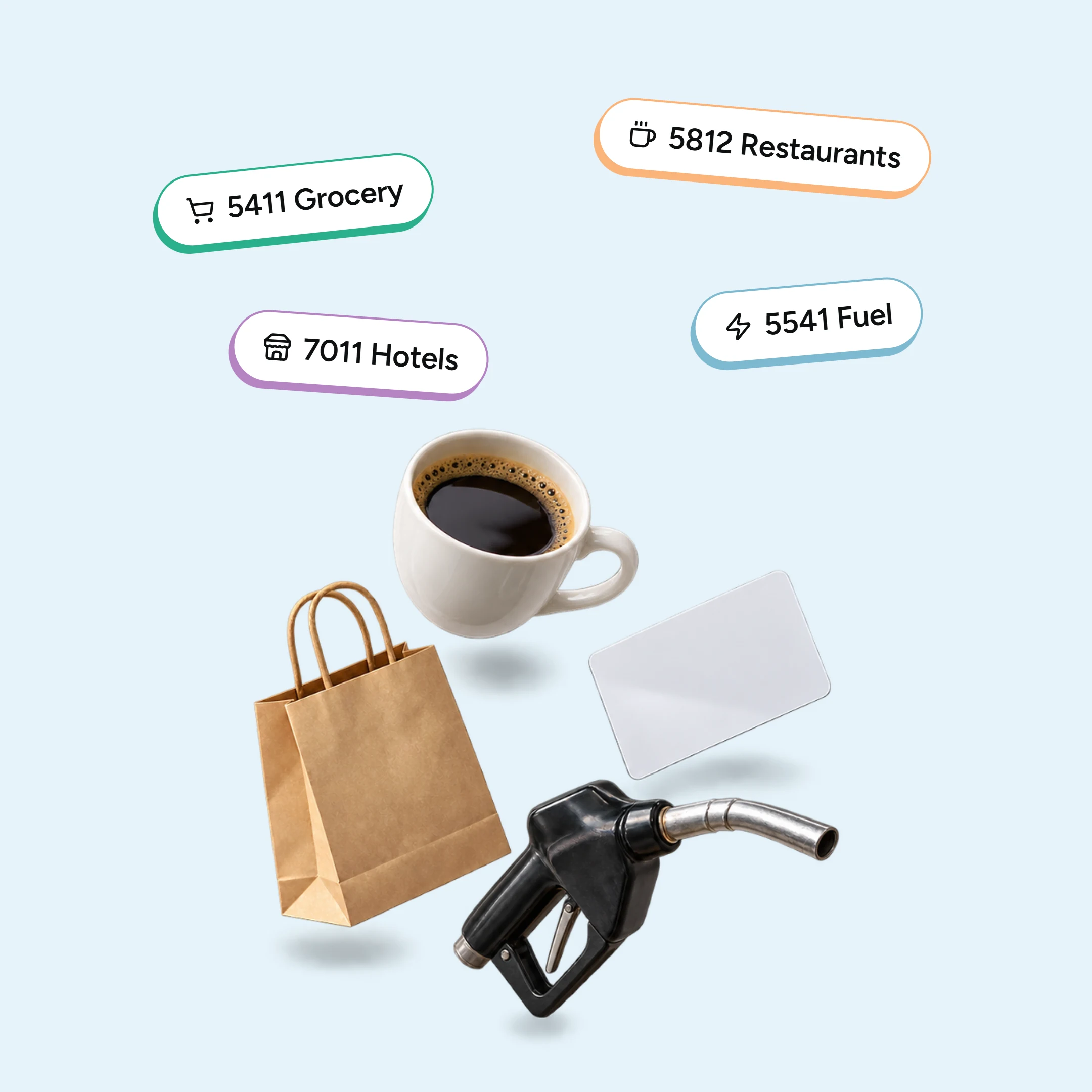
| 5411 | Grocery stores and supermarkets |
| 5541 | Service stations |
| 5812 | Eating places and restaurants |
| 5912 | Drug stores and pharmacies |
| 7011 | Hotels, motels and resorts |
The code describes the merchant rather than the individual item purchased. If a customer buys toiletries from a supermarket, the transaction generally carries the supermarket’s MCC rather than a separate code for toiletries.
How MCCs Are Assigned, and by Whom
The acquirer or payment provider assigns the MCC when a business sets up card acceptance. The merchant supplies information about its products, services and trading model during onboarding, and the acquiring side selects the closest category under the relevant scheme rules.
Visa requires acquirers and their agents to choose the MCC that most accurately describes the merchant’s business. In most cases, this reflects the activity producing the highest sales volume.
A business should describe its activities accurately during onboarding. Choosing a preferred code solely to gain different fees or acceptance treatment can create a scheme-compliance issue.
For more detail on the acquiring side of a transaction, see acquiring bank vs issuing bank and what a payment processor does.
What Information Does an MCC Provide?
An MCC gives payment participants a standard way to identify the merchant’s business category. It can support several functions, such as:
Transaction controls
Card issuers and business-card administrators can allow or restrict spending by merchant category. A company may permit employees to use a purchasing card for travel while blocking gambling or cash-like transactions.
The UK government’s procurement-card policy also recognises MCCs as a way to categorise transactions and apply controls to certain types of spending.
Card Rewards
Some card rewards depend on where a purchase is made. A card may offer additional points for supermarket, restaurant or travel spending, with the merchant’s recorded category helping the issuer decide whether the purchase qualifies.
The issuer controls its rewards programme. A purchase from a business that appears similar to an eligible category may earn a different reward if its assigned MCC falls elsewhere.
Risk and Acceptance Checks
Issuers and card schemes may apply additional controls to categories such as gambling, cryptocurrency, money transfers and other regulated activities. An accurate MCC allows the payment to receive the correct treatment.
A decline can have many causes, including available funds, authentication and fraud checks. The MCC may contribute when the issuer or card programme restricts spending in that category, though the code alone rarely explains every declined payment.
Transaction Reporting
MCCs help banks, card providers and expense-management systems group spending into broad categories. This can make corporate-card review and expense analysis easier.
The category remains a broad classification. It does not provide a detailed description of the products included in a purchase.
How MCCs Can Affect Card Costs
An MCC can affect whether a transaction qualifies for a particular interchange rate, incentive or card programme. The effect varies according to the card type, transaction details, country and applicable scheme rules.
Some programmes apply only to defined merchant categories, such as tax payments, financial services or government services. Other categories may have additional data or registration requirements.
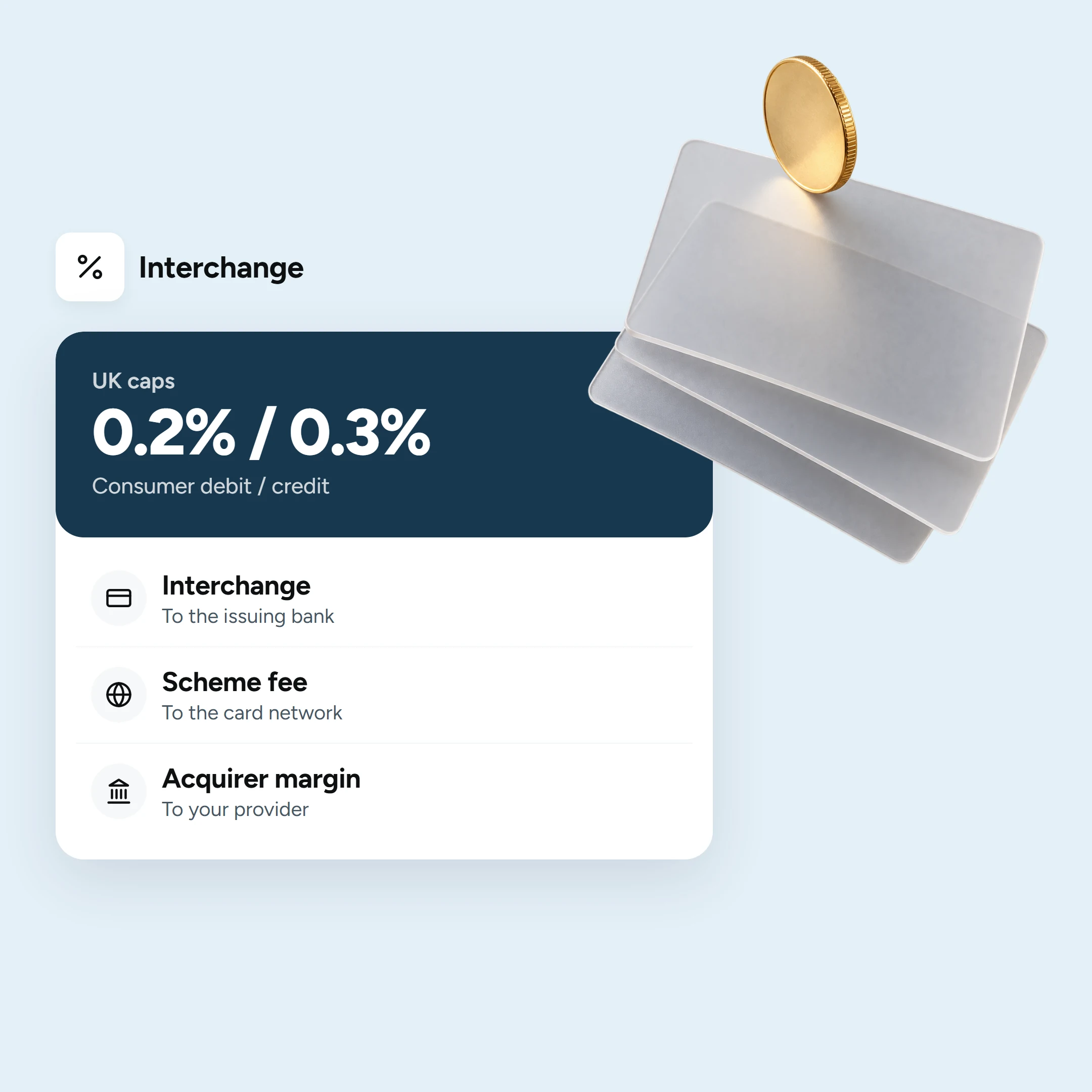
The MCC is therefore one pricing input rather than the sole factor deciding the merchant’s card fee. The total charge can also include:
- Interchange paid to the card issuer
- Fees charged by the card scheme
- Acquiring and processing charges
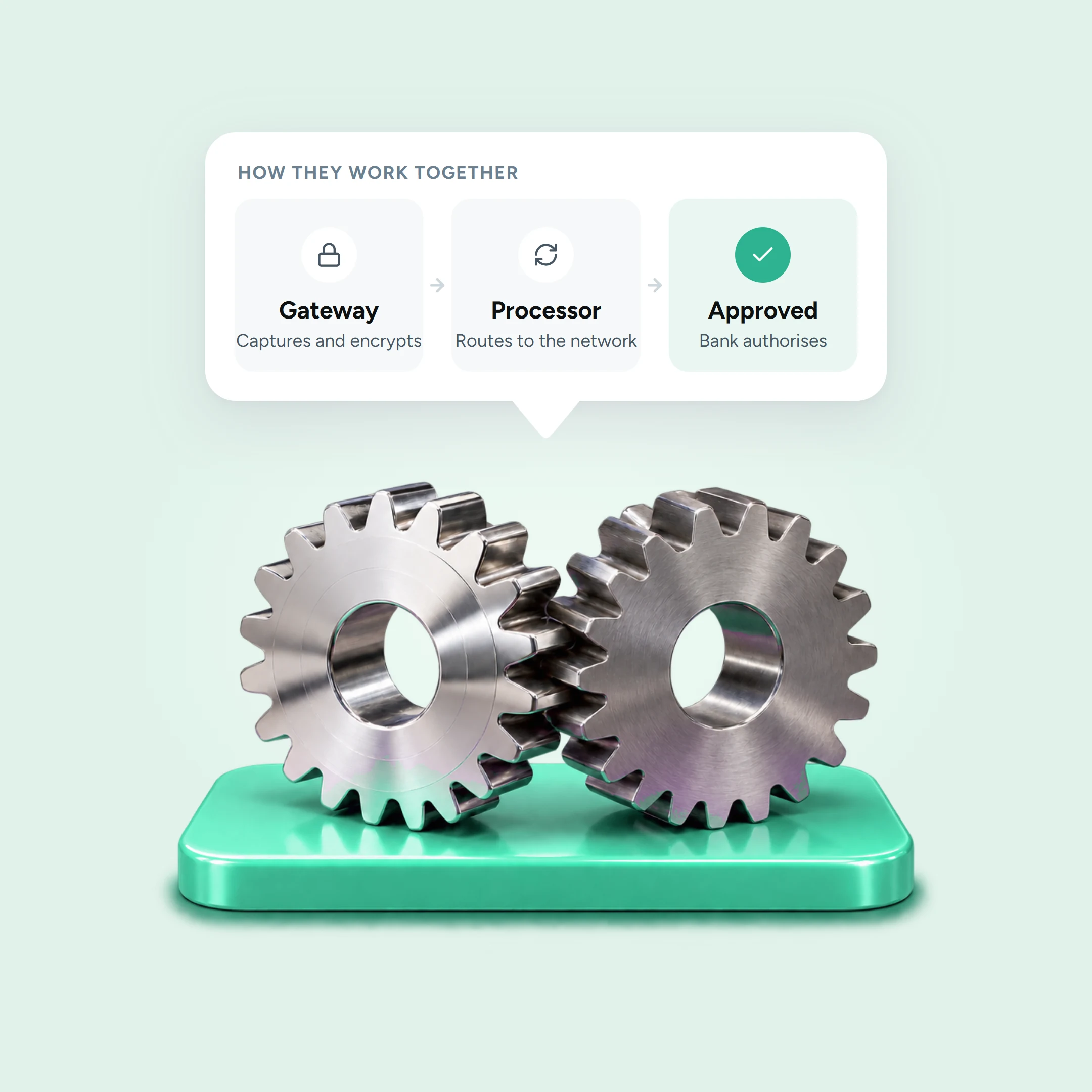
- Gateway and authorisation fees
- Other services included in the merchant agreement
For UK consumer cards covered by statutory interchange caps, an MCC does not override those limits. Commercial cards and specialised programmes may follow different pricing structures.
Changing an MCC also offers no automatic saving. The code must accurately represent the business activity. See interchange fees explained for the full breakdown of card-processing costs.
How to Find Your MCC
The assigned MCC may appear on your merchant statement, payment dashboard or account documents. Its location varies between providers, and some dashboards leave it outside the main transaction view.
To confirm your code:
- Check your card-processing statement
- Review your merchant-account settings
- Ask your acquirer or payment provider
- Compare the confirmed code with the current category description
Public MCC lists can help identify the likely classification, but the acquirer or payment provider can confirm the code attached to the live merchant account.
MCC versus SIC code
An MCC and a UK Standard Industrial Classification code both describe business activity, but they serve different systems. Here’s the comparison:
| MCC | SIC code |
|---|---|
| Used within card payments | Used on the Companies House register |
| Usually four digits | Usually five digits in the UK system |
| Assigned through the acquiring relationship | Selected when reporting company activities |
| Supports payment processing and card controls | Records the company’s principal business activities |
| Governed by card-scheme and ISO rules | Maintained for UK company and statistical reporting |
A company’s SIC code may help explain its activities during onboarding, but it does not automatically determine the MCC used for card transactions.
Do Pay by Bank payments use MCCs?
MCCs belong to the card-payment system. Pay by Bank uses open banking to initiate an account-to-account payment, so the transaction does not travel through card schemes and carries no card MCC.
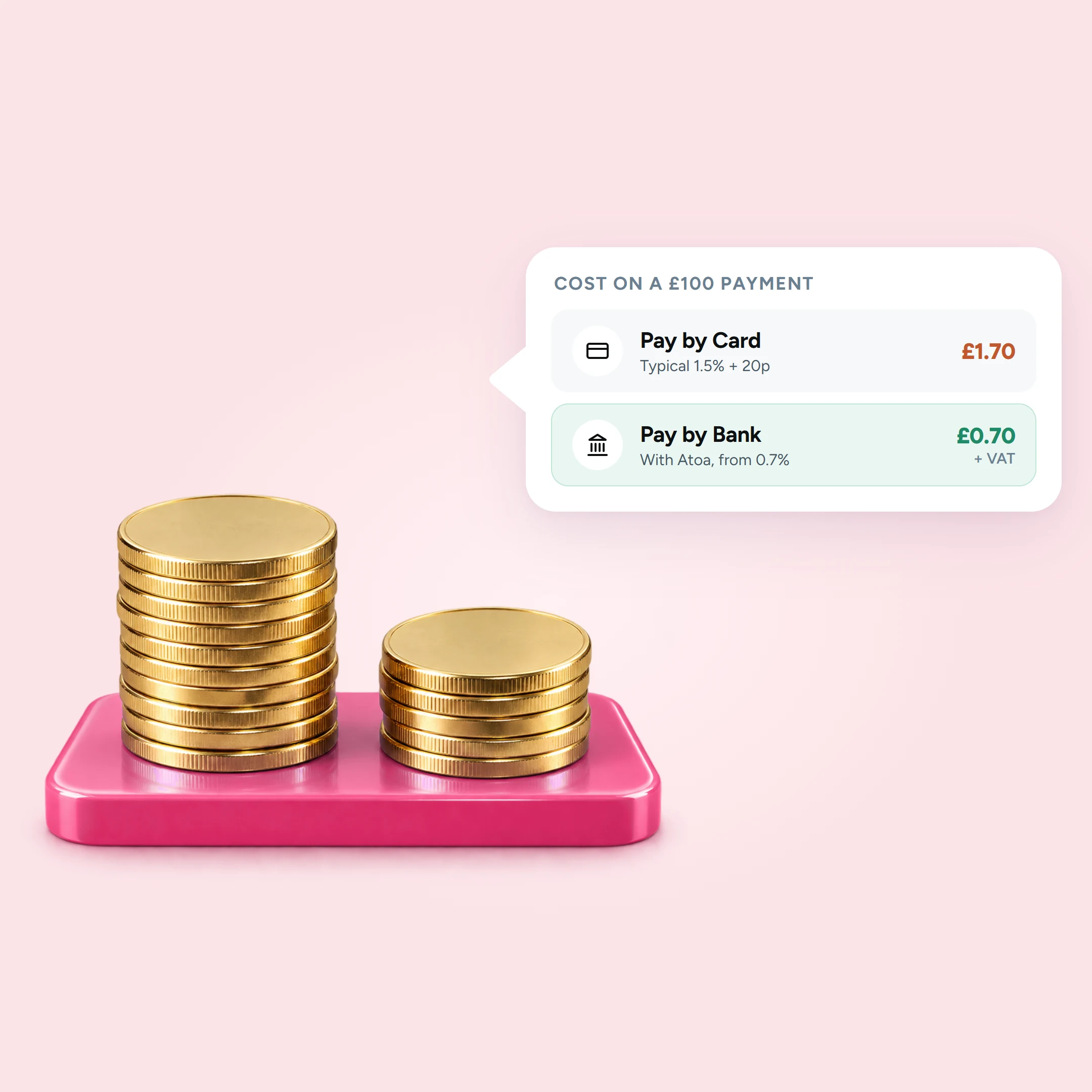
Because there’s no card network involved, there’s no interchange, no scheme fees and no category-based pricing to worry about. That’s a big part of why Atoa’s Pay by Bank costs less than cards: it starts from 0.7% + VAT, and payments land in your account in 3 to 6 seconds, with no card-style chargebacks. See Atoa’s merchant services and card payments.
Frequently Asked Questions
What is an MCC code?
MCC stands for merchant category code. It is a four-digit number used within card payments to identify a merchant’s main type of business.
Who assigns a merchant category code?
The merchant’s acquirer or payment provider assigns the MCC during onboarding using information about the business and the relevant card-scheme rules.
Where can I find my MCC?
Check your merchant statement, payment dashboard or account documents. If the code is absent, ask your acquirer or payment provider to confirm it.
Can a business have multiple MCCs?
Yes. Multiple codes may apply where a business operates distinct activities, websites, outlets or payment systems. The acquirer decides the appropriate treatment under scheme rules.
Is an MCC the same as a SIC code?
No. An MCC classifies a merchant within card payments, while a SIC code records a company’s business activities for Companies House and statistical purposes.
Does Pay by Bank use merchant category codes?
No. Pay by Bank uses an account-to-account payment route outside the card networks, so card MCCs do not apply.
If card-scheme fees and category-based pricing are eating into your margin, see how Atoa’s merchant services add Pay by Bank alongside cards, or book a demo.
Sources
Atoa Payments Limited is authorised by the Financial Conduct Authority as an Authorised Payment Institution to provide account information services and payment initiation services (FRN 1007647).
- ISO 18245 catalogue page
- GOV.UK Government Procurement Card guidance
- Payment Systems Regulator, the Interchange Fee Regulation and merchants
SHARE ARTICLE
Share link copied!