
Ready to get started?
Easily integrate next-generation payments and financial data into any app. Build powerful products your customers love.
SHARE ARTICLE


 Share link copied!
TL;DR: The acquiring bank works for the business taking a card payment, accepting the transaction and settling the money to it. The issuing bank works for the customer, issuing the card and approving or declining each payment. The acquirer pays interchange to the issuer.
Key takeaways
- The acquiring bank serves the business while the issuing bank serves the cardholder.
- The acquirer sends the authorisation request, the issuer approves or declines it.
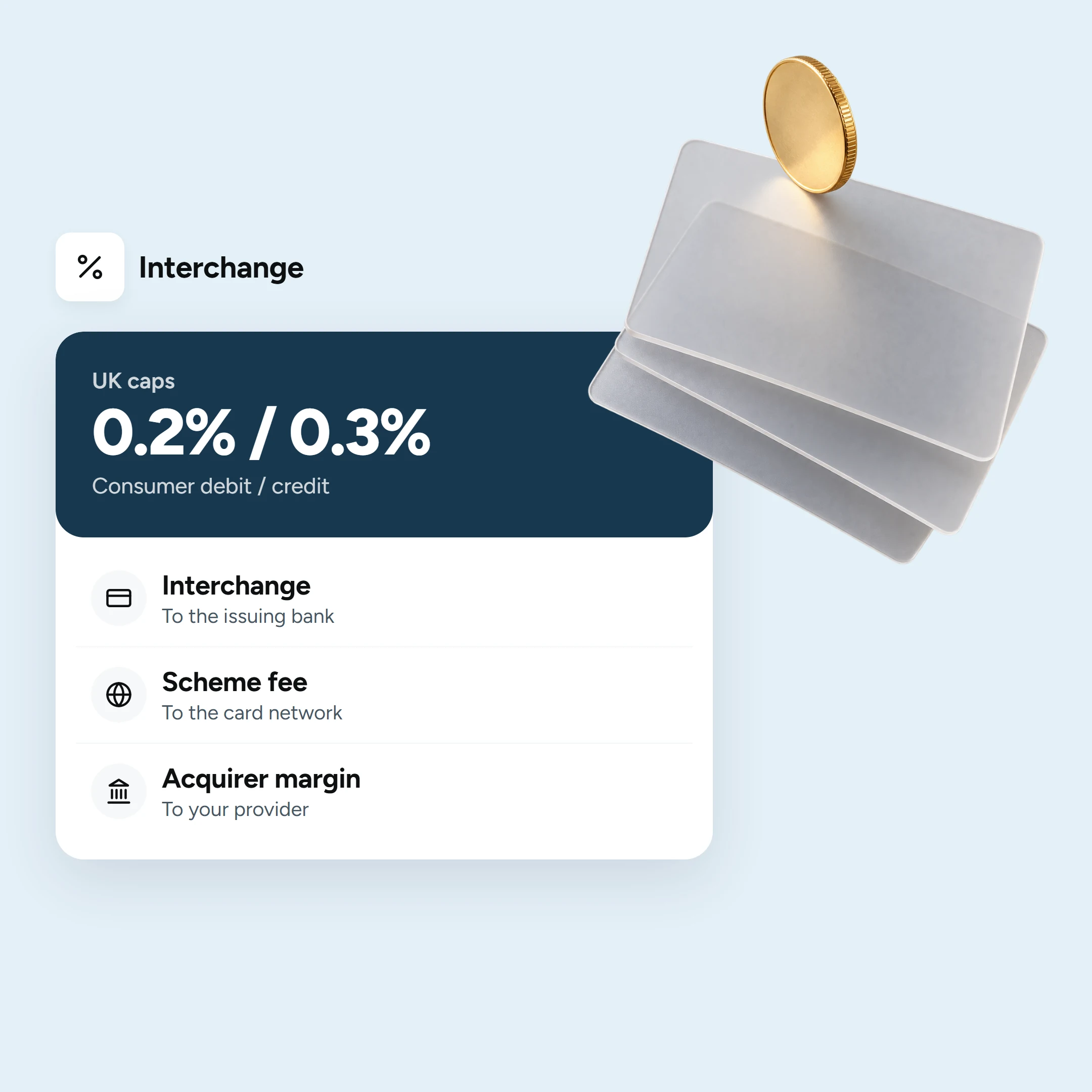
- The acquirer pays interchange to the issuer, capped in the UK at 0.2% on consumer debit and 0.3% on consumer credit since December 2015.
A finance director at a 12-site dental group is reading a new payments contract. It names an acquirer, a processor and a gateway, quotes a blended rate and says settlement follows scheme rules. What she needs to know is simpler than any of these finance terms. She only needs which of these companies is responsible for the practices’ money between a patient paying and the cash reaching the bank.
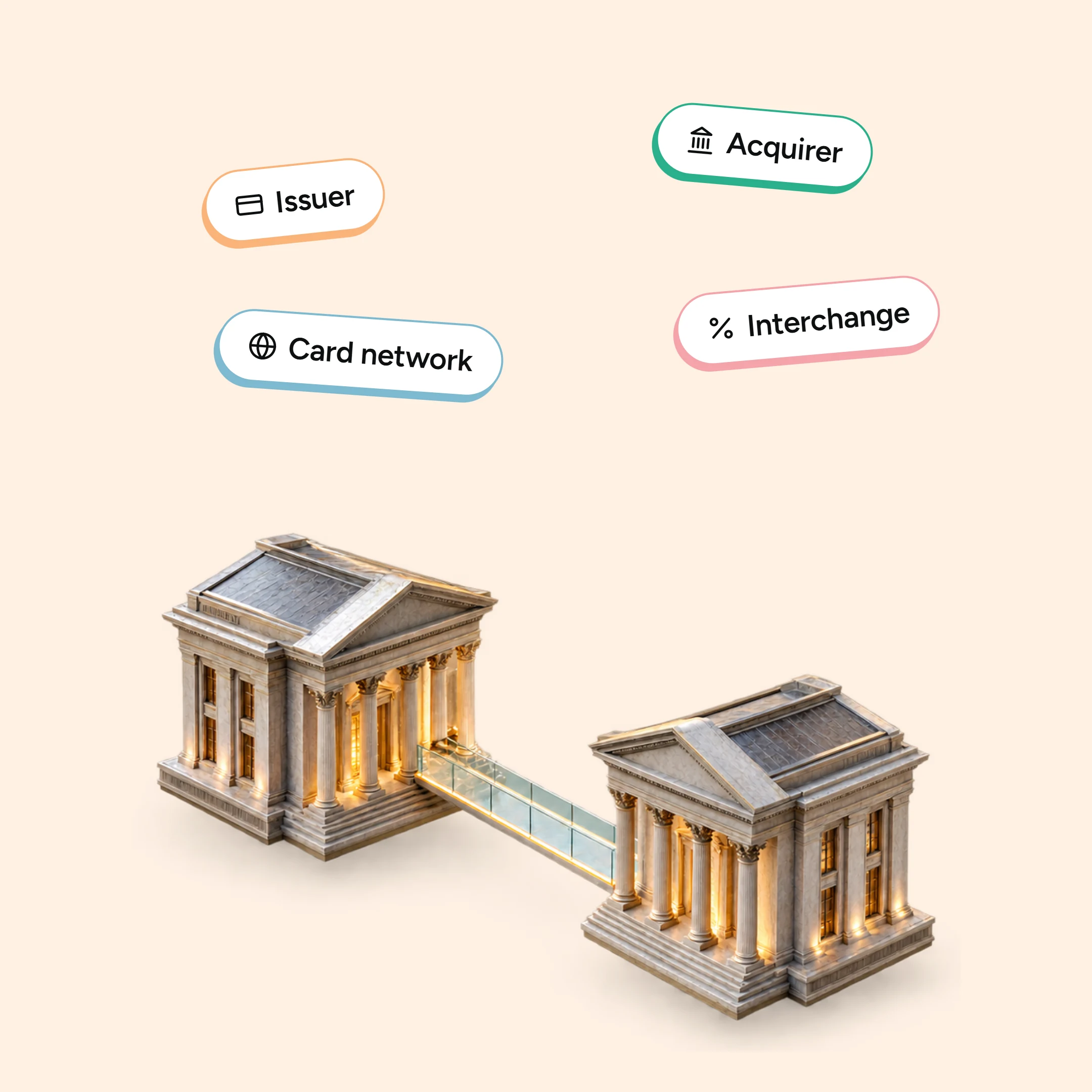
There are two banks sitting on opposite side of each payment. The acquiring bank is on her side, and the issuing bank is on the patient’s. Everything else in the contract either moves information or sells her software.
This blog covers what are acquiring banks and issuing banks, what each bank does, which one charges interchange and how much, which firms actually acquire card payments in the UK, and what changes when a customer pays straight from their Bank app instead of with a card.
What Is an Acquiring Bank?
An acquiring bank, or merchant acquirer, provides the service that allows a business to accept card payments through a card network. Acquiring can also be provided by authorised non-bank payment firms.
The acquirer manages the merchant’s participation in the card-payment system. Its responsibilities include assessing the business, supporting transaction processing, arranging settlement and managing exposure to refunds and chargebacks.
What Does an Acquiring Bank Do?
An acquiring bank enables a business to accept card payments and arranges for the proceeds to reach its account. It also manages the risks associated with providing that service. Here are a few other things that acquiring bank does:
- Reviews the business by checking ownership, trading activity and financial risk before setting payment acceptance terms.
- Routes payment requests by passes transaction information through the card network to the issuing bank for authorisation.
- It handles the merchant side of clearing and settlement, with payouts following the agreed schedule.
- It passes the chargeback notices to the business and manages its response and supporting evidence.
- Monitors payment activities by reviewing fraud, refunds and disputes, which can affect account terms or reserve requirements.
Acquiring Bank Example: Rapyd
Rapyd Payments Limited provides Atoa’s card-payment services and is FCA-authorised under FRN 900688. It illustrates how a business can use a payment platform while a separate company provides the acquiring service.
The practical point is accountability: the company supplying the checkout or terminal may differ from the company responsible for acquiring.
What Is an Issuing Bank?
An issuing bank provides a customer’s debit, credit or prepaid card and manages the associated account. Also called the card issuer, it checks payment requests against the card’s status, available funds or credit, and security controls.
What Does an Issuing Bank Do?
An issuing bank provides the customer’s card and manages the account behind it. It assesses payment requests and handles cardholder account issues. It also does the following:
- Issues vides debit, credit or prepaid cards and handles replacements, renewals and card controls.
- For every transaction, it checks card status, available funds or credit, and security signals before returning a decision.
- Provides the funds due for completed card transactions through the card-payment system.
- Maintains the customer’s account by recording transactions, producing statements and managing credit-card balances and repayments.
- Investigates disputed payments by reviewing cardholder complaints and raising chargebacks where the card scheme’s rules allow.
Acquiring Bank vs Issuing Bank: The Main Differences
| Responsibility | Acquiring bank | Issuing bank |
|---|---|---|
| Customer relationship | Provides card acceptance for the business | Provides the card to the cardholder |
| Authorisation | Routes the merchant’s request through the payment system | Normally approves or declines the request |
| Settlement | Arranges settlement of card proceeds to the merchant | Meets settlement obligations for card transactions |
| Interchange | Generally pays interchange | Generally receives interchange |
| Disputes | Handles the merchant side of the chargeback process | Handles the cardholder side |
| Commercial terms | Sets acquiring terms, including fees and payout conditions | Sets the cardholder’s account and card terms |
The card acquirer vs card issuer distinction also explains why changing payment providers affects some costs and processes but does not give a business control over customers’ banks.
Merchant Acquirer vs Payment Processor: Who Does What?
A payment processor handles transaction messages and related processing. A payment acquirer provides the acquiring service and takes responsibility for the merchant relationship within the card scheme.
A gateway supplies the technology that securely accepts payment information and passes it into that processing flow.
These functions can be supplied by one company or several. A provider describing itself as a processor may also offer acquiring, so the label alone does not establish its responsibilities. The contract should identify who provides each service.
Understanding what a payment processor does helps businesses distinguish a technical processing issue from a settlement or contractual issue.
How Acquiring and Issuing Banks Complete a Card Payment
A typical online-authorised card transaction follows this sequence:
- The business submits the payment. Its terminal or checkout sends the transaction into the processing system.
- The request reaches the issuer. The acquiring side routes it through the relevant card network.
- An authorisation response returns. The issuer normally approves or declines, and the result reaches the checkout.
- The completed transaction enters clearing. Payment details are exchanged and settlement obligations are calculated.
- Settlement and merchant payout follow. Funds move through the payment system, and the merchant receives its payout under the agreed terms.
Card networks distinguish authorisation, clearing and settlement because each serves a different purpose.
For finance teams, that means the sales report and bank deposit will not always match transaction for transaction. A payout may combine several sales and include deductions or adjustments. Reconciliation needs to connect those records, rather than treating the checkout total as the expected bank deposit.
Which Bank Receives Interchange Fees?
In a typical four-party card arrangement, the acquiring bank pays interchange to the issuing bank. That cost forms part of the merchant service charge, alongside other processing costs and the provider’s margin.
For eligible UK domestic consumer transactions, interchange is capped at:
- 0.2% for consumer debit cards, including qualifying prepaid cards.
- 0.3% for consumer credit cards.
These caps apply where the merchant, acquirer and issuer are located in the UK. They limit interchange, not the total merchant service charge. A cap is a maximum, not a minimum price.
A blended rate combines costs into one quoted price. Interchange-plus-plus pricing separates interchange, scheme fees and the provider’s markup. Either way, the useful comparison is the total cost for the business’s actual card mix.
A rate based mainly on domestic consumer debit cards will not necessarily represent a business accepting substantial commercial or international card volumes. The guide to interchange fees explains the components in more detail.
How to Choose an Acquiring Bank for Your Business
The advertised transaction rate is only part of an acquiring agreement. Payout terms, reserves, reporting and support determine how that agreement works in practice.
Acquiring Fees and Contract Terms
Compare proposals against recent transaction data, including card types, average payment values and sales channels. Include fixed charges, terminal costs, refund and dispute fees, and any minimum commitments.
The agreement should also make renewal dates, termination charges and separate equipment contracts clear. A small rate reduction can lose its value if it comes with costs that the headline quote leaves out.
Settlement Timing and Reserves
Payout terms should specify cut-off times, treatment of weekends and any conditions that can delay access to funds.
A reserve holds back part of the proceeds against potential liabilities. Its amount, release schedule and review conditions matter to cash-flow planning, particularly where customers pay well before goods or services are delivered.
Chargeback Handling and Support
Acquiring does not remove the merchant’s exposure to disputes. The agreement should explain how disputed amounts and fees are handled, what evidence is required and how deadlines are communicated.
For businesses taking deposits or advance payments, accessible records of the order, customer agreement and fulfilment are especially useful. A dispute is harder to defend when the supporting evidence sits across disconnected systems.
Reporting Across Locations and Sales Channels
For a multi-site business, useful reporting connects each transaction to its location, sales channel and underlying order or invoice.
A practical assessment should follow a sale through to payout, then check a refund and a disputed payment. That shows whether finance staff can explain an adjustment without searching several dashboards or contacting individual branches.
Do Pay by Bank Payments Need an Acquiring or Issuing Bank?
Pay by Bank uses account-to-account payments rather than card transactions. The customer approves payment through their bank, and the payment follows banking infrastructure instead of a card network.
The payer’s bank and the receiving bank remain involved, but they are not acting as card issuer and card acquirer for that transaction. Card interchange and card-network fees therefore do not apply.
Pay by bank acquirer can describe the merchant-facing payment service commercially. It should not be treated as confirmation that the provider performs card acquiring or holds the same regulatory permissions.
The distinction also matters for disputes. Card-scheme chargebacks do not apply to bank payments, but refunds, complaints and applicable payment protections still need clear procedures.
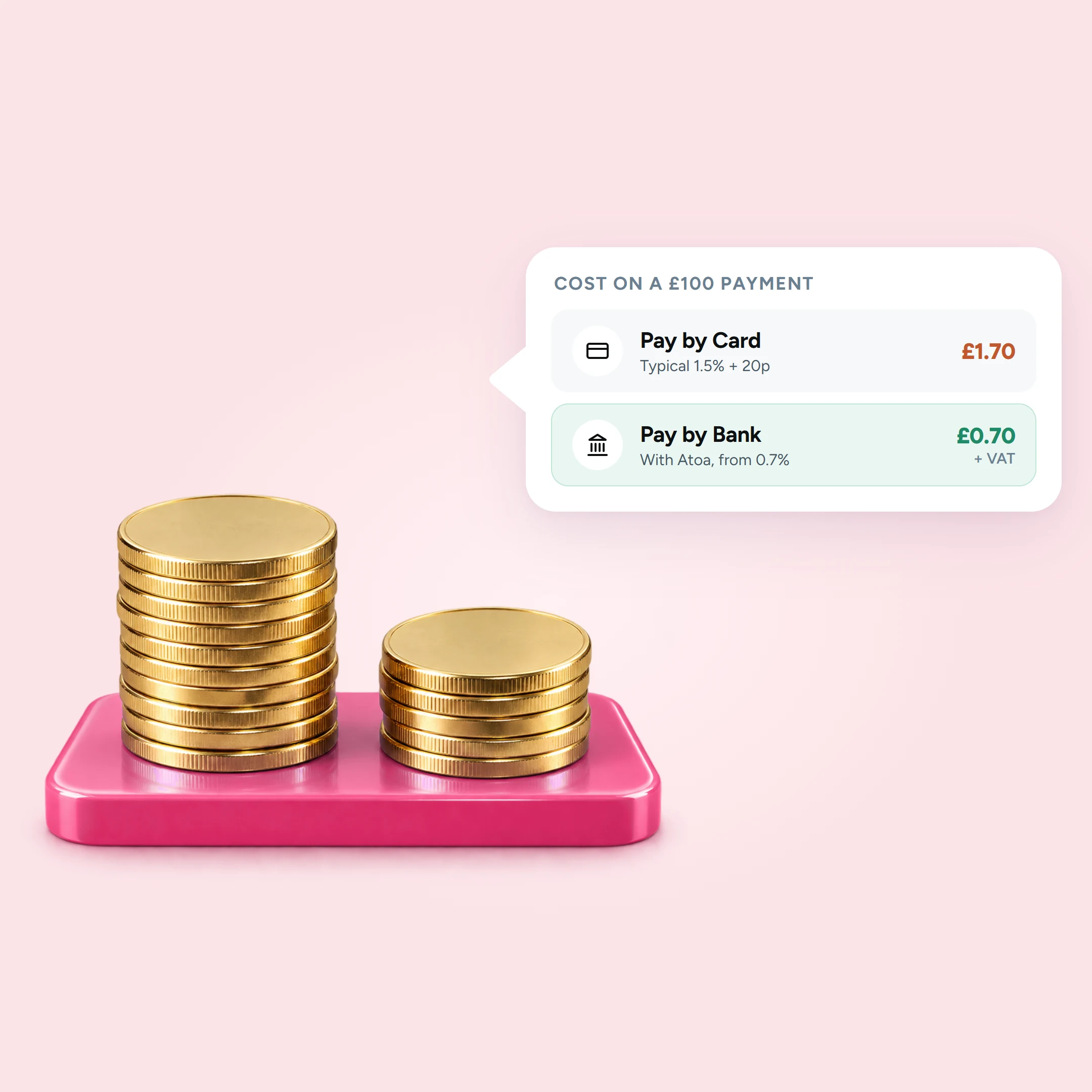
For businesses, the comparison should cover the provider’s charges, customer experience, payout arrangements and reconciliation. Removing card-network costs changes the cost structure; the overall saving depends on the service’s pricing and how customers use it.
How Atoa Provides Card Payments and Pay by Bank
Atoa offers both payment methods with separate regulatory arrangements.
Atoa Payments Limited is an FCA-authorised Payment Institution providing account information and payment initiation services under FRN 1007647. Its open-banking authorisation supports its Pay by Bank service.
Atoa’s card payments are provided through Rapyd Payments Limited, FCA reference 900688. Atoa’s regulatory disclosures identify the two entities and their respective services.
Conclusion
An acquiring agreement determines how card revenue reaches the business and how exceptions are handled. Evaluate it using actual transactions, payout records and support requirements. A competitive rate matters most when the business can also trace its money and resolve problems without unnecessary manual work.
FAQs
Can the Same Company Be an Acquirer and an Issuer?
Yes. A financial institution can provide both services. The terms describe its role in a transaction: supporting merchant acceptance or providing the customer’s card.
Is a Merchant Acquirer the Same as a Card Acquirer?
In card-payment discussions, both terms refer to the acquiring role. “Payments acquirer” is another label used for it. The provider’s contractual responsibilities matter more than the label.
Does an Approved Card Payment Guarantee Payout?
Approval is an authorisation result. The transaction still needs to complete the relevant processing stages, and payout follows the merchant agreement. Refunds, disputes, reserves or other adjustments can affect the amount received.
Who Should a Business Contact About a Missing Card Payout?
The payment provider’s settlement or support team is the starting point. The transaction reference, expected payout date and reconciliation report help establish whether the issue concerns processing, a deduction or a payout delay.
Sources
Atoa Payments Limited is authorised by the Financial Conduct Authority as an Authorised Payment Institution to provide account information services and payment initiation services (FRN 1007647). Card services are provided by Rapyd Payments Limited (FRN 900688).
- The Payment Services Regulations 2017, regulation 2, for the legal definitions of acquiring of payment transactions and payment initiation services
- Payment Systems Regulator, The IFR and merchants, for the interchange caps and the rules on blended pricing
SHARE ARTICLE
Share link copied!