
Ready to get started?
Easily integrate next-generation payments and financial data into any app. Build powerful products your customers love.
SHARE ARTICLE


 Share link copied!
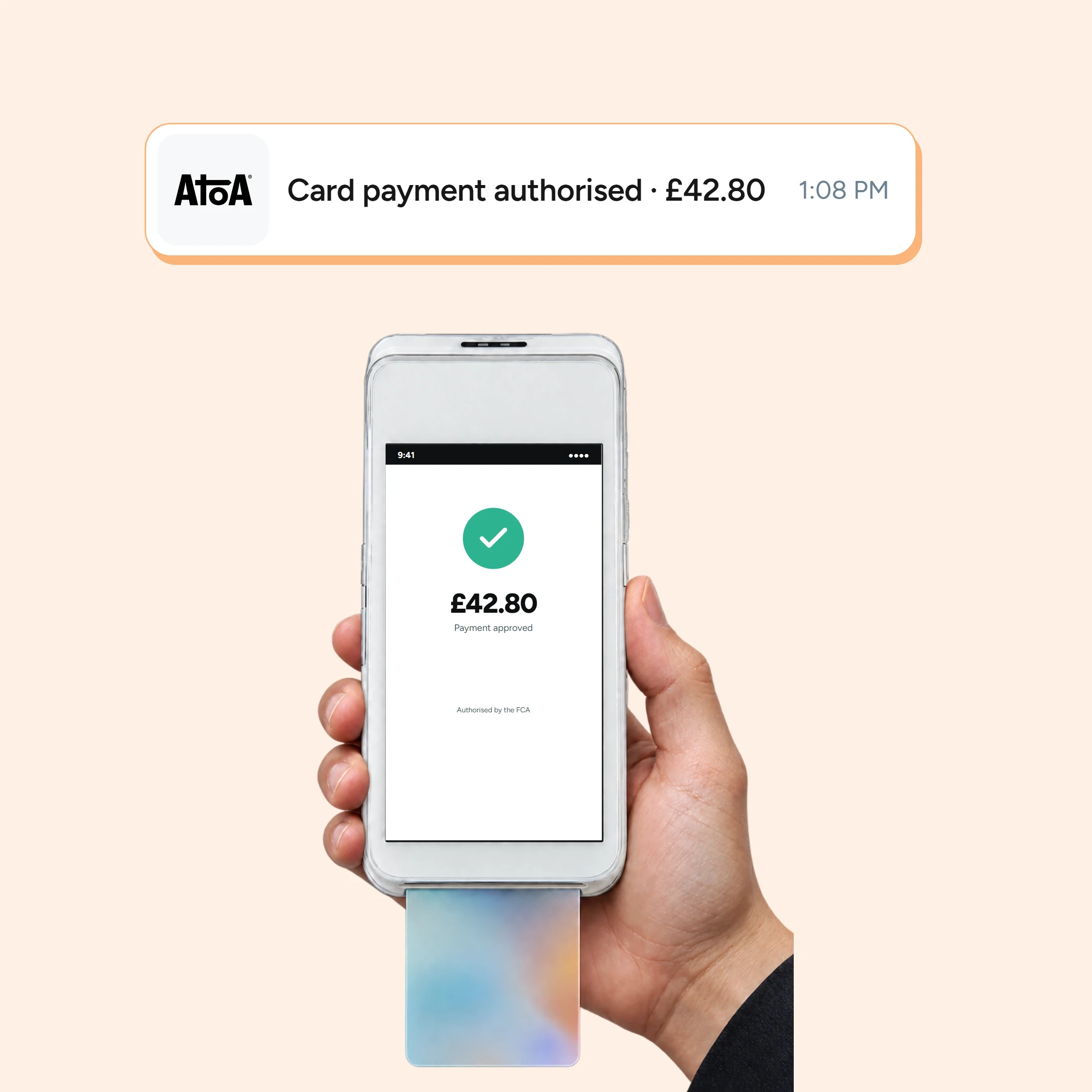
When a customer taps their card on your business terminal, the payment feels instant. Behind that two-second wait, there’s a payment processor checking if the card is valid, asking your customer’s bank if money is in the account, guarding the transaction against fraud, and starting the journey that eventually lands the funds in your account.
Most business owners never give it a thought until payments gets declined at a busy checkout, when funds take longer to arrive than you expected, or when your monthly statement carries fees you can’t explain. Understanding the payment processor, and how it differs from the gateway and the acquirer, lets you spot those problems and choose a better setup.
Here we will cover what a payment processor is, how it works, how a card payment travels from your customer to your bank, and what to weigh up when you pick one.
What a Payment Processor Does
A payment processor is a company or service that handles the technical communication required to complete an electronic payment. For a card transaction, it securely sends the payment request between the merchant, acquiring bank, card network and customer’s issuing bank, then returns the approval or decline response to the checkout or terminal.
Once a payment is authorised, the processor also handles clearing and settlement, the stages in which transaction records are reconciled and funds are transferred through the payment system before the merchant receives a payout.
The processor does not usually approve the payment itself. This decision is generally made by the customer’s issuing bank. It is also different from a payment gateway, which securely captures and passes payment information from an online checkout. However, one payment provider may perform several of these roles.
How Payment Processing Works
Every card payment runs through three steps, and the whole journey takes a couple of seconds:
- The payment is approved or declined. The customer pays, and the processor sends the transaction to the card scheme (such as Visa or Mastercard) and the customer’s issuing bank. The bank checks the card, available funds and relevant fraud controls before approving or declining the payment.
- The banks agree what is owed. Once the payment is approved, the details are exchanged between the banks so both sides settle on the exact amount changing hands.
- Then money reaches your account. The funds from customer’s bank, pass through your acquirer, and land in your account. For UK card payments, this part usually takes one to three working days.
This involves the customer’s issuing bank, the card scheme, your acquirer, the payment processor (which moves it all) and, for online transactions, a payment gateway. The settled card proceeds are handled through a merchant account or an equivalent acquiring arrangement before your provider pays them into your business bank account.
Processor vs Gateway vs Acquirer
A gateway, processor and acquirer may work together on the same card payment, but they perform different functions. Here’s a simple breakdown of what each does during a card payment:
| Role | What it does | Where it sits |
|---|---|---|
| Payment gateway | Captures the payment securely at the checkout or terminal and passes it on | The front door, at your checkout |
| Payment processor | Moves the transaction data and funds between the banks and card schemes | Behind the scenes, between checkout and banks |
| Acquirer (acquiring bank) | Holds your merchant relationship, receives the funds and settles them to you | The regulated party that settles your money |
Take any one of these away and the payment simply won’t go through. The two pairings that cause the most confusion are the payment gateway and payment processor, which sound similar but do very different jobs, and the acquiring and the issuing bank, which sit on opposite sides of the same transaction.
Where Atoa Fits
Traditionally a business had to connect a processor, a gateway and an acquirer separately, from different vendors, each with its own contract. Atoa is an all-in-one platform that covers all three, processing, gateway and acquiring, for both card and Pay by Bank. So, a mid-market business runs one provider and one dashboard instead of stitching three together.
There is also an important difference why the Pay by Bank exists. It does not use card-scheme processing at all. Because it is open banking, the money moves account-to-account directly between the customer’s bank and yours over Faster Payments. There is no card network in the middle, no chargebacks, and settlement in 3 to 6 seconds. That removes a whole layer of cost and complexity that card processing carries.
What to Look For in a Payment Processor
When you’re choosing between processors, a few things make a real difference to what you pay and how smoothly you run the business day to day:
- Look at the total monthly cost rather than the advertised percentage. A headline rate of 1.5% with a monthly fee, a minimum charge, and a PCI cost added on can work out dearer than a plain 1.9% with nothing else attached. Ask any provider for the full breakdown before you sign anything.
- Check how fast you actually get paid. Card payouts commonly take one to three working days, while Pay By Bank payments arrive much sooner. If your cash flow is tight, this matters as much as the rate.
- Understand your chargeback and fraud exposure.. Card payments can be disputed and reversed weeks after the sale. Bank-approved payments can’t be charged back through the card schemes, so your risk sits in a different place.
- Make sure it integrates with your tools. Confirm it connects to your checkout, accounting software, and sales system, so you aren’t reconciling two sets of records by hand.
- Know who you’ll call when something breaks. A UK support team that actually answers, and a provider authorised by the FCA, will save you far more than a slightly lower rate when a payment goes wrong.
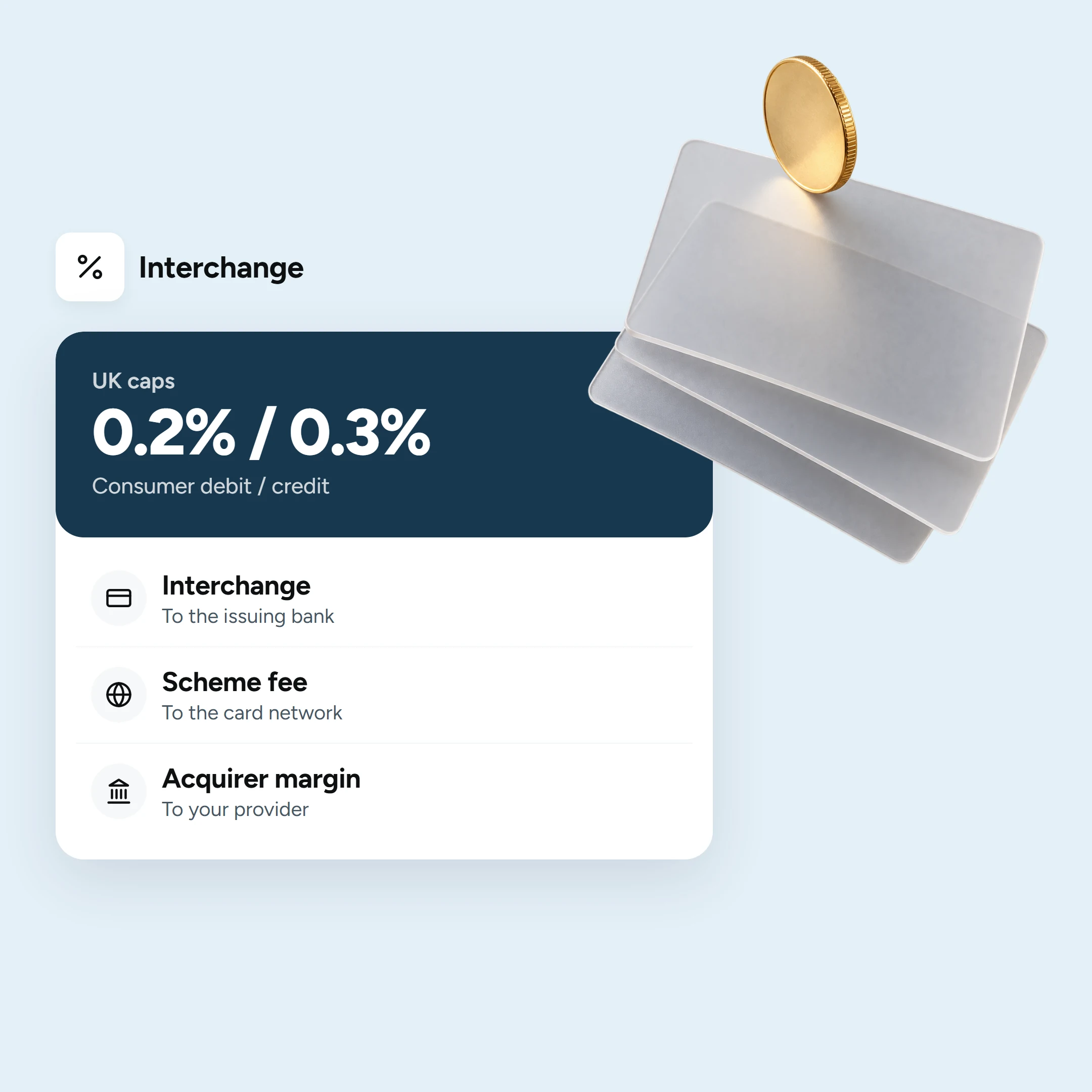
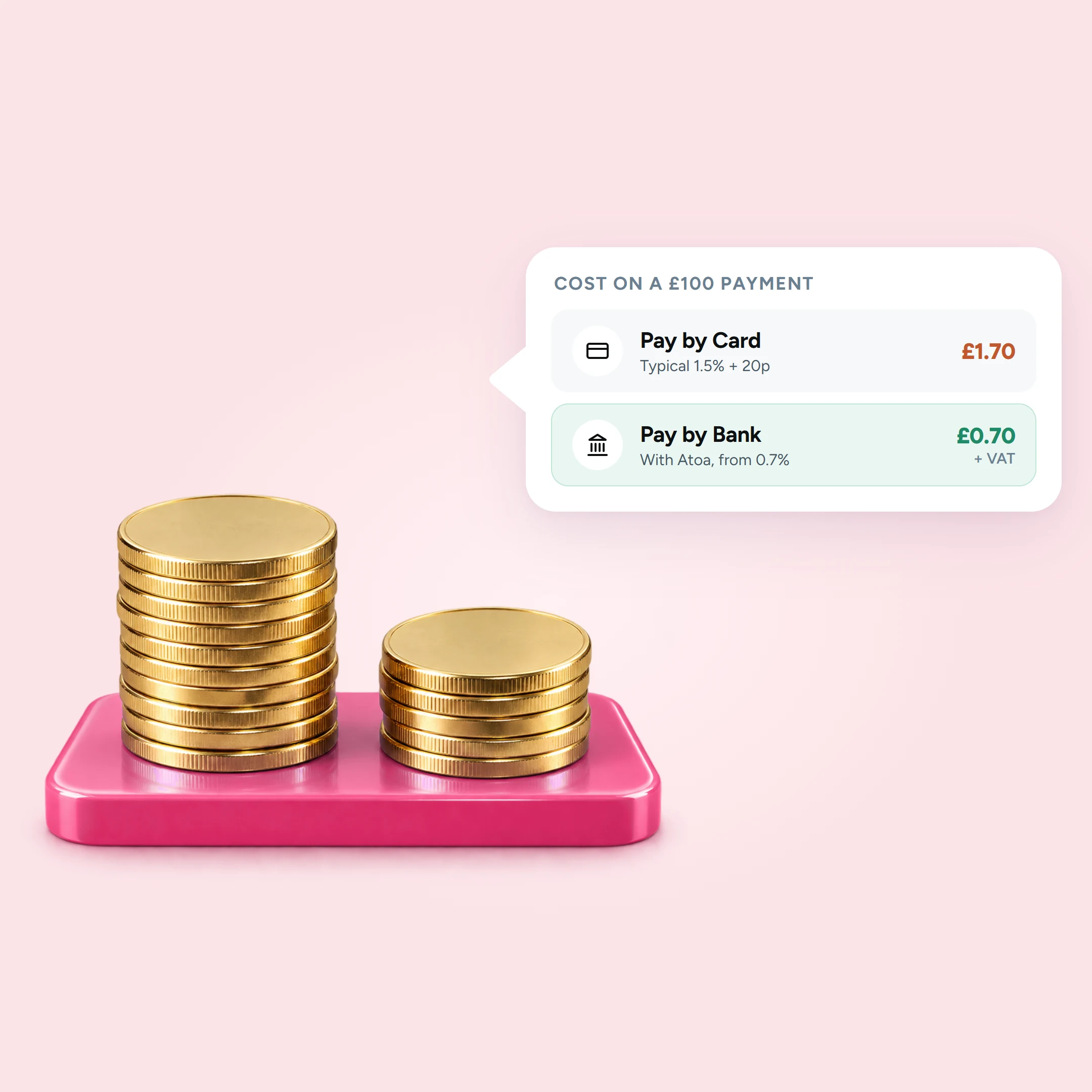
Atoa is an FCA Authorised Payment Institution (FRN 1007647), with card services provided by Rapyd (FRN 900688), and Pay by Bank from 0.7% + VAT and cards from 1.3%, up to 50% lower than typical card fees. See pricing.
Frequently Asked Questions
What is a payment processor?
A payment processor is the service that moves transaction data and funds between the customer’s bank, the card schemes and your account, checking each payment is valid and carrying it through to settlement. It works behind the scenes every time a card is used.
What is the difference between a payment processor and a payment gateway?
A gateway captures the payment securely at your checkout and passes it on. A processor moves the transaction data and funds between the banks and card schemes. The gateway is the front door; the processor is the engine behind it. Many providers offer both together.
What is the difference between a processor and an acquirer?
A processor moves the transaction and funds through the system. An acquirer is the regulated party that holds your merchant relationship, receives the funds and settles them to your account. One moves the payment; the other settles your money.
How does payment processing work?
In three stages: authorisation, where the payment is approved or declined by the customer’s bank; clearing, where the banks agree what is owed; and settlement, where the funds reach your account. It happens in seconds.
What does a payment processor cost in the UK?
It varies by provider and business, and usually combines a percentage plus a fixed fee per transaction, sometimes with monthly or gateway costs. Compare the all-in cost. Atoa’s Pay by Bank starts at 0.7% + VAT and cards from 1.3%.
Do I need a payment processor for Pay by Bank?
No card-scheme processor is involved. Pay by Bank uses open banking, so the money moves account-to-account directly between the customer’s bank and yours, with no card networks in the middle, no chargebacks, and settlement in 3 to 6 seconds.
Sources
Atoa Payments Limited is authorised by the Financial Conduct Authority as an Authorised Payment Institution (FRN 1007647); card services are provided by Rapyd Payments Limited (FRN 900688). Atoa is ISO 27001 and SOC 2 certified.
- Card payments and processing in the UK: UK Finance.
- Card data security requirements (PCI DSS): PCI Security Standards Council.
SHARE ARTICLE
Share link copied!