
Ready to get started?
Easily integrate next-generation payments and financial data into any app. Build powerful products your customers love.
SHARE ARTICLE


 Share link copied!
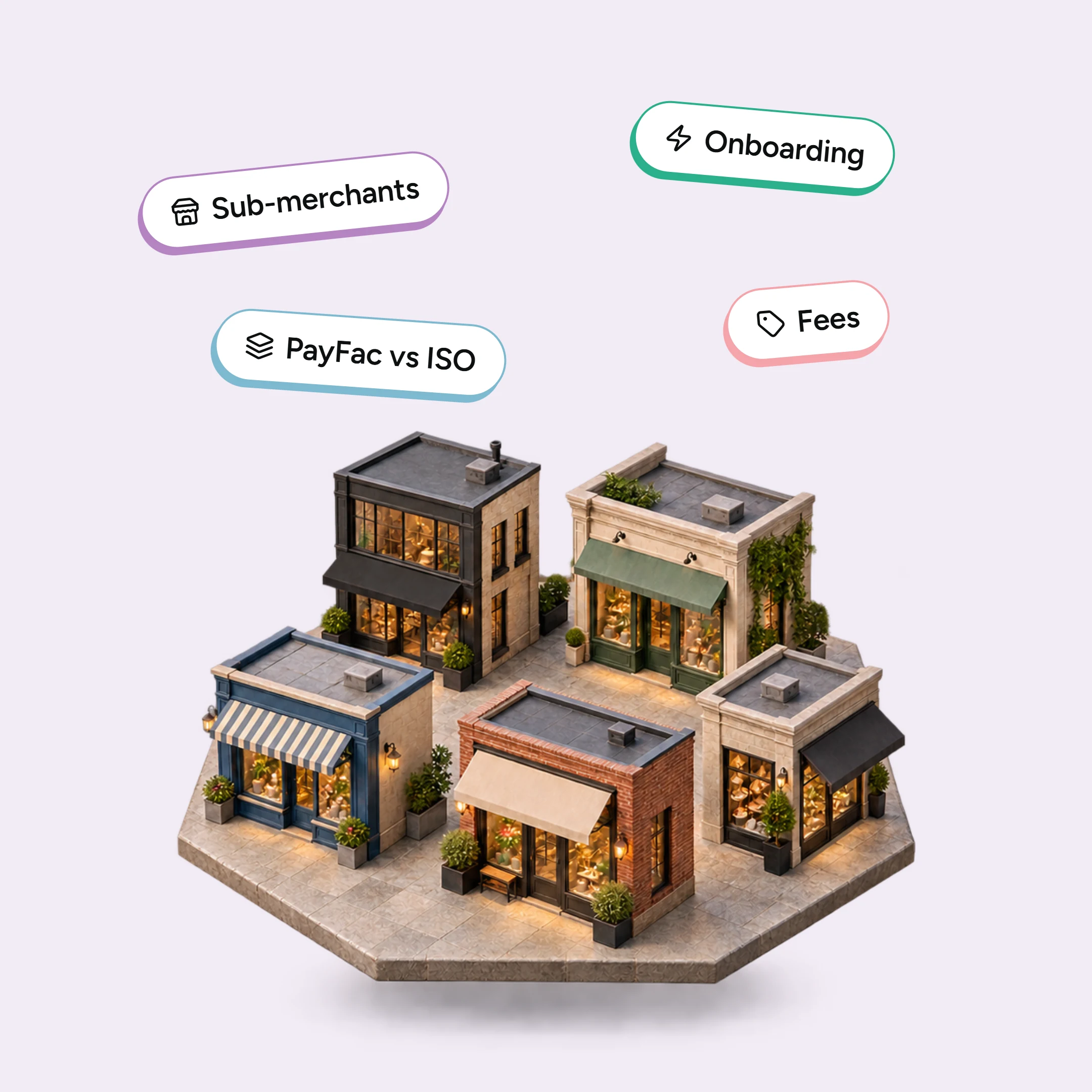
If you build a platform or run a business that wants to accept card payments quickly, you are likely to come across the term payment facilitator, or PayFac, along with similar terms such as acquirer, ISO and payment aggregator. For platforms serving multiple sellers, a traditional arrangement may require each seller to obtain a separate merchant account, making onboarding slow and administratively demanding. The PayFac model simplifies this process by onboarding eligible sellers as sub-merchants under the payment facilitator’s acquiring arrangement.
This guide defines the PayFac, how the PayFac model works, the roles of the parties involved and what a platform should consider before becoming a PayFac or working with an established provider.
A payment facilitator (PayFac) is a provider that holds a master merchant account with an acquiring partner and allows other businesses to accept card payments as sub-merchants under that account. Rather than asking every business to apply for its own merchant account, a process that can take days or weeks, the PayFac handles onboarding, underwriting, Know Your Business checks and ongoing compliance. It may also manage payment processing, payouts and chargebacks, depending on how the service is set up.
In return for faster, simpler onboarding, sub-merchants may have less control over areas such as pricing, payout schedules and account terms. This model is why many apps, marketplaces and software platforms can allow an eligible business to start accepting payments much sooner, sometimes within minutes.
Who Is Involved In The PayFac Model?
Here are the businesses and financial institutions involved each time a customer makes a card payment through a PayFac:
- Cardholder: The customer making the payment.
- Sub-merchant: The business selling the product or service and accepting the payment through the PayFac.
- Payment facilitator: The provider that signs up sub-merchants, carries out the required checks and manages areas such as compliance, fraud and chargebacks.
- Acquirer: The financial institution that sponsors the PayFac, provides access to the card networks and supports the settlement of card payments.
- Card network: Visa, Mastercard and other networks that carry payment instructions and set the rules participants must follow.
- Issuer: The bank or financial institution that issued the customer’s card. It checks the payment request and decides whether to approve or decline it.
What makes the PayFac model different is its use of a master merchant account and merchant ID, commonly called a MID. The PayFac establishes this account with its acquirer and brings multiple businesses onto it as sub-merchants. Those businesses can then accept card payments without each having to establish a separate direct relationship with an acquirer.
How the PayFac Model Works
The PayFac model starts before a business takes its first payment. Instead of sending the business to an acquirer to apply for a separate merchant account, the PayFac brings it onto its existing payment setup as a sub-merchant.
Here is how the process usually works:
- The business applies through the PayFac. It provides information about the company, its owners, the products or services it sells and its expected payment volume.
- The PayFac verifies the information provided and reviews the level of risk involved. Straightforward applications can often be approved quickly, while some businesses may need to provide additional documents.
- The business is added as a sub-merchant. Once approved, it can begin accepting card payments through the PayFac without opening a merchant account directly with an acquirer.
- When the customers make payments, each card payment travels through the acquiring side and card network to the customer’s issuing bank, which approves or declines it.
- Approved payments are cleared and settled through the card-payment system. The business then receives its proceeds according to the payout schedule set by the provider, after any applicable fees or adjustments.
The PayFac’s work continues after onboarding. It monitors transactions, reviews suspicious activity and helps manage refunds and chargebacks. This allows the sub-merchant to focus on running its business while the PayFac handles much of the payment administration behind the scenes.
PayFac vs Acquirer vs ISO vs Aggregator
These terms are often confused because each can help a business accept card payments. The main differences are how the merchant is onboarded, who carries out the underwriting and whether the business has a direct relationship with an acquirer.
| Model | Who holds the account | Who underwrites | Onboarding | Typically used by |
|---|---|---|---|---|
| PayFac | The PayFac (master account; you are a sub-merchant) | The PayFac | Fast, minutes to days | Platforms and SaaS onboarding many merchants |
| Acquirer | You, your own merchant account | The acquirer | Slower, days to weeks | Larger, established businesses wanting control |
| ISO (Independent Sales Organisation) | You, under the acquirer | The acquirer | Medium | Businesses buying through a reseller |
| Payment aggregator | The aggregator (pooled) | The aggregator | Fast | Smaller merchants pooled under one account |
“Payment aggregator” is a broad term for a provider that groups multiple merchants under a shared payment structure. A PayFac follows a more clearly defined model in which businesses are formally onboarded as identifiable sub-merchants under the PayFac’s relationship with an acquirer. An ISO, by contrast, resells an acquirer’s services but does not hold the merchant account or take on the underwriting itself. For the banks either side of a card payment, see acquiring bank vs issuing bank.
Pros and Cons of the PayFac Model
The PayFac model can make card payment acceptance easier, but it also gives the provider greater control over the merchant relationship. Here are the main advantages and disadvantages to consider.
Pros
- Quicker onboarding, often minutes rather than weeks, as they don’t need a separate merchant account directly with an acquirer.
- A simpler experience for the sub-merchant, since the PayFac handles compliance and settlement.
- The PayFac handles much of the onboarding, compliance monitoring and chargeback administration, resulting in less payment administration.
- One relationship instead of several, which suits platforms onboarding many businesses.
Cons
- Less control than holding your own merchant account.
- Risk and funds are aggregated under the master account, so the PayFac manages exposure carefully.
- Pricing is often bundled, which is convenient but can be less transparent than a dedicated arrangement at scale.
How the PayFac Model Affects Onboarding and Fees
PayFac onboarding is often faster because the PayFac can assess and register businesses directly as sub-merchants using its own systems and risk rules. Each business must still pass the required checks, including identity, ownership and business verification. Straightforward applications may be approved quickly, while businesses with complex ownership structures, unusual payment activity or higher-risk products may face further checks.
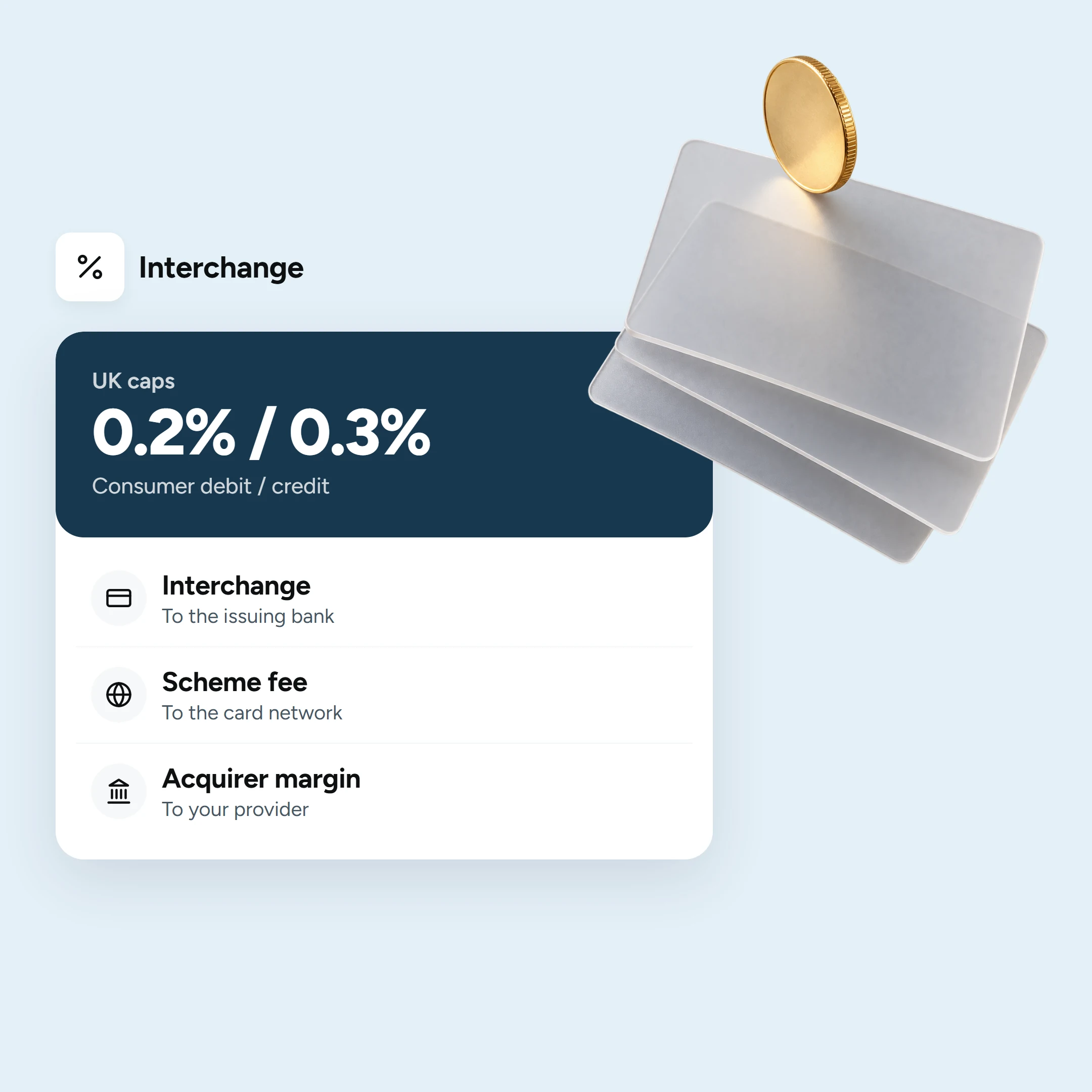
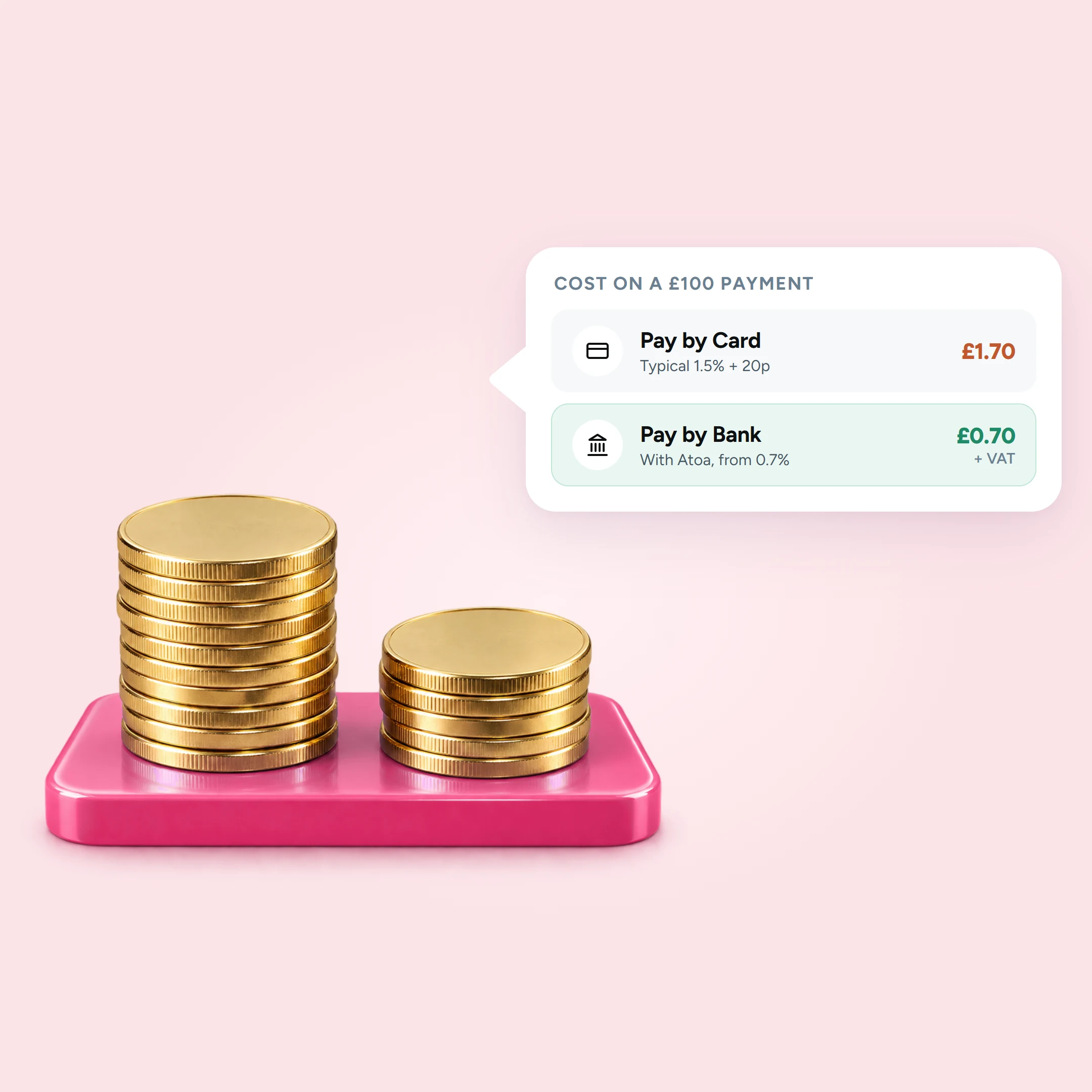
PayFac pricing is often presented as a single transaction rate, sometimes combining several processing costs that a traditional merchant account would list separately. A simple rate is easier to understand, but it is not automatically the cheapest option. Compare the total cost based on your expected payment volume, average transaction value and card mix, including any monthly, refund, chargeback, cross-border, currency-conversion or payout fees.
Where Atoa fits
Most businesses do not want to become a PayFac; they want the outcome a PayFac gives, which is to start taking payments quickly without building an acquiring stack. Atoa delivers that as a UK, FCA-authorised payments platform: a business completes verification, connects the tools it already uses, and takes card and Pay by Bank on one platform, without wiring up a separate payment processor, gateway and acquirer itself.
There’s also a difference in the underlying rails worth understanding. Pay by Bank runs on open banking, so money moves account-to-account, straight from the customer’s bank to yours, outside the card-scheme and PayFac structure altogether. That’s why it settles in 3 to 6 seconds over Faster Payments, carries no card-style chargebacks, and starts from 0.7% + VAT. Developers can build either flow through the API, SDKs and CLI.
Frequently Asked Questions
What is a payment facilitator (PayFac)?
A payment facilitator holds a master merchant account with an acquirer and onboards businesses under it as sub-merchants, so they can take card payments quickly without their own merchant account. The PayFac handles the underwriting, onboarding and compliance.
Does a business need to become a PayFac to take payments quickly?
No. An all-in-one provider such as Atoa gives you fast onboarding and card plus Pay by Bank on one platform, without running your own acquiring or PayFac stack, so you go live quickly while the provider handles the complexity underneath.
How does a payment facilitator make money?
Mainly through a fee on each transaction, usually a percentage of the sale, sometimes with a small fixed amount added. Where the PayFac is also a software platform, it may charge a subscription or software fee on top.
Is a payment facilitator the same as a payment gateway?
No. A gateway securely passes payment details from a checkout to be processed; it doesn’t onboard businesses or settle funds. A PayFac is the broader commercial arrangement that onboards sub-merchants and manages compliance and risk, and it may use a gateway as one part of that.
Sources
Atoa Payments Limited is authorised by the Financial Conduct Authority as an Authorised Payment Institution (FRN 1007647); card services are provided by Rapyd Payments Limited (FRN 900688). Atoa is ISO 27001 and SOC 2 certified.
- Card-scheme payment facilitator programmes: Visa’s Payment Facilitator model and Mastercard’s payment facilitator rules and registry.
- Payment institution authorisation in the UK: Financial Conduct Authority.
SHARE ARTICLE
Share link copied!