
Ready to get started?
Easily integrate next-generation payments and financial data into any app. Build powerful products your customers love.
SHARE ARTICLE


 Share link copied!
A restaurant taking orders through Deliveroo, Uber Eats and its own website can end up managing three different menus, payment reports and payout schedules. If those orders don’t feed into the till, someone also has to enter them manually while the kitchen is busy.
The cost is another consideration. A delivery marketplace might bring in customers who would never have found the restaurant, but commission reduces the amount retained from each sale. Direct ordering can cost less per transaction, although the restaurant must attract customers and arrange fulfilment itself.
A restaurant online ordering system lets customers browse a menu, place an order and pay digitally for delivery, collection or dine-in service. Depending on the platform, orders can also flow into the restaurant’s EPOS and kitchen display.
This guide compares six online ordering systems available to UK restaurants: Flipdish, Slerp, Storekit, Deliverect, Square Online and Epos Now Order and Pay. It covers software costs, delivery arrangements, payment processing, EPOS integrations and the UK requirements that matter when accepting food orders online.
How Restaurant Online Ordering Systems Work
An online ordering system connects the customer’s order to the restaurant’s fulfilment process.
The customer selects their food, chooses collection or delivery, and completes checkout. The system then sends the order to a kitchen display, EPOS or separate ordering tablet. Staff prepare the food, arrange collection or dispatch, and update the order status.
Behind that relatively simple journey are several processes that need to work together.
| Stage | What happens | What the restaurant needs to check |
|---|---|---|
| Menu | Customers view products, prices, modifiers and allergen information | Menu accuracy and availability |
| Checkout | Customers choose fulfilment and make payment | Payment methods and total charges |
| Order acceptance | The order reaches the restaurant | EPOS and kitchen integration |
| Preparation | Kitchen staff receive the items and instructions | Accurate modifiers and preparation times |
| Fulfilment | The order is collected or delivered | Delivery partners and order tracking |
| Settlement | Payment proceeds reach the restaurant | Fees, payout timing and reconciliation |
The ordering software doesn’t necessarily manage every stage. Some platforms provide their own checkout and delivery services, while others depend on external payment providers, couriers or EPOS integrations.
Delivery Marketplaces
Just Eat, Deliveroo and Uber Eats are examples of third-party ordering marketplaces.
Customers browse participating restaurants through the marketplace’s website or app. The platform processes the order, collects payment and may arrange delivery through its own courier network.
The main advantage is customer acquisition. A restaurant can reach people who haven’t previously ordered from it.
The trade-off is commission, which may vary depending on whether the marketplace provides delivery, the restaurant uses its own drivers or the customer collects the food.
Marketplaces also generally provide more limited access to customer information than a restaurant’s own ordering channel.
Direct Online Ordering
Direct ordering allows customers to order through a restaurant’s own website or branded application.
Platforms such as Flipdish, Slerp and Storekit provide the technology for menus, checkout and order management.
Instead of paying a marketplace commission on every order, restaurants generally pay software subscriptions, payment processing fees and, in some cases, additional per-order charges.
Direct ordering gives restaurants more control over their customer experience, but it also makes them responsible for attracting customers to that channel.
A branded ordering website has little value if customers cannot find it or the checkout is difficult to use.
EPOS-Integrated Ordering
Some restaurant EPOS providers offer online ordering through their own software or supported applications.
Square Online and Epos Now Order and Pay are examples.
These systems can reduce the need to manage a separate ordering platform because online transactions can connect with existing till and kitchen workflows.
However, integration capabilities vary. Some systems synchronise menus, modifiers and order statuses, while others provide more limited connections.
Restaurants reviewing their till alongside online ordering should consider how restaurant POS systems handle both in-person and digital sales.
Restaurant Online Ordering Systems Compared: Pricing and Integrations
The six platforms below serve different restaurant requirements. Some focus on direct customer ordering, others on delivery-channel management, and others on integrating orders with an existing EPOS.
| System | Best for | Software pricing | Ordering model | EPOS and delivery integrations |
|---|---|---|---|---|
| Flipdish | Restaurants wanting branded websites, apps and optional POS | Website from £49/month per location, billed annually | Direct ordering | Flipdish POS, supported third-party EPOS connections and Uber Direct |
| Slerp | Restaurant groups managing delivery and catering | Indicative £125–£250/month per location, plus order fees | Direct ordering | Selected EPOS systems, Uber Direct, Deliveroo Express and other delivery partners |
| Storekit | Takeaways, cafés and casual dining | Free Starter; Grow £99/month; Pro £199/month per location | Direct, collection and table ordering | Supported EPOS integrations, Deliverect and delivery partners |
| Deliverect | Restaurants receiving orders from several marketplaces | From £79/month, depending on requirements | Order aggregation and direct ordering | Delivery marketplaces and supported restaurant EPOS systems |
| Square Online | Restaurants already using Square POS | Free plan; paid online plans from £20/month | EPOS-connected direct ordering | Square POS, kitchen display and supported delivery services |
| Epos Now Order and Pay | Restaurants already using Epos Now | Custom quotation | Table ordering, collection and delivery | Epos Now EPOS |
Prices reflect the supplied UK provider research dated 8–9 October 2026. They may exclude VAT, card processing, hardware, setup, additional locations and per-order fees. Slerp’s figures are indicative. Commercial terms and integrations should be confirmed before purchasing.
1. Flipdish: Branded Online Ordering and Restaurant POS
Flipdish provides online ordering websites, branded mobile apps, kiosks and restaurant POS software.
It is worth considering for restaurants that want customers to order directly rather than relying entirely on third-party delivery marketplaces.
The platform supports collection and delivery, and its broader product range allows operators to combine ordering with in-store checkout.
The UK pricing in the supplied research starts at £49 per month per location for website ordering when billed annually. Monthly billing and packages including a branded app cost more.
Payment processing, hardware and setup may involve additional charges.
For multi-site operators, central menu management is useful, but restaurants should establish how prices, availability and operating hours are handled for individual locations.
What to test: Remove a sold-out item from one branch’s menu and check whether the change appears correctly on the website, app and connected till.
Best suited to: Takeaways, quick-service restaurants and growing hospitality groups that want direct ordering under their own brand.
2. Slerp: Delivery, Collection and Catering Orders
Slerp focuses on direct ordering for restaurants and hospitality businesses, including delivery, collection and larger catering orders.
Its delivery connections are particularly relevant for restaurants that want to accept orders through their own website but use external couriers.
The supplied research identifies integrations with Uber Direct, Deliveroo Express, Just Eat’s JET Go and Stuart.
This can give restaurants an alternative to employing their own drivers for every delivery.
Slerp also supports scheduled and catering orders, where preparation times, advance ordering and fulfilment arrangements can be more complex.
The supplied company information indicates subscription pricing of approximately £125–£250 per location per month, with additional per-order fees. Current pricing and onboarding terms require confirmation.
What to test: Place a scheduled catering order and a standard delivery order. Check how the kitchen receives each order, how delivery is arranged and how partial refunds are handled.
Best suited to: Established restaurant brands, multi-location businesses and operators with significant delivery or catering demand.
3. Storekit: Direct Ordering for Takeaways and Casual Dining
Storekit provides online ordering for collection, delivery and dine-in service.
Its plans range from a free entry tier to more advanced options offering additional integrations and management capabilities.
The supplied UK pricing lists Starter at £0, Grow at £99 and Pro at £199 per month per location, excluding VAT.
However, Storekit also charges per-order fees. That means the free subscription does not necessarily make it the cheapest option for a restaurant with high order volumes.
Higher plans provide broader integration and multi-location capabilities.
Storekit also supports ordering at the table, where customers can browse a menu and submit an order through their phones.
This goes beyond displaying a digital menu. Restaurants exploring the difference between displaying information and taking orders can consider the practical uses of QR code menus.
What to test: Change an item’s availability during service, then place an order through the website and table-ordering interface. Confirm that unavailable items cannot be purchased.
Best suited to: Takeaways, cafés and casual dining restaurants that want direct ordering with the option to add integrations as they grow.
4. Deliverect: Managing Orders Across Delivery Platforms
Deliverect addresses a different problem from a standalone online ordering website.
It helps restaurants bring orders from multiple delivery channels into a central workflow and connect them to supported EPOS systems.
A restaurant receiving orders from Just Eat, Deliveroo, Uber Eats and its own website may otherwise need to manage several tablets and manually transfer orders to the kitchen.
Deliverect aims to reduce that work by consolidating orders.
Its Deliverect Direct offering also provides direct ordering capabilities.
The supplied research lists UK plans starting from £79 per month, with pricing depending on order volume, locations and selected products.
What to test: Submit orders simultaneously through two marketplaces and a direct ordering channel. Confirm that all three reach the correct kitchen with modifiers, order references and status updates intact.
Best suited to: Delivery-heavy restaurants and multi-site groups managing several ordering platforms.
5. Square Online: Direct Ordering Connected to Square POS
Square Online allows restaurants to accept orders through a website connected to Square’s POS environment.
For businesses already using Square, this can reduce the need for separate ordering, checkout and kitchen systems.
Online orders can connect with the restaurant’s existing sales records and supported kitchen workflows.
The supplied research lists a free online plan, with paid options starting at £20 per month.
Square’s published UK online card rate in that research is 1.4% plus 25p for eligible UK card transactions.
Restaurants should also distinguish the cost of Square Online from subscriptions for advanced restaurant POS functionality.
What to test: Place an online collection order, send it to the kitchen, complete the sale and issue a refund. Confirm that the online and POS records match.
Best suited to: Independent restaurants, cafés and small groups already using Square.
6. Epos Now Order and Pay: Ordering Through an Existing EPOS
Epos Now offers online and table-ordering capabilities through its hospitality software ecosystem.
Its Order and Pay application, identified as powered by Yoello in the supplied research, supports digital ordering and payment.
For restaurants already using Epos Now, adding a supported ordering application may be less disruptive than replacing the till or adopting an entirely separate system.
However, restaurants should confirm which features are included, how the ordering software connects with the kitchen and whether additional agreements apply.
The supplied research does not establish a standard public subscription price for Order and Pay.
What to test: Place an order containing several items and modifiers, add another item later and complete payment. Check how the system handles the kitchen ticket, order total and refund records.
Best suited to: Restaurants, pubs and hospitality businesses using Epos Now that want to extend their digital ordering capabilities.
What Restaurant Online Ordering Really Costs
The monthly software subscription is only one part of the cost.
Restaurants should compare marketplace commissions, payment processing, delivery fulfilment, subscriptions and any additional per-order fees.
Marketplace Commissions
Delivery marketplaces commonly charge a percentage of the order value.
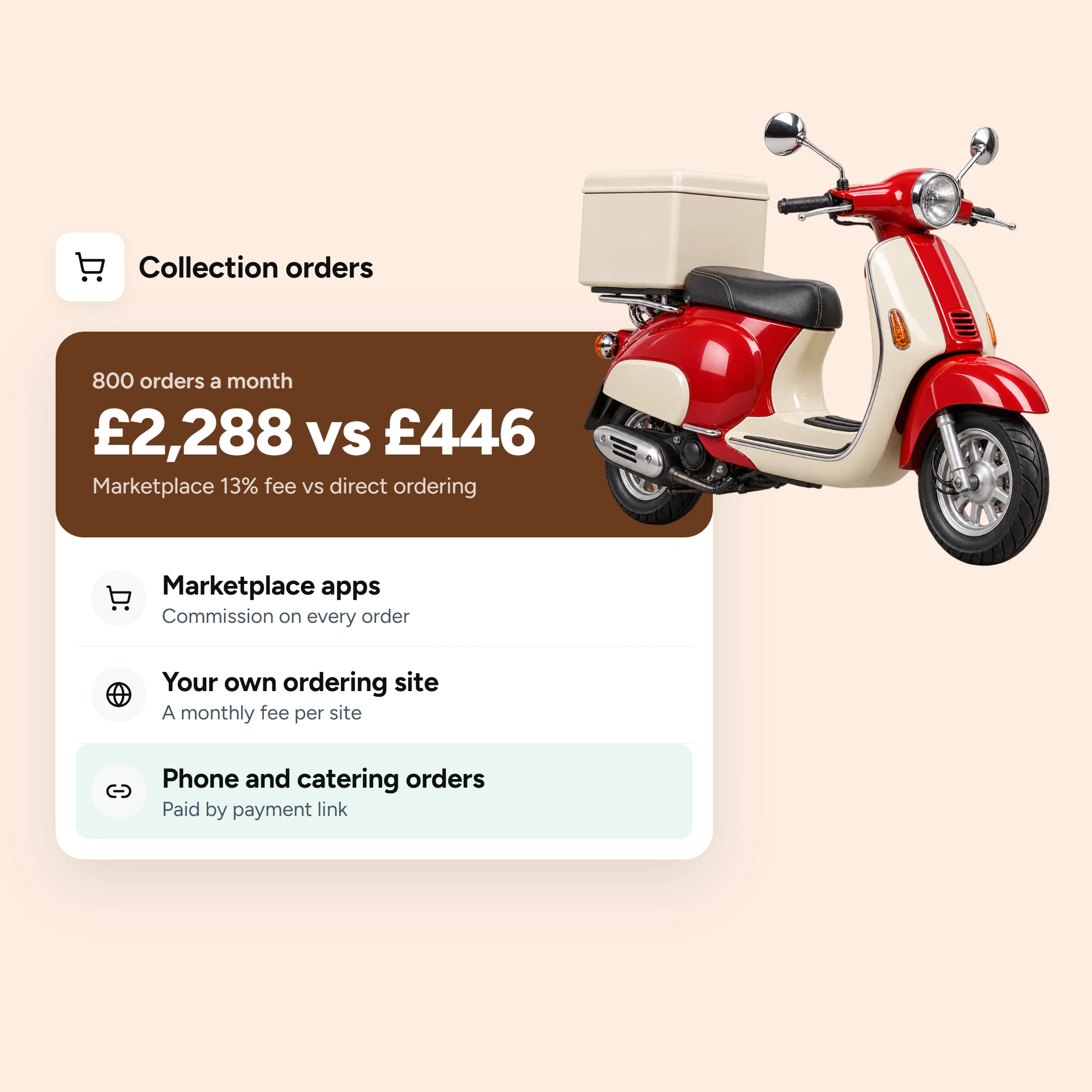
The supplied research records Uber Eats’ UK published rates as 30% when Uber Eats provides delivery, 33% for certain Uber One orders and 13% for self-delivery or collection, excluding VAT.
Deliveroo and Just Eat use commercial arrangements that may differ by restaurant and service model. Their exact rates should be taken from the restaurant’s agreement.
The commission is not simply a technology fee. Marketplaces can also provide customer acquisition, ordering infrastructure and delivery logistics.
That distinction matters when comparing them with direct ordering.
Direct Ordering Subscriptions
Direct ordering platforms commonly charge a monthly subscription per restaurant or location.
Some charge extra for branded apps, additional sites, integrations or support.
Others add a fee to every order, even when they advertise commission-free ordering.
Restaurants should calculate the full cost based on their actual monthly volume rather than comparing subscription prices alone.
Payment Processing, Payouts and Reconciliation
Restaurants often compare ordering software without examining what happens to the payment after checkout.
Yet the payment arrangement affects transaction costs, cash flow, refunds and finance administration.
Card Payments and Digital Wallets
Online restaurant checkouts commonly support debit cards, credit cards and digital wallets such as Apple Pay and Google Pay.
Card processing costs may include a percentage of the transaction, a fixed fee or both.
Rates can differ for domestic, international, commercial and other card categories.
When a customer pays, authorisation confirms whether the card issuer has approved the transaction. Settlement and payout happen later.
The restaurant should know when funds will arrive and how fees are deducted.
Understanding the difference between a payment gateway and a payment processor can also help operators evaluate checkout providers.
Pay by Bank
Pay by Bank allows customers to authorise a payment directly through their banking app rather than entering card details.
It uses payment initiation services to start a bank payment with the customer’s approval.
In the UK, these payments commonly use Faster Payments, although confirmation and merchant payout arrangements depend on the provider.
Pay by Bank is not subject to the card scheme chargeback process. However, refunds, complaints and other applicable dispute or fraud-reimbursement processes still need to be handled appropriately.
It can be offered alongside cards and digital wallets where the ordering platform supports the payment method.
Payment Provider Compatibility
Some restaurant ordering platforms require businesses to use their own payment processing arrangements.
Others support external payment providers or selected checkout integrations.
This distinction matters because a restaurant may be able to choose its payment provider for an independent e-commerce website but not for a closed ordering platform.
For example, payment solutions such as Atoa can support payment collection through compatible e-commerce and hospitality systems. Restaurants can check the available connections through Atoa’s integrations.
That does not mean Atoa integrates directly with every ordering platform reviewed in this article.
Where an ordering platform does not support an external payment provider, a restaurant may still use payment links for separate transactions such as telephone orders or catering deposits, provided the workflow is appropriate.
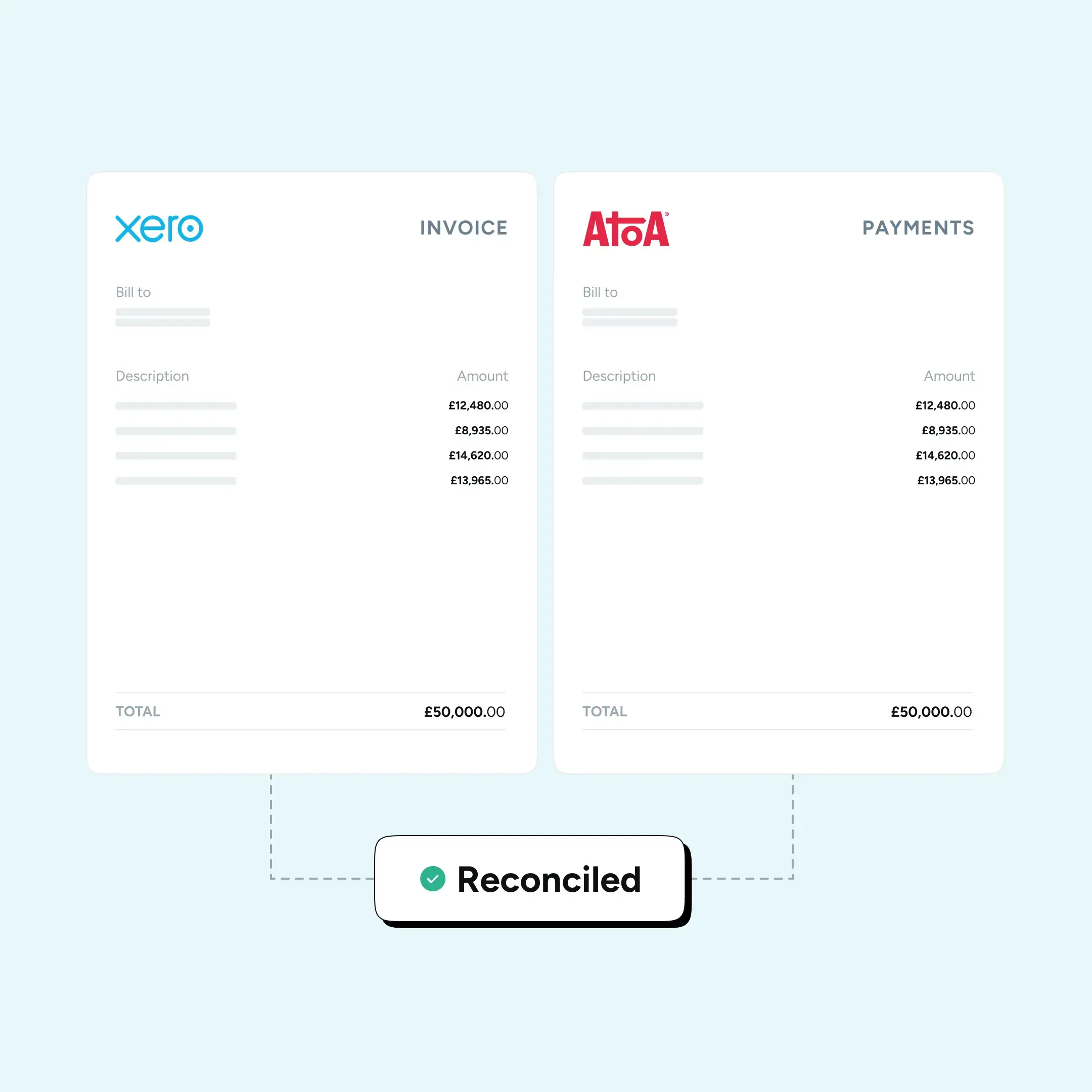
Payout Timing and Reconciliation
Restaurants should distinguish between payment confirmation and funds reaching their bank account.
A payment may be confirmed at checkout while the provider settles or pays out the money later.
Marketplace payments can follow weekly or other scheduled payout arrangements. Direct checkout providers may offer different settlement options.
For restaurants with several locations, the reconciliation process should identify:
- Gross sales by ordering channel and location.
- Marketplace commissions and platform fees.
- Card or bank payment processing charges.
- Refunds and adjustments.
- Net amounts paid into the bank account.
Accounting integrations can help, but restaurants should establish whether the system exports individual transactions, summary reports or actual payout records.
A report showing £10,000 in sales is not enough if finance cannot explain why a different amount reached the bank.
EPOS and Kitchen Integrations for Multi-Site Restaurants
A reliable integration should move more than the order total.
It needs to preserve the information staff require to prepare and fulfil the order correctly.
Menu Synchronisation and Availability
Restaurants frequently change menus during service.
An ingredient may run out, a dish may be temporarily unavailable or one location may offer a different price.
A good integration should help keep the ordering menu aligned with the restaurant’s actual availability.
For multi-site operators, central menu management should allow local variations without requiring every branch to maintain an entirely separate catalogue.
Kitchen Displays and Order Modifiers
Online orders should reach the correct kitchen station with relevant instructions.
If a customer removes an ingredient, chooses a side or requests a different preparation option, that information should remain attached to the order.
Restaurants should also check how online orders are prioritised alongside dine-in orders during busy periods.
Delivery and Collection
The ordering platform should support the restaurant’s chosen fulfilment model.
That might involve customer collection, employed drivers or an external delivery partner.
Check whether the system supports delivery zones, realistic preparation times, scheduled orders and customer notifications.
For restaurant groups, order routing should send each order to the correct location.
Customer Data and Reporting
Direct ordering can give restaurants more access to customer information than marketplace ordering.
However, access and portability depend on the provider’s terms and the restaurant’s data protection responsibilities.
Before signing, establish which customer records can be exported, whether order history remains available after cancellation and how marketing preferences are recorded.
A branded ordering website does not automatically mean the restaurant has unrestricted ownership or use of all customer data.
UK Rules Restaurants Need to Consider When Taking Orders Online
Online ordering introduces responsibilities that go beyond choosing software.
The platform should support compliance with food information, consumer protection, payment security and data protection requirements.
Allergen Information for Online Food Orders
Restaurants selling food online must make required allergen information available before customers complete their purchase and when the food is delivered.
The Food Standards Agency provides guidance for food sold through distance communication, including websites, apps and telephone orders.
An ordering system should therefore make it practical to provide accurate allergen information and keep it updated when recipes change.
Restaurants should not assume that a generic note asking customers to contact staff replaces their legal obligations.
For businesses operating across the UK, the relevant guidance from the Food Standards Agency and Food Standards Scotland should be considered.
Mandatory Fees and Price Transparency
The Digital Markets, Competition and Consumers Act 2024 introduced requirements affecting how businesses present prices.
Mandatory charges should be included in the total price information presented to customers rather than appearing unexpectedly late in checkout.
This can affect service charges, compulsory delivery fees and other unavoidable costs.
Restaurants should review the Competition and Markets Authority’s guidance when configuring online pricing.
Optional extras can be presented separately where they are genuinely optional.
Tips on Online Orders
Some ordering systems allow customers to add tips during checkout.
Where qualifying tips are received by a business, the Employment (Allocation of Tips) Act 2023 and associated statutory code require fair allocation and distribution to workers.
The rules apply in England, Scotland and Wales.
Restaurants should be able to identify tips separately from food sales and retain the records needed to demonstrate compliance.
Customer Data and Marketing Consent
A direct ordering website can provide customer email addresses, phone numbers and purchase histories.
Restaurants must handle that information in accordance with UK GDPR and applicable Privacy and Electronic Communications Regulations.
Collecting contact details to fulfil an order does not automatically authorise every form of marketing.
Ordering software should support appropriate privacy notices, marketing preferences and data exports.
Payment Security and Refunds
Restaurants accepting online card payments need to understand their responsibilities under PCI DSS, the payment card industry’s security standard.
Using a hosted checkout from a compliant payment provider can reduce the amount of sensitive card information the restaurant handles, but it does not necessarily remove every responsibility.
Refund policies should also explain what happens when food arrives damaged, items are missing or an order cannot be fulfilled.
The ordinary 14-day online cancellation right generally does not apply to goods liable to deteriorate or expire rapidly, but that does not remove customers’ other statutory rights.
Choosing an Online Ordering System for Your Restaurant
The right system depends on the restaurant’s existing technology, order volume, delivery arrangements and customer base.
Before choosing a provider, use the following comparison process.
Review Your Current Order Mix
Start with the previous three months of orders.
Separate marketplace, website, telephone and in-person transactions.
Calculate the average order value, order volume and total channel costs for each.
For a restaurant group, analyse every location separately. A city-centre takeaway may have a different order mix from a suburban restaurant with a strong collection business.
Compare the Full Cost per Order
Include subscriptions, commissions, processing charges, delivery fulfilment, additional order fees and other recurring costs.
Use your actual order values rather than relying on a provider’s example.
Where a platform charges per location, calculate the cost of your current sites and any planned expansion.
Test the Ordering and Kitchen Workflow
Give shortlisted providers the same scenarios.
| Test | What to check |
|---|---|
| Place an order with modifiers | All instructions reach the kitchen correctly |
| Mark an item unavailable | Customers cannot order it through affected channels |
| Process a scheduled order | Preparation and fulfilment times remain accurate |
| Route an order to another branch | Correct location and menu are used |
| Issue a partial refund | Payment and order records stay consistent |
| Simulate several simultaneous orders | No missing or duplicated tickets |
| Reconcile a trading day | Sales, fees, refunds and payouts can be traced |
A live demonstration using the restaurant’s actual menu is more useful than a generic product walkthrough.
Confirm Payment and Delivery Restrictions
Ask whether the ordering platform requires its own payment provider.
Confirm which payment methods are available, how long payouts take and how refunds work.
For delivery, establish whether the platform supports your own drivers, external couriers or both.
Review Contracts and Data Portability
Check minimum terms, notice periods, onboarding charges and any fees for additional sites.
Ask what happens to customer records, menus and order history if you leave the platform.
A low introductory price is less attractive if the restaurant later faces expensive migration or restrictive cancellation terms.
Building a Profitable Direct Ordering Channel
Direct ordering works best when customers already know the restaurant and have a reason to order from it again.
Delivery marketplaces can remain valuable for attracting new customers, particularly in areas where a restaurant has limited brand recognition.
A direct website or app can then provide a convenient channel for repeat purchases.
Rather than replacing every marketplace immediately, test direct ordering at one location.
Make the ordering page easy to find, keep menus accurate and ensure the checkout works well on mobile devices.
Compare the contribution margin of direct and marketplace orders after accounting for delivery, processing, marketing and software costs.
For multi-site restaurants, expand only after the first location demonstrates that the new ordering process works operationally and commercially.
Choosing the Right Restaurant Online Ordering System
Flipdish, Slerp and Storekit are relevant when restaurants want more control over direct ordering. Deliverect is worth assessing when several delivery marketplaces need to feed into one operational system. Square Online and Epos Now Order and Pay make sense to investigate when a restaurant already uses the corresponding EPOS.
The best choice is not necessarily the cheapest monthly subscription or the platform promising the most features.
It is the system that reliably moves orders from customers to the kitchen, supports the restaurant’s fulfilment model and gives management a clear view of costs, payments and profitability.
For businesses reviewing the payment side of their ordering operations, restaurant payment solutions can provide additional context on compatible in-person and digital payment methods.
Restaurant Online Ordering System FAQs
What Is a Restaurant Online Ordering System?
A restaurant online ordering system allows customers to browse menus, place orders and pay digitally for delivery, collection or dine-in service. Depending on the software, orders can also connect to the restaurant’s EPOS, kitchen display and delivery services.
How Much Does Online Ordering Software Cost in the UK?
Costs depend on the provider and ordering model. Marketplaces generally charge commissions, while direct ordering platforms may charge monthly subscriptions, per-order fees and payment processing costs. Some systems offer free entry plans, with additional features available on paid tiers.
Is Commission-Free Online Ordering Really Free?
Not necessarily. Commission-free usually means the platform does not charge a marketplace-style percentage commission on each order. Restaurants may still pay software subscriptions, payment processing, delivery costs and additional per-order fees.
Can Online Ordering Software Integrate With an Existing EPOS?
Yes, where the platform supports the restaurant’s specific EPOS system. Integrations may transfer orders, menus, modifiers and payment information, but functionality varies. Restaurants should test the connection before purchasing.
Should Restaurants Use Delivery Apps or Direct Ordering?
Many restaurants use both. Marketplaces can help attract new customers, while direct ordering can be more economical for returning customers. The best mix depends on customer acquisition, fulfilment costs and profit per order.
Can Restaurants Accept Pay by Bank for Online Orders?
Yes, where the ordering platform or checkout supports it. Customers authorise the payment through their banking app instead of entering card details. Availability depends on the payment provider and software integration.
Do Restaurants Need to Display Allergen Information Online?
Yes. Required allergen information must be available before a customer completes a distance-sale food purchase and again when the food is delivered. Restaurants should ensure the ordering platform supports accurate and up-to-date allergen information.
Disclaimer: Prices and platform features are based on October 2026 research and may change.
SHARE ARTICLE
Share link copied!