
Ready to get started?
Easily integrate next-generation payments and financial data into any app. Build powerful products your customers love.
SHARE ARTICLE


 Share link copied!
An invoice tells a customer what they are being charged for, how much they owe and when payment is due. It also provides both parties with a record of the transaction for accounting and tax purposes.
Sending an accurate invoice helps the customer approve it without having to ask for missing information. This guide covers UK invoice requirements, VAT invoices, payment terms and the practical steps involved in creating and sending one.
What Is An Invoice?
An invoice is a document issued by a seller to request payment from a customer. It records the goods or services supplied, their cost, the parties involved and the agreed payment terms.
For example, a software company completing a £1,000 project might send an invoice showing:
- The work completed
- The date it was supplied
- The price and any applicable VAT
- The total amount owed
- The payment deadline
- Instructions for making the payment
The underlying agreement creates the customer’s obligation to pay. The invoice documents that obligation and gives the customer the information needed to settle it.
Invoice vs Receipt, Quote and Bill
These terms are often mixed up, but they do different jobs. An invoice requests payment before it is made. A receipt confirms payment after it has been made. A quote is an estimate of cost given before any work is agreed, and is not a request for payment. A bill is essentially the same as an invoice viewed from the payer’s side, the amount they owe. Knowing the difference matters, because only an invoice, issued correctly, creates the formal record you rely on for accounting and VAT.
| Document | What it means | When it is used |
|---|---|---|
| Invoice | A formal request for payment for goods or services supplied | Before the customer makes payment |
| Receipt | A record confirming that the customer has completed payment | After the customer makes payment |
| Quote | An estimated price for proposed goods, services or work | Before the customer approves the purchase |
| Bill | A request for payment, usually due immediately or shortly | At or soon after the purchase |
What a UK Invoice Must Include
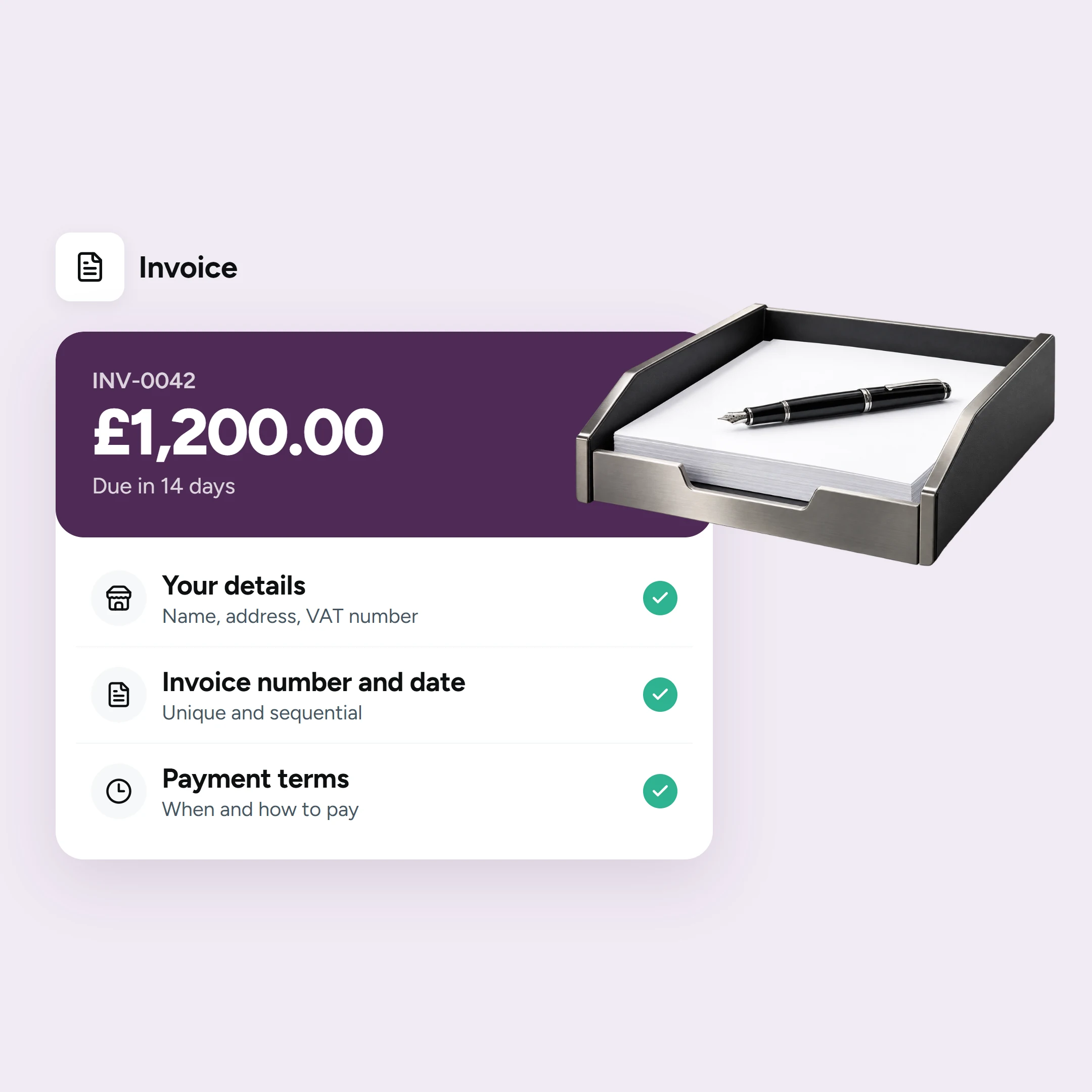
A basic UK invoice should clearly show that it is an invoice, a unique identifying number, your business name and address and contact details, the customer’s name and address, a description of the goods or services, the date of supply and the invoice date, the amount owed and the payment terms. If you are not VAT registered, you must not charge or show VAT.
If you are VAT registered and selling to another VAT-registered business, you must issue a full VAT invoice, which HMRC requires to include more detail:
- A unique, sequential invoice number.
- The invoice date, and the tax point (time of supply) if it is different.
- Your business name, address and VAT registration number.
- The customer’s name and address.
- A description of the goods or services supplied.
- For each item: the unit price excluding VAT, the quantity, the VAT rate applied, and the amount payable excluding VAT.
- The total amount of VAT charged, shown in pounds sterling.
- The rate of any cash discount offered.
Sole traders must include their personal name and any trading name they use. When a trading name appears, the invoice must also provide an address where legal documents can be delivered.
Limited companies must use the full company name shown on their certificate of incorporation. If the invoice names one company director, it must name all directors.
VAT Invoice Requirements
Only a VAT-registered business can charge VAT. If a VAT-registered business makes a taxable sale to another VAT-registered business, it will usually need to provide a VAT invoice.
A full VAT invoice must also show the supplier’s VAT registration number, tax point, quantity or extent of the supply, unit prices excluding VAT, applicable VAT rates and the VAT amount separately.
Eligible retail sales worth £250 or less, including VAT, can use a simplified VAT invoice with fewer details. VAT invoices generally need to be issued within 30 days of the tax point.
The format depends on the value and circumstances of the transaction, so businesses should check the current HMRC VAT guidance where needed.
Types of Invoice
Types of Invoice
The invoice used will depend on the timing and purpose of the charge.
| Type | When it is used |
|---|---|
| Standard invoice | Requests payment after goods or services have been supplied |
| VAT invoice | Records a taxable sale made by a VAT-registered business |
| Pro forma invoice | Shows the expected cost before the final invoice is issued |
| Recurring invoice | Bills a customer regularly for an ongoing service or subscription |
| Credit note | Reduces or cancels an amount charged on an earlier invoice |
A pro forma invoice is a preliminary document rather than a valid VAT invoice. For example, it may be sent before an order to confirm the expected cost. The business issues the final invoice at the appropriate point in the transaction.
How to Create and Send an Invoice
You can create invoices using a template, accounting platform or dedicated invoicing system. Whichever method you choose, follow a consistent process.
1. Confirm the customer’s details
Check the customer’s full name or company name, billing address and accounts-payable contact. Ask whether the invoice needs a purchase order number, project code or departmental reference.
2. Add a unique invoice number
Use a clear numbering sequence such as INV-2026-001. Each invoice must have its own number so that both parties can identify and track it.
3. Describe what was supplied
Explain the goods or services clearly enough for the customer to recognise the charge. “Website maintenance for August 2026” is more useful than “professional services.”
Include quantities, dates, rates or hours where they help explain the total.
4. Calculate the amount owed
Show each charge, any discount, the subtotal, applicable VAT and the final amount. Check that the VAT rate and calculation match the supply.
5. Set the payment terms
State when the invoice payment is due. A specific date is clearer than relying on “30 days” alone.
For example:
Payment terms: 30 days
Payment due: 30 September 2026
UK businesses can agree their own terms, including advance payment, deposits and staged payments. Where no payment date has been agreed, the customer must generally pay within 30 days of receiving the invoice or the goods or services.
6. Include a way to pay
Add clear bank details, a payment reference or a secure payment link. Check every detail before sending the invoice to the customer’s billing contact.
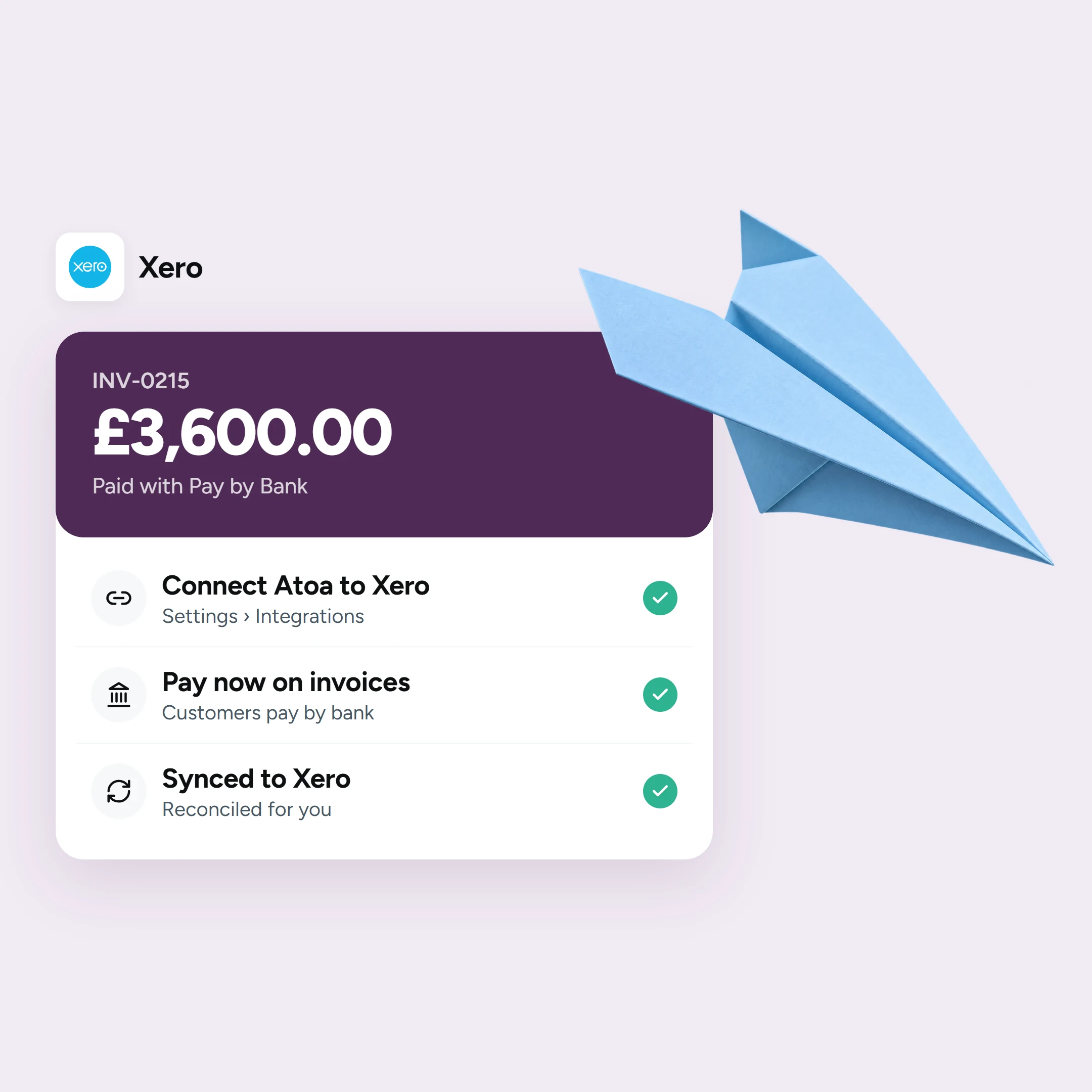
Many businesses use accounting software such as Xero, QuickBooks or Sage to generate sequential numbers, store customer information and track outstanding invoices.
How to Get an Invoice Paid Faster
Late payment often begins with friction rather than disagreement. The invoice may go to the wrong person, require a missing purchase order or provide unclear payment instructions.
Sending the invoice promptly is the first step. It should also contain an exact due date and a payment method the customer can use without asking for further information.
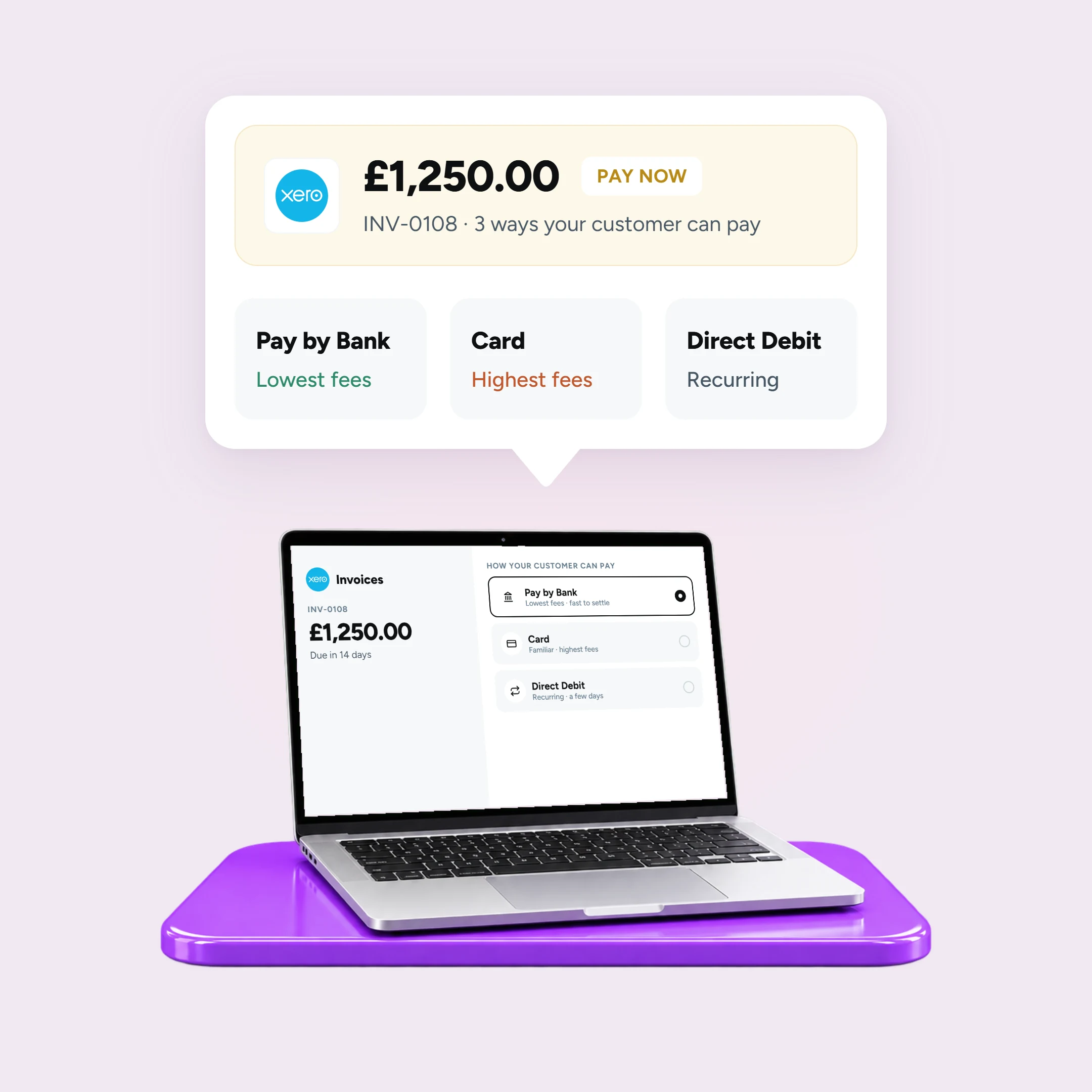
A payment link can make the process more direct. With Atoa invoice payments, the customer receives an invoice containing a “Pay now” link. They can choose Pay by Bank or card from the payment page.
For Pay by Bank, the customer selects their bank and approves the payment in their banking app. They do not need to copy account details or enter a payment reference manually.
After the payment is completed, the invoice status updates in the Atoa dashboard. Businesses can see whether an invoice is sent, partially paid, paid or overdue, making it easier to match payments with invoices.
Pay by Bank payments settle instantly for most smaller businesses through Faster Payments. Larger businesses may receive funds on the next working day, depending on their settlement arrangement.
Common Invoicing Mistakes to Avoid
Small invoicing errors can delay approval and payment. Before sending an invoice, check for these common problems:
- Using a duplicate or missing invoice number
- Entering the wrong customer name, address or billing contact
- Giving a vague description of the goods or services supplied
- Leaving out required VAT information
- Failing to include a specific payment due date
- Omitting a purchase order number requested by the customer
- Providing incorrect or unclear payment instructions
Keep a copy of the invoice with the related contract, order or delivery record. If payment becomes overdue, include the invoice number, amount and due date in each reminder.
Frequently Asked Questions
What is an invoice?
An invoice is a document a business sends to request payment for goods or services. It records what was supplied, the amount owed and the payment terms.
What must a UK invoice include?
A UK invoice must include a unique number, the seller’s and customer’s details, a description of the supply, the invoice and supply dates, the amounts charged, applicable VAT and the total owed.
Can I send an invoice without being VAT registered?
Yes. Any business can issue an invoice. Only VAT-registered businesses can charge VAT and issue VAT invoices.
How long does a customer have to pay an invoice?
The agreed payment terms apply. If no payment date has been agreed, payment is generally due within 30 days of the customer receiving the invoice or the goods or services.
What is a pro forma invoice?
A pro forma invoice is a preliminary document showing the expected details and value of a transaction. It is commonly issued before the final invoice and cannot serve as a VAT invoice.
How can a customer make an invoice payment online?
A business can add a secure payment link to the invoice. With Atoa, customers can open the link and pay by bank or card, while the invoice status updates in the business’s dashboard.
See how Atoa invoice payments let customers pay directly from an invoice, or book a demo to discuss your payment process.
Turn your invoices into instant payments: see how Atoa adds a Pay by Bank link so you get paid in seconds and reconcile automatically, or book a demo.
Sources
Atoa Payments Limited is authorised by the Financial Conduct Authority as an Authorised Payment Institution to provide account information and payment initiation services (FRN 1007647). Card-payment services are provided by Rapyd Payments Limited (FRN 900688).
SHARE ARTICLE
Share link copied!