
Ready to get started?
Easily integrate next-generation payments and financial data into any app. Build powerful products your customers love.
SHARE ARTICLE


 Share link copied!
Where QR code payments are right now
QR codes were already becoming popular before the pandemic. Lockdowns accelerated everything. Contactless and mobile payments became the default for millions of people who had never used them before.
Today, QR codes are used in almost every setting. From restaurant bills to retail checkouts to parking. But not all QR payments are created equal. Plenty still route through traditional card networks, which means transaction fees, settlement delays, and the usual card processing infrastructure underneath. That is starting to change.
Open banking payments are reshaping the picture
There’s a major shift happening in the payments industry about QR codes. And it also includes what sits underneath them.
Open banking payments move money directly from a customer’s bank account to yours, using the Faster Payments network. This means, no card network in the middle, no interchange fees, no chargebacks. The customer authenticates through their own Bank app, and the payment lands in your account, usually within seconds.
According to the FCA’s open banking progress update, there are now more than 16 million active open banking users in the UK, with open banking payments growing 53% year on year in 2025. That is not a niche anymore. That is a payment method that has reached mainstream scale.
For businesses, pairing a QR code with an open banking payment rather than a card payment means lower costs, faster settlement, and a cleaner checkout experience. The customer scans, authenticates in their bank app, and it is done.
What is driving payment industry trends right now
A few things are pushing the payments industry in the same direction at once.
The PSR’s ongoing work on APP fraud liability has put more pressure on banks and payment providers to build stronger authentication into every transaction. Open banking payments, which require the customer to authenticate directly through their bank, are well placed here.
At the same time, businesses are getting more serious about the cost of card acceptance. Processing fees that seemed manageable at low volumes become a real line item as turnover grows. The future of payments, for many UK businesses, involves reducing that dependency.
Biometrics, NFC, and digital wallets are all part of the picture too. But open banking payment infrastructure is increasingly what sits underneath them, handling the actual movement of money.
Which UK banks support open banking?
All of the major UK high street banks are required to support open banking under FCA regulation. That includes Barclays, HSBC, Lloyds, NatWest, Santander, Halifax, Monzo, Starling, and more. Any customer with a UK personal or business bank account at a regulated bank can make an open banking payment.
That is one of the practical advantages of the UK’s digital payment system. The infrastructure is already there, sitting inside bank apps that millions of people use every day.
What this means for businesses taking payments
The direction of travel is clear. Customers want faster, simpler ways to pay. Businesses want lower fees and instant settlement. Regulators want stronger authentication and less fraud. Open banking payments tick all three.
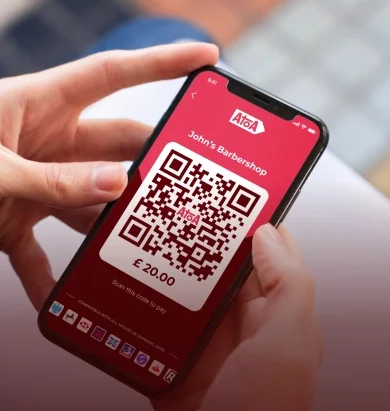
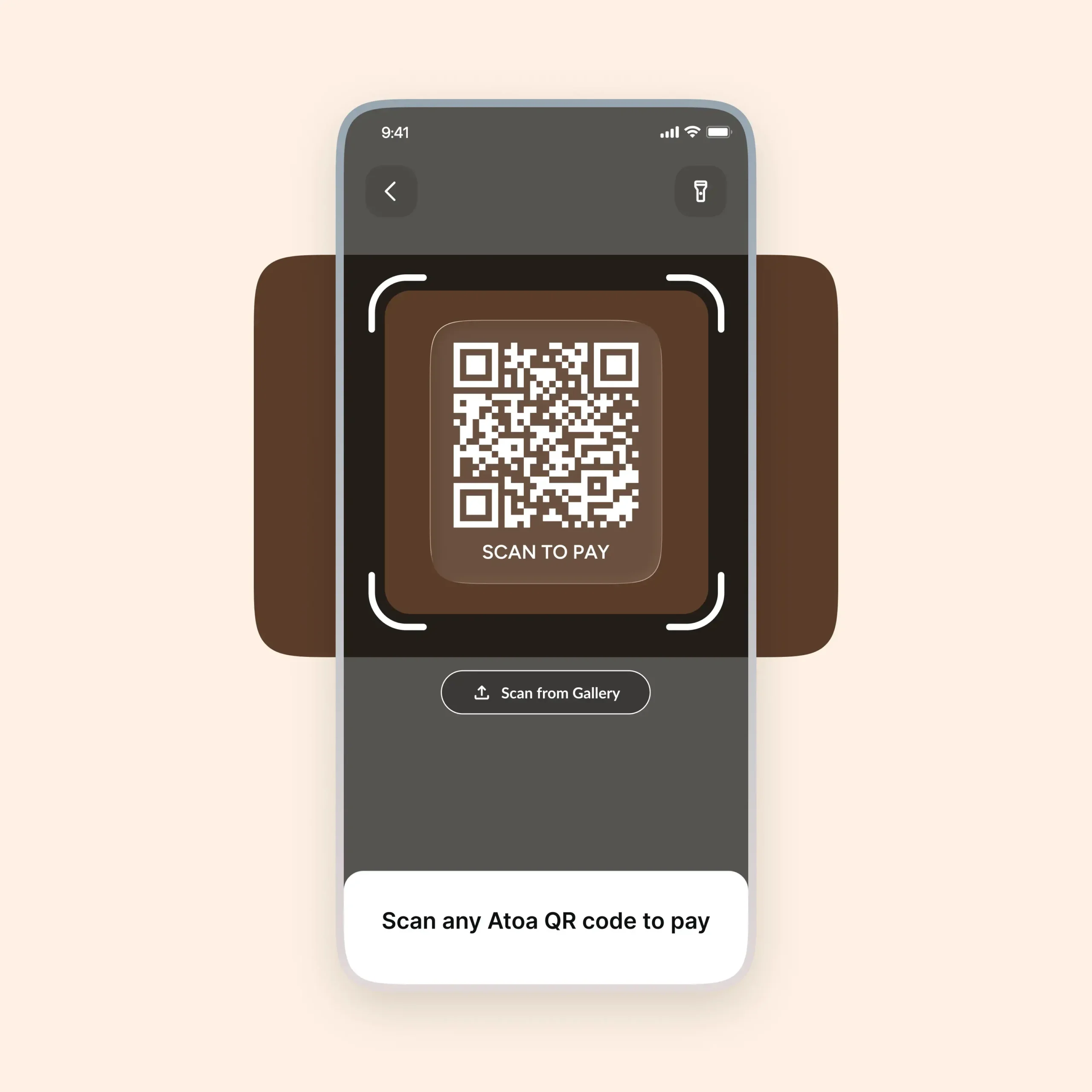
Pay by Bank with Atoa is built on exactly this infrastructure. Customers scan a QR code or tap a payment link, authenticate through their bank app, and the money moves instantly via the Faster Payments network. No card data, no chargebacks, and no waiting days for settlement.
If you still need to accept cards, Atoa’s card payments sit alongside Pay by Bank, so customers get the choice and businesses get the flexibility.
The future of payments in the UK is not one method replacing another. It is giving customers more ways to pay and making sure the ones that work best for your business are front and centre.
FAQs
What are open banking payments?
Open banking payments is a safe way for businesses to move money directly from a customer’s bank account to a business’s account, using the Faster Payments network. The customer authenticates the payment through their own Bank app.
Which UK banks have open banking?
All major regulated UK banks support open banking, including Barclays, HSBC, Lloyds, NatWest, Santander, Halifax, Monzo, and Starling. Any customer with a UK bank account at a regulated bank can make an open banking payment.
What are the 4 digital payment methods?
The main digital payment methods used in the UK are card payments (credit and debit), digital wallets (like Apple Pay and Google Pay), bank transfers, and open banking payments. The lines between them are increasingly blurred, with open banking infrastructure now underpinning several wallet and transfer products.
What companies are in the payments industry?
The UK payments industry includes card networks like Visa and Mastercard, card processors like Stripe, Square, and Worldpay, and open banking payment providers like Atoa. There are also digital wallet providers, Buy Now Pay Later services, and the banks themselves, all operating across different parts of the payments stack.
SHARE ARTICLE
Share link copied!