
Ready to get started?
Easily integrate next-generation payments and financial data into any app. Build powerful products your customers love.
SHARE ARTICLE


 Share link copied!
Open banking has gone from niche to normal. By July 2025 it passed 15 million UK users (roughly one in three adults), and UK businesses and customers made 351 million open banking payments across the year, up 57% on 2024 (Open Banking Limited). A big chunk of that is Pay by Bank: customers paying a business straight from their banking app.
The reason businesses are moving is cost. UK card transactions topped £1 trillion in 2024 (UK Finance), and accepting those cards isn’t cheap. Once you add interchange, scheme fees and your acquirer’s markup, total acceptance costs commonly land between 1.5% and 3.4% per transaction. Those costs have been climbing, too: the Payment Systems Regulator found card scheme and processing fees rose by more than 30% in real terms between 2019 and 2024.
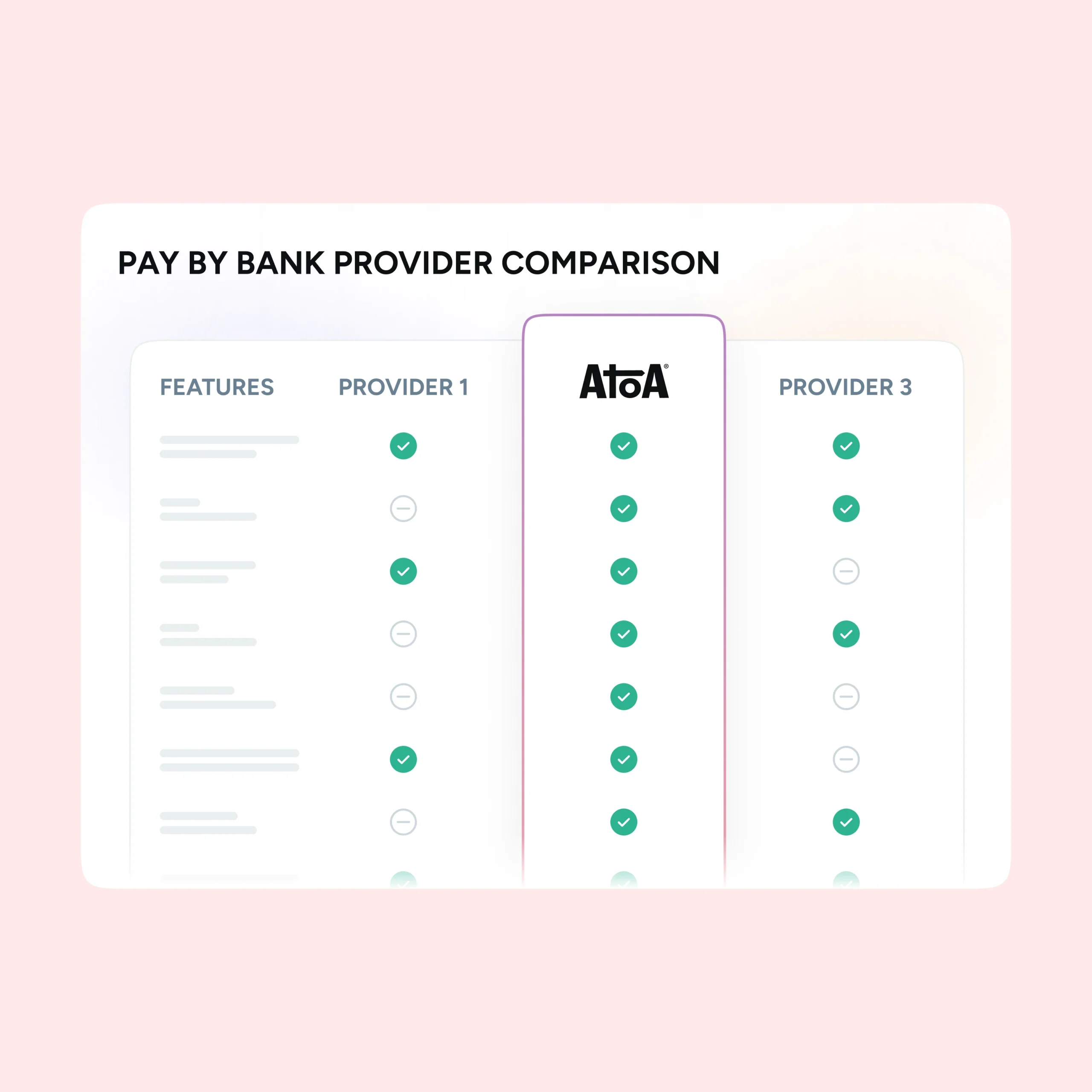
So Pay by Bank is worth a look. But the providers behind it vary a lot, and the labels all sound the same. Here’s how to compare them properly. (If you’re new to it, start with our explainer on Pay by Bank.)
Fees, and whether the pricing is honest
Look past the headline rate and check the full picture:
- The percentage, and whether VAT sits on top. Atoa’s Pay by Bank starts at 0.7% + VAT, for instance.
- Any fixed per-transaction add-on (online payments often add around 20p).
- Monthly fees, terminal rental or PCI charges hiding underneath.
- Contract length and early-exit terms.
A provider that publishes its rates is telling you something, and our side-by-side of open banking payment providers shows which ones do and what their prices come to on a real month. If you can’t find the price without a sales call, treat that as a flag. Compare against the Atoa pricing as a benchmark for what “transparent” should look like.
How fast you actually get paid
- Many providers just settle funds from customer to merchant bank account. By not doing end of day bulk payouts this can clutter up your bank statement and make it difficult for your business to manage payments.
- Not providing end of day payouts means refunds become heavily manual as you don’t have the customer’s bank details stored and must ask the customer to provide you bank details so you can do a manual refund. With end of day payouts, you can trigger a refund via API or one click, as you have funds available and know the customers details.
Whether it works in person and online
This is the one most businesses get wrong. Plenty of “Pay by Bank” providers are online-only. If you take money at a counter, at a table, or on a job, you need both. Check for:
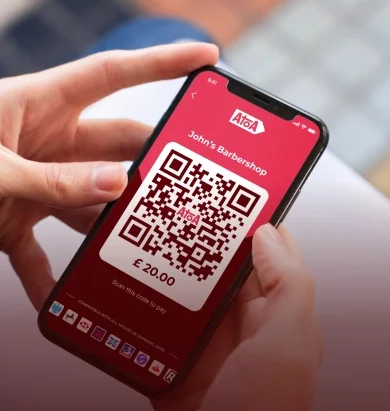
- In-person options: a QR code on a stand, a payment link, or a terminal.
- An online checkout for your website.
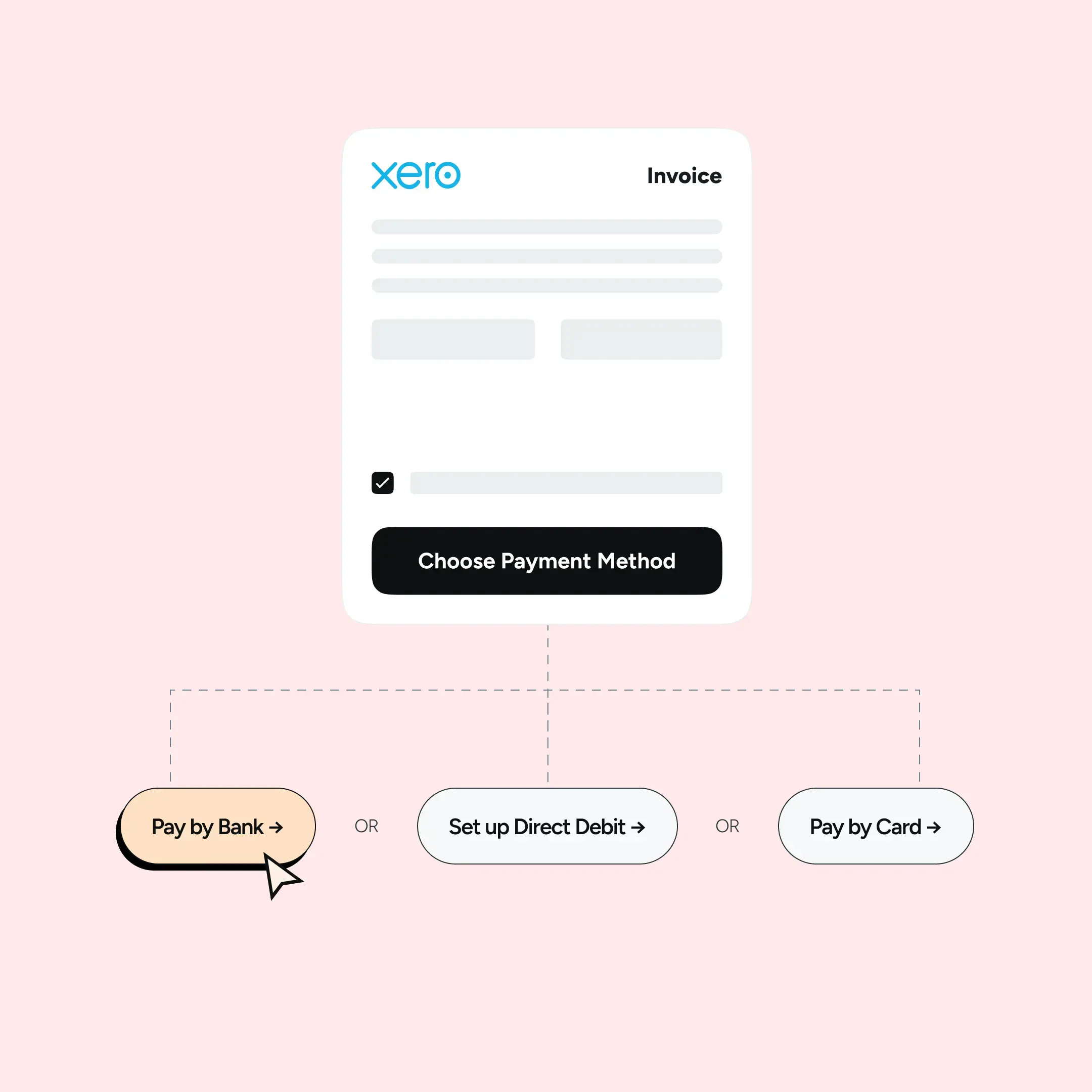
- The option to take card payments too, for customers who still prefer a card.
One provider that covers both saves you running two systems and reconciling them by hand.
How it handles the messy edge cases
Add verifying payment without having to check your company’s bank account. Ask exactly how it deals with:
- Full and partial refunds.
- Deposits and partial payments.
- High-value transactions.
- Payments that get stuck in “pending”.
- Verifying a payment without having to check your company’s bank account.
Watch the limits, too. Many providers cap out at around £2,000 a payment, while Atoa transacts all the way up to each bank account’s own bank transfer limit, which matters for deposits and big-ticket sales. A lot of open banking tools handle a clean payment fine and then leave you stranded on the exceptions, so test these before you sign anything.
UK bank coverage
Pay by Bank only works if your customer’s bank is connected. Check that the provider supports all the major UK banks, so you’re not turning away the customer at the worst possible moment, the point of paying.
Recurring payments
If you bill on a schedule, memberships, subscriptions, retainers, check whether the provider supports recurring open banking payments via Variable Recurring Payments (VRP), and how that stacks up against Direct Debit on cost and settlement speed. VRP is one of the fastest-growing parts of open banking, so it’s worth understanding even if you don’t need it today.
Integrations with your stack
A provider should fit the tools you already run, not replace them. Look for ready integrations with your accounting software (Xero, QuickBooks, Sage), your e-commerce platform (WooCommerce, Magento, Shopify), and your EPOS, plus an API for anything custom. Atoa’s integrations page is a useful yardstick for what “works with your stack” should actually mean.
Security and regulation
Money is involved, so the bar is high. Confirm the provider is authorised by the Financial Conduct Authority (FCA), holds recognised certifications such as ISO 27001 and SOC 2, and uses Strong Customer Authentication, so the customer approves each payment in their own banking app.
One real advantage of Pay by Bank: because the customer authorises it directly, there are no card-style chargebacks.
Two things are easy to miss. First, if a provider gives you end-of-day payouts, check that your funds sit in a segregated, safeguarded account held in your business name.
Second, ask whether the provider is FCA-authorised and connects directly with the banks, or whether it uses a third-party infrastructure provider and piggybacks on their licence. Piggybacking means less visibility and control over payments, which can hurt your payment approval rates.
Atoa holds its own Authorised Payment Institution licence and connects directly with all leading UK banks for account information (AIS) and payment initiation (PIS).
Support and onboarding
Check there’s a UK-based team to set you up and to answer the phone when something breaks. Quick onboarding and a free trial usually mean a provider is confident in the product. It’s also worth reading a provider’s Trustpilot reviews before you commit, to see how they handle support, refunds and payouts day to day.A quick checklist
- Before you choose, make sure you can answer yes to these:
- Is there a UK support team and no long contract?
- Is the pricing published, with VAT and add-ons clear?
- Do funds settle as fast as I need, with end-of-day payouts?
- Does it work both in person and online?
- Can it handle refunds, partial, high-value and pending payments?
- Does it cover all the major UK banks?
- Does it do recurring payments if I need them?
- Does it connect to my accounting, e-commerce and EPOS tools?
- Is it FCA authorised and properly certified?
- Does it hold my funds in a safeguarded account and connect directly with the banks?
How Atoa measures up
Atoa was built around this list: Pay by Bank from 0.7% + VAT, in-person and online in one place, end-of-day payouts with one-click refunds, real handling of refunds, partial and high-value payments, VRP for recurring billing, integrations across accounting, e-commerce and EPOS, and an Authorised Payment Institution licence that connects directly with the UK banks.
Want to see it against your current setup? Book a demo and our UK team will run your numbers.
Frequently Asked Questions
What should I look for in a Pay by Bank provider?
Check the fees (and whether they’re published), settlement speed and end-of-day payouts, whether it works in person and online, how it handles refunds, partial and high-value payments, UK bank coverage, integrations, FCA authorisation and safeguarding, whether it connects directly with the banks, and contract terms.
Is Pay by Bank cheaper than card payments?
Usually, yes, because it skips the card networks. UK card acceptance commonly costs 1.5%–3.4% all-in (interchange plus scheme and acquirer fees), while Atoa’s Pay by Bank starts at 0.7% + VAT. Your exact saving depends on your card mix and volume.
Are Pay by Bank payments safe?
Yes. The customer approves each payment in their own banking app using Strong Customer Authentication, and no card details are shared. With an FCA-authorised provider, it’s a secure way to get paid. See how it works on our Pay by Bank page.
Sources
- Open banking adoption and payment volumes (15M+ users; 351M payments in 2025, +57%): Open Banking Limited, Open Banking and Open Banking
- UK card transactions topped £1 trillion in 2024: UK Finance, UK Finance
- Card scheme and processing fees rose 30%+ (2019–2024): Payment Systems Regulator (card-fees market review), PSR
- Card acceptance cost ranges (1.5%–3.4% all-in): industry analysis; verify against your own acquirer statements.
SHARE ARTICLE
Share link copied!