
Ready to get started?
Easily integrate next-generation payments and financial data into any app. Build powerful products your customers love.
SHARE ARTICLE


 Share link copied!
Running a private physiotherapy practice involves a lot more than clinical work. There is scheduling, patient communication, and somewhere in the middle of all of it, getting paid. For many practices, physiotherapy payment processing is still more manual than it needs to be. Invoices sent by email and chased days later, card readers at reception, the occasional awkward conversation about an overdue payment.
The options available to UK practices have improved considerably, and patients coming to private clinics in 2026 expect the same convenience paying for their session as they do everywhere else in their lives. Here is a clear look at what is available and how each one works.
The no-show problem and why deposits matter
Before getting into payment methods, it is worth addressing the no-show. According to NHS England, up to 10% of physiotherapy appointments are missed every year in the UK. For a private practice, a missed session without enough notice is lost revenue with no way to recover it.
Collecting a deposit at the time of booking is one of the most effective ways to reduce this. When a patient has already committed financially, they are far more likely to attend or give notice in time to reschedule. The right payment setup makes collecting a deposit easy, without any awkward manual steps.
Payment methods for physiotherapy practices
Every practice is different, but these are the payment methods most relevant to UK physiotherapy clinics in 2026.
Pay by Bank
Pay by Bank is the payment method that makes the most meaningful difference to processing costs for a private physio clinic. The patient approves the payment directly in their Bank app using Face ID, fingerprint or a passcode, and the money moves instantly from their account to yours via the UK’s Faster Payments network.
Fees can be up to 50% lower than standard card processing. There are also no chargebacks, since every payment is authenticated by the patient’s own bank. For clinics processing a full diary of appointments, that cost difference adds up quickly across the month.
In-person QR code
A QR code is a clean option for clinic settings. A QR code displayed on a stand, screen, or tablet at reception lets patients scan and pay from their phone without any card machine or physical handover. The patient scans, selects their payment method (Pay by Bank or card) and the payment is confirmed instantly.
Card payments
Card payments remain widely used and are what most patients default to. Visa, Mastercard, American Express, Apple Pay, and Google Pay are all options patients expect to be available. Card payments are well understood, easy for patients, and a sensible option to keep alongside Pay by Bank so that every patient can pay the way they prefer.
Payment links
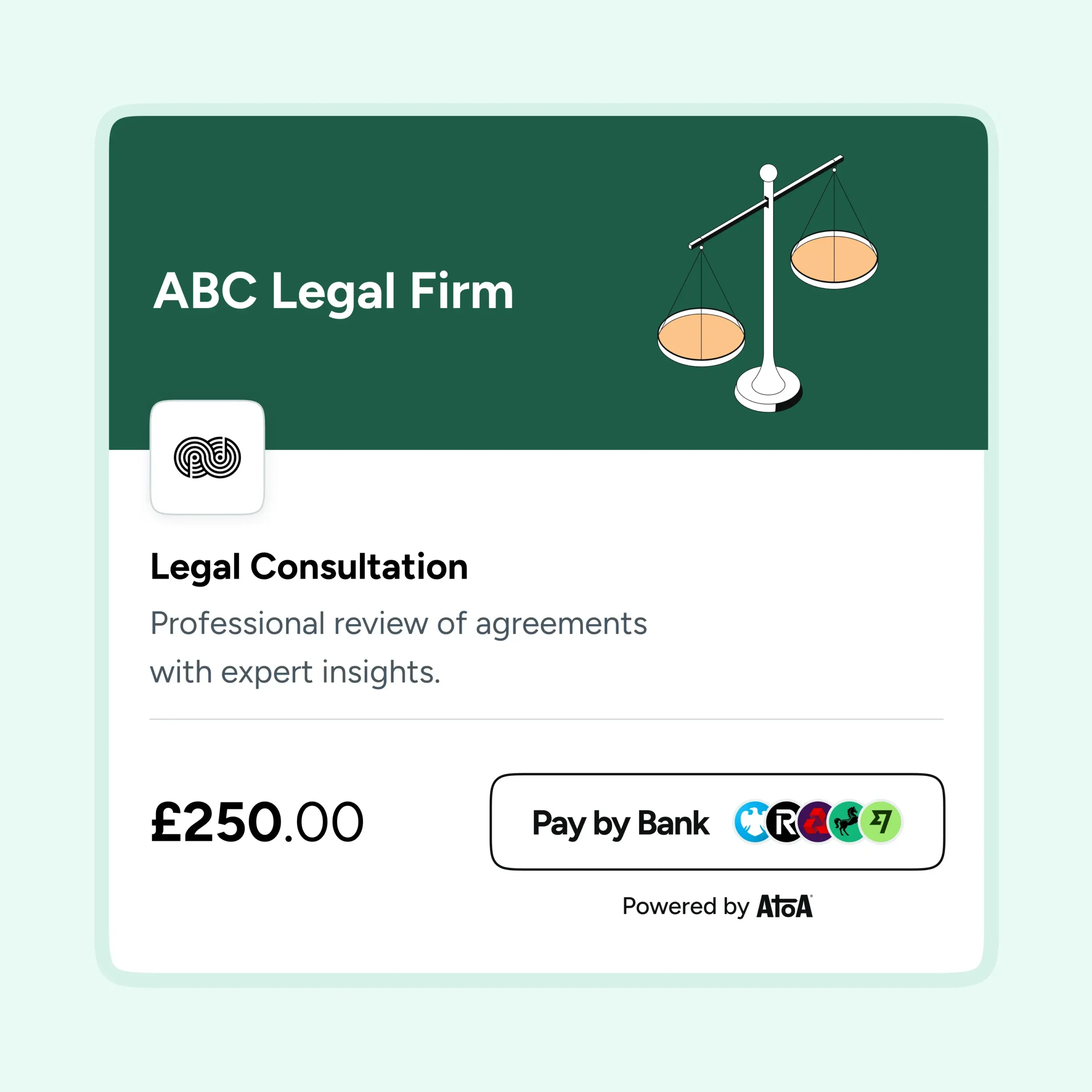
Payment links are a way of sending a request for payment to a patient by SMS or email. The patient taps the link, lands on a secure payment page, and chooses how they want to pay: Pay by Bank or card.
Payment links are particularly useful before appointments, for collecting a deposit at the time of booking, and after sessions for any outstanding balance. They work remotely, which makes them well suited to home visit physiotherapists as well as clinic-based practices.
Digital invoices
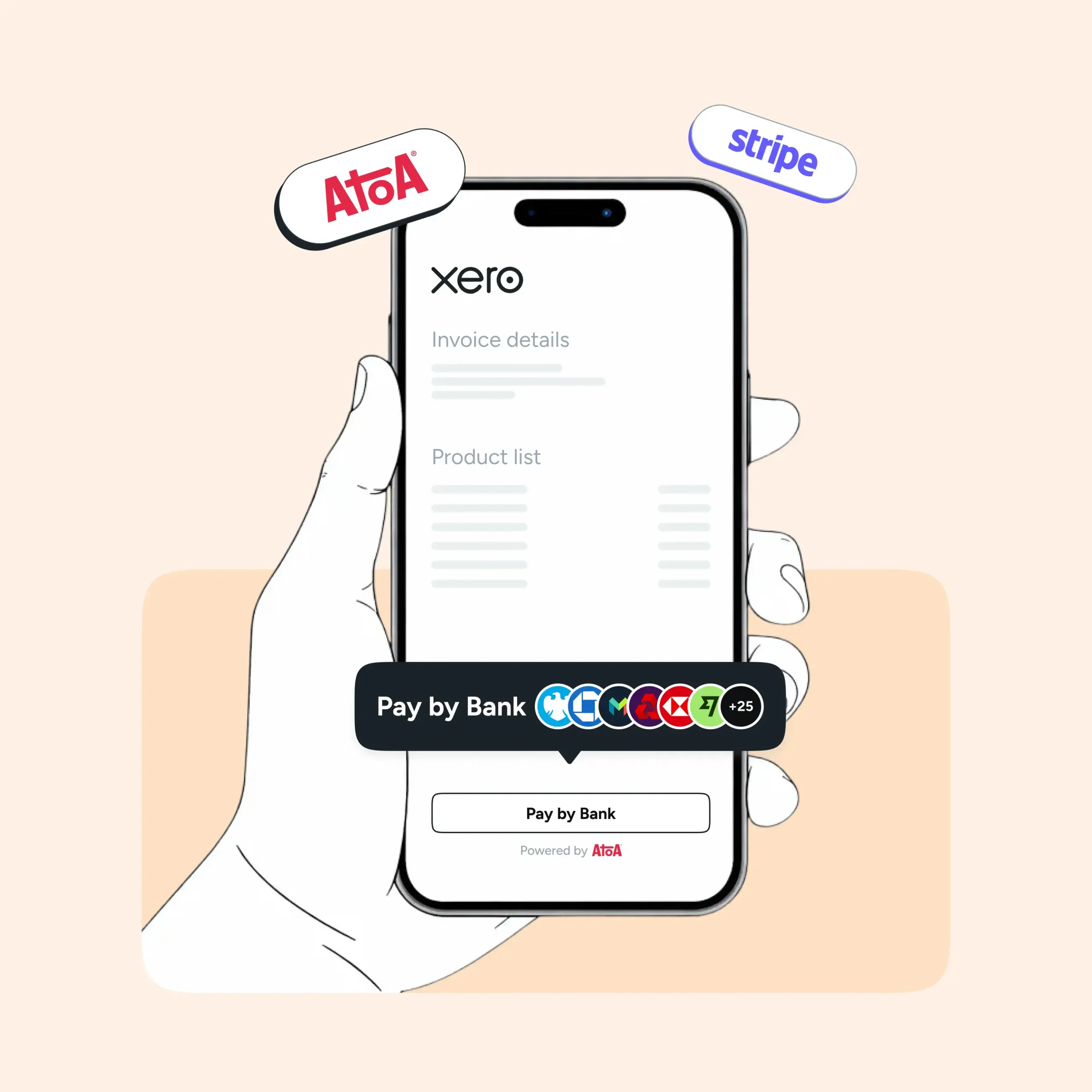
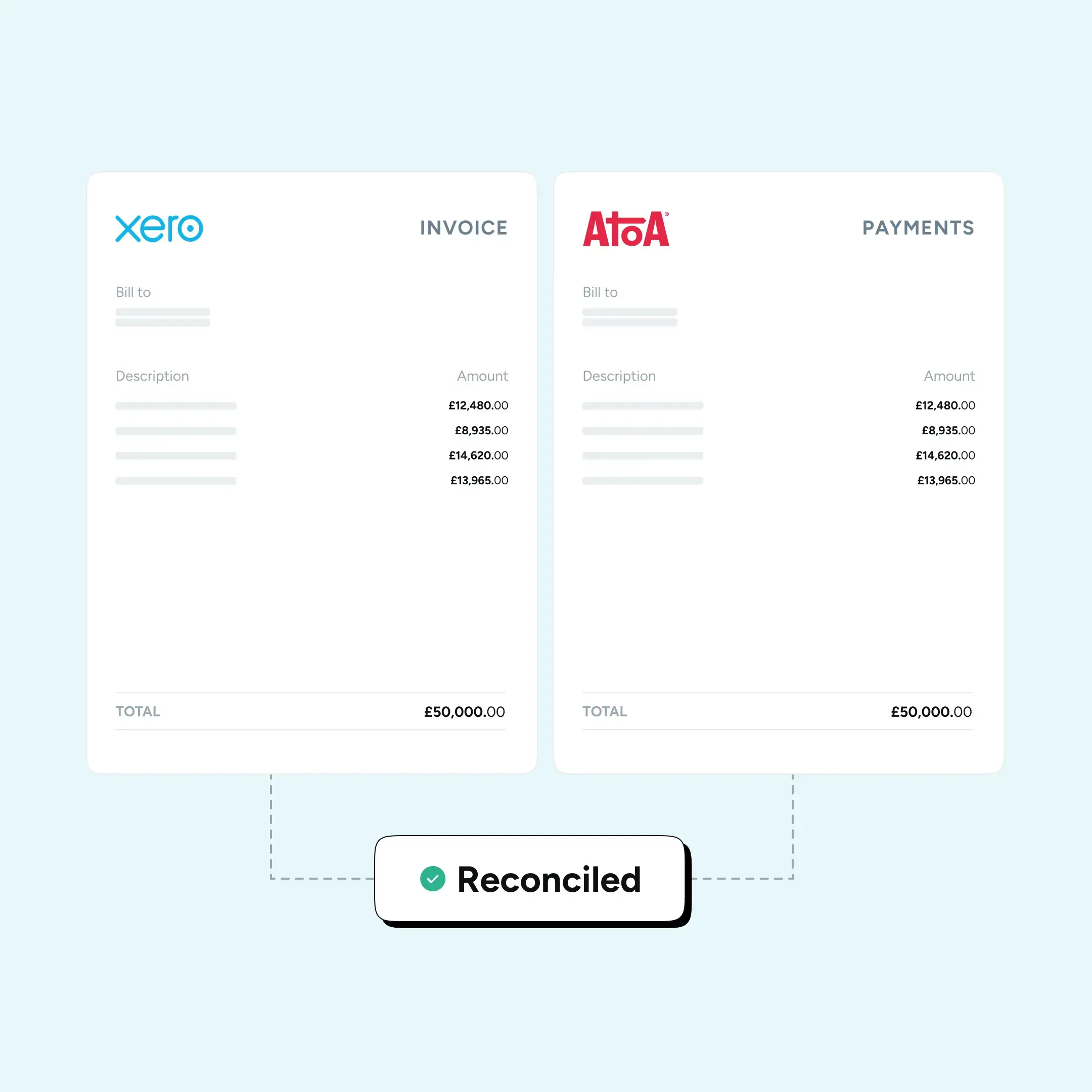
Digital invoices sent through platforms like Xero, QuickBooks, or Sage can include a Pay Now button, giving the patient the option to pay directly from the invoice using their preferred method. This keeps billing and accounting in one place and reduces the manual chasing that comes with sending a plain invoice and hoping for a bank transfer.
Insurance billing
Practices registered with major UK health insurers can often bill the insurer directly, removing the need for the patient to pay out of pocket at all. This sits separately from standard payment processing but is worth having a clear system for, particularly for practices with a high proportion of insured patients.
How Atoa supports physiotherapy payment processing
Atoa is a UK-based, FCA-authorised payment provider. It brings Pay by Bank and card payments together in one platform, without hardware, contracts, or developer setup. For physiotherapy practices, it covers several stages of the patient payment journey in one place.
- Send a payment link by SMS or email at the time of booking to collect a deposit and reduce no-shows
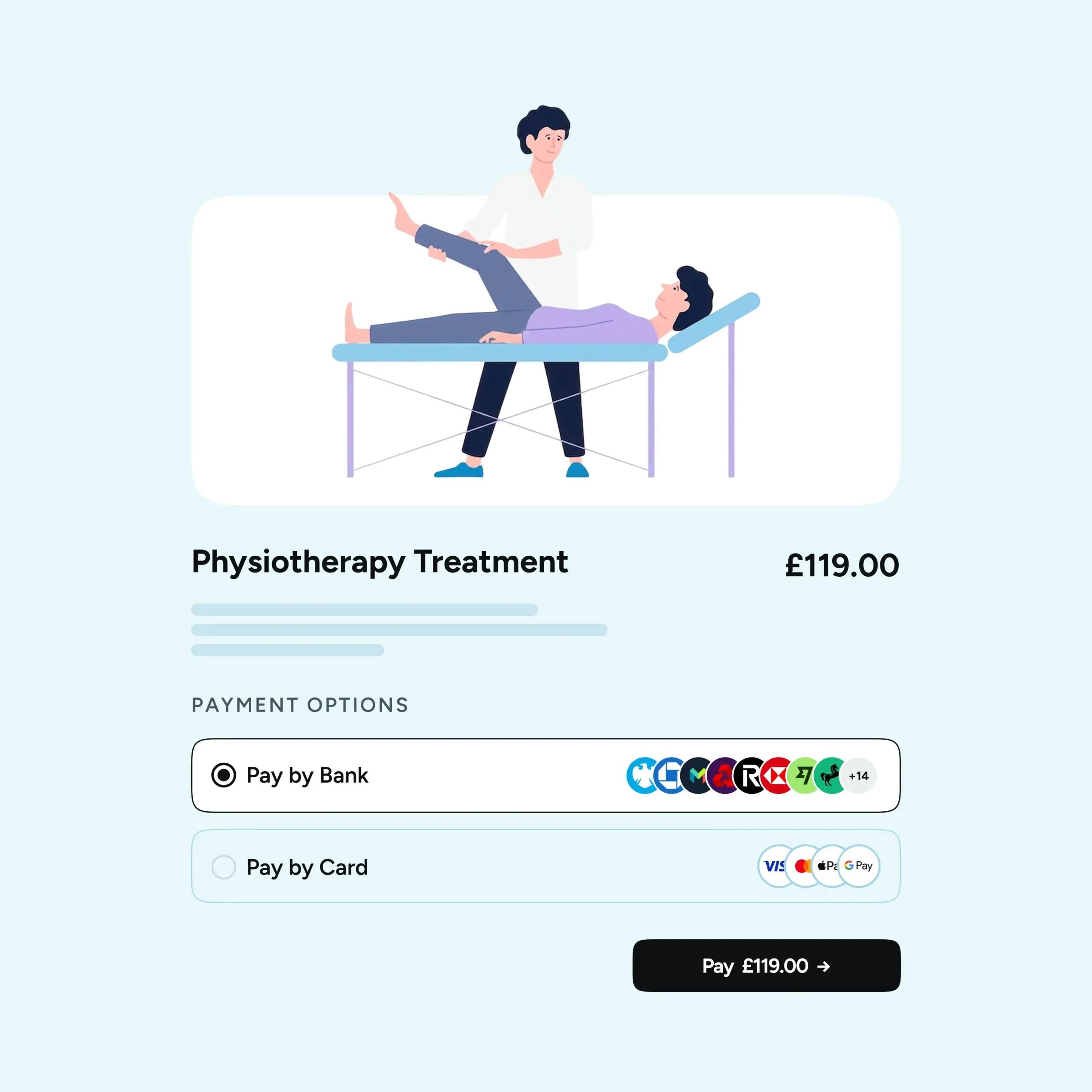
- Patients choose Pay by Bank or card, with instant confirmation either way
- In-person QR code payments at reception for patients paying on the day
- Partial payments available for higher-value treatment packages, giving patients flexibility without creating cash flow risk for the practice
- Pay by Bank fees are up to 50% lower than standard card processing
- Payments settle instantly for Pay by Bank, so your account reflects actual income without delay
Choosing the right setup for your practice
There is no single answer that works for every clinic. A multi-site practice will likely want a fuller suite of options covering in-person, remote, and online payments. A sole physiotherapist doing home visits needs something lighter and more portable. In both cases, the direction is the same: patients want to pay without friction, practices want to get paid promptly with minimal admin, and the technology to make both happen is accessible in 2026.
The physio practices that get this right are the ones that offer patients a choice, lead with the payment method that costs less to process, and remove the manual steps that slow down both collection and reconciliation. That is what good physiotherapy payment processing looks like in practice.
Want to see how Atoa works for your physiotherapy practice? Book a free demo with the UK-based team.
Frequently asked Questions
What payment methods work best for physiotherapy clinics?
The best setup for physiotherapy clinics combines Pay by Bank, card payments, in-person QR codes, payment links and digital invoices. Pay by Bank costs the least to process, while cards give patients a familiar option. Offering a choice lets every patient pay how they prefer while the clinic leads with the lower-fee method.
How can physios reduce no-shows with deposits?
Physios can reduce no-shows by taking a deposit at the time of booking. When a patient has committed financially, they are more likely to attend or give notice to reschedule. A payment link sent by SMS or email, or Atoa’s partial payments, makes collecting a deposit simple.
Can patients pay by bank or card with Atoa?
Yes, patients can pay by bank or card with Atoa in one platform. Pay by Bank lets them approve payment in their banking app, and cards remain available for anyone who prefers them. Both confirm instantly, with no card machine or developer setup needed.
How does Atoa lower clinic payment fees?
Atoa lowers clinic fees by using Pay by Bank, which skips card networks and their processing charges. Pay by Bank fees start from 0.7% plus VAT, up to 50% lower than standard card processing, and there are no chargebacks. Card payments are also available from 1.3%.
SHARE ARTICLE
Share link copied!