
Ready to get started?
Easily integrate next-generation payments and financial data into any app. Build powerful products your customers love.
SHARE ARTICLE


 Share link copied!
Shopping with AI has moved from novelty to habit faster than most people expected. Millions of UK consumers now use AI tools to research products, compare prices, and decide what to buy and increasingly, those tools can do more than just recommend. They can act.
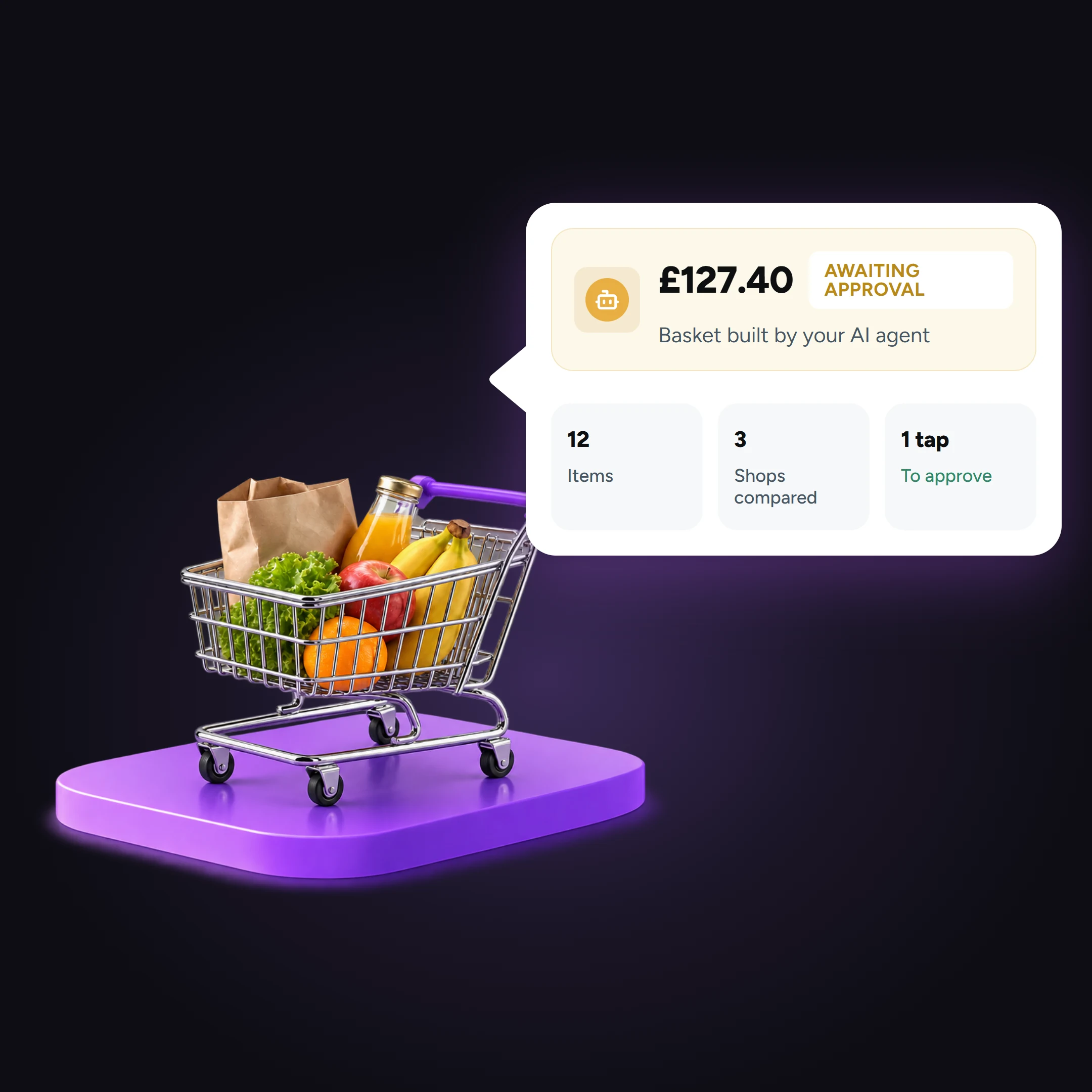
An AI shopping agent is software that shops on your behalf. You tell it what you want, it searches, compares options against your preferences, and in some cases can take the purchase all the way to checkout. The gap between “AI that suggests” and “AI that buys” is narrowing. Understanding where that line currently sits, and what it means for shoppers and merchants, is what this guide is for.
What is an AI shopping agent?
An AI shopping agent is an assistant that acts on your behalf rather than just answering questions. You give it a goal and it works through the steps to get there. For instance, if you ask it to find the best running shoes under £80, reorder office supplies when stock runs low or even book a service appointment. There are a few distinct types in use today:
- Consumer assistants such as ChatGPT and similar AI apps help you find and compare products, and in some configurations can take a purchase to checkout.
- Replenishment agents reorder household or business supplies automatically when stock drops below a threshold you set, within rules you define upfront.
- Business and procurement agents buy services or inputs on a company’s behalf, often working between software systems rather than consumer-facing websites.
What distinguishes an agent from a chatbot is not intelligence, it is action. A chatbot surfaces information. An agent does something with it.
How autonomous checkout works
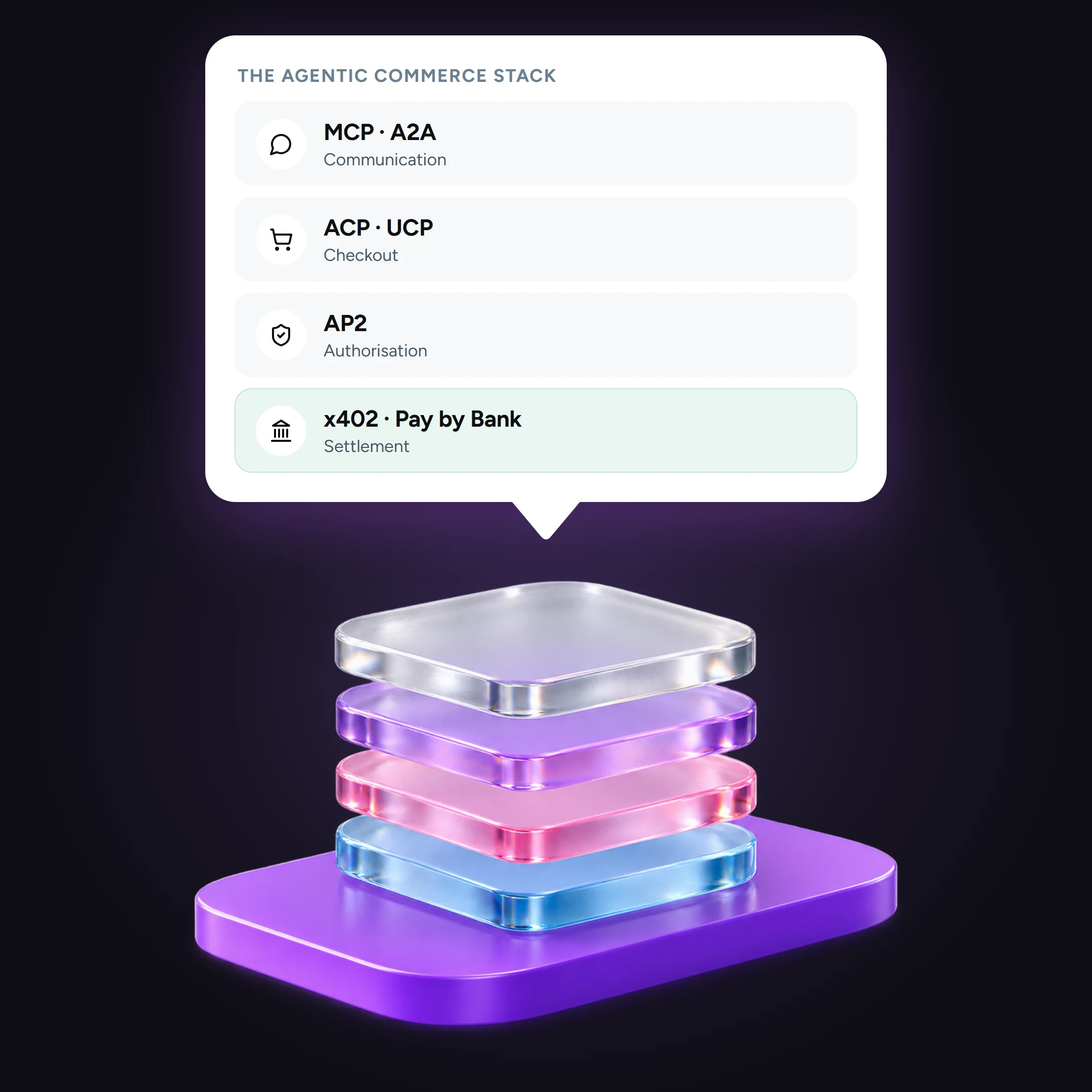
Whatever the agent, an autonomous purchase follows the same four steps: discover, decide, authorise, pay. The agent finds products, usually by reading structured data and APIs rather than a human web page. It picks one against your rules on price, brand and delivery. It checks that you actually authorised the spend, within a limit you set. Then it pays, through a checkout or payment rail built to accept an agent-initiated payment.
Underneath, this runs on a stack of open standards rather than one system: discovery, checkout, a signed proof that you authorised the purchase, and settlement. That authorisation step is the critical one. It is what separates a trustworthy autonomous payment from one that is guesswork. We explain each in the protocols behind agentic commerce; the point for shoppers and merchants is that the “authorise” step is what makes an autonomous payment trustworthy.
What happened with ChatGPT checkout
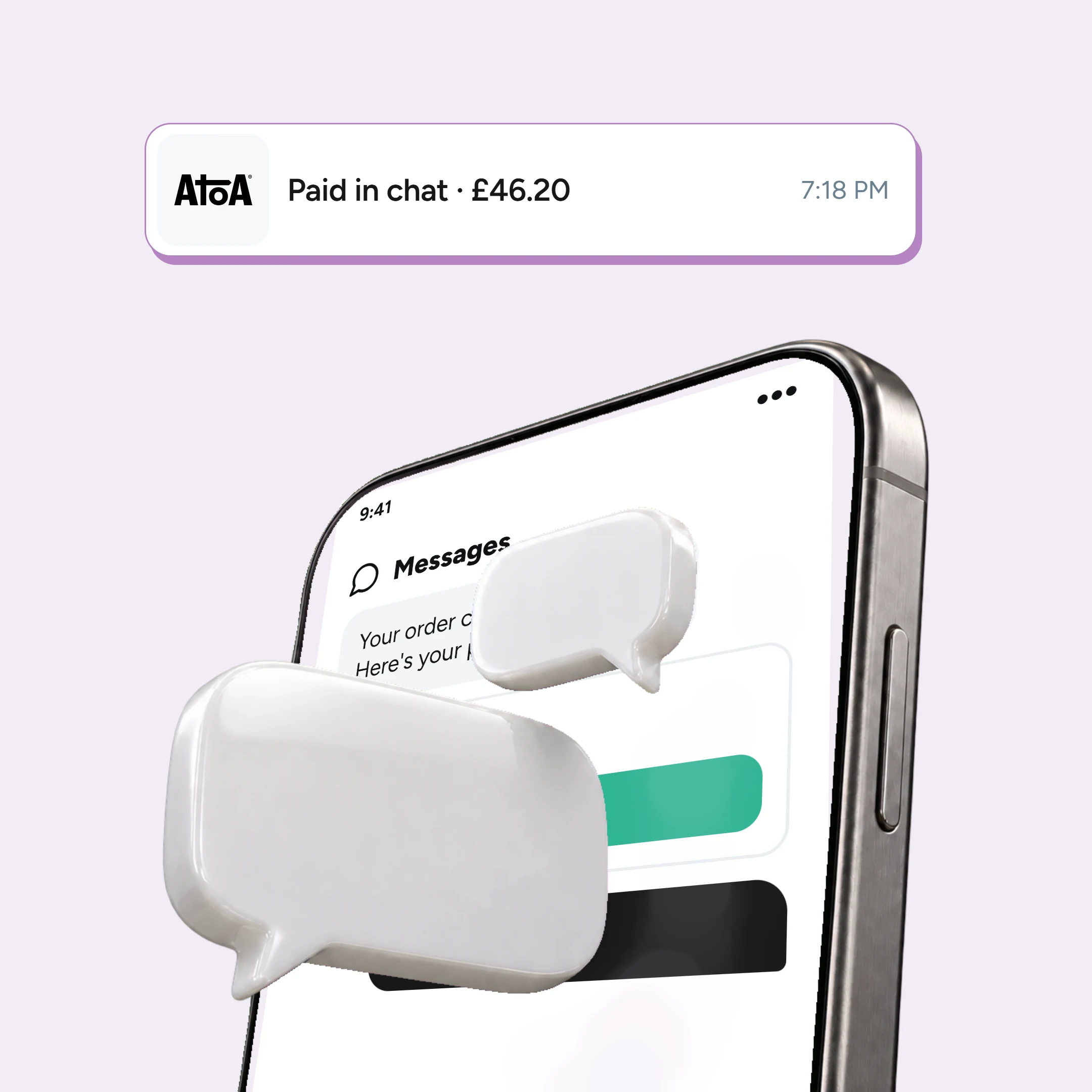
The most closely watched experiment in autonomous checkout was ChatGPT. OpenAI launched Instant Checkout on 29 September 2025, initially with Etsy and with Shopify merchants including major brands planned to follow. The idea was straightforward: let users buy directly inside the chat, with OpenAI acting as the intermediary between shopper and store.
Unfortunately, it did not work as planned. By March 2026, less than six months after launch, OpenAI quietly shelved Instant Checkout. The official explanation was that it “did not offer the level of flexibility we aspire to provide.” The underlying issue appears to have been consumer sentiment rather than purely technical obstacles. Research from Exploding Topics found that 77% of shoppers had used AI to help with a purchase decision in the previous six months but when asked about AI tools that could complete purchases autonomously, 41% described their attitude as “sceptical” and 33% as “suspicious.” The median amount consumers trusted an AI to spend on their behalf was zero.
OpenAI responded by pivoting to a discovery-first model. ChatGPT now surfaces product recommendations and routes shoppers to the merchant’s own checkout. The Agentic Commerce Protocol (ACP), developed with Stripe and now open-source, lives on as the standard for how agents connect to merchant catalogues.
The takeaway is not that autonomous shopping failed, but that it found its shape: discover in AI, buy on site. AI is increasingly where people research and choose; the payment still tends to complete on the merchant’s own checkout.
The broader protocol landscape
ChatGPT is not the only player building infrastructure for agentic commerce. Several parallel efforts are under way:
Google’s Agent Payments Protocol (AP2) is designed to facilitate actual transactions led by AI agents, working across payment methods. PayPal, Revolut, and Mastercard are among those involved. Unlike the ACP pivot, AP2 remains focused on completing purchases, not just discovery.
Visa Intelligent Commerce establishes a system of verification that allows agents to make pre-authorised payments on a user’s behalf, including setting up instructions for future payments.
Stripe’s Machine Payments Protocol allows businesses already using Stripe to accept AI-initiated payments in a small number of lines of code.
The direction across all of these is consistent: build the infrastructure for agents to pay, but keep the human in control of authorisation.
Where autonomous shopping is today
Adoption is early but real. Consumer interest in AI-assisted shopping is strong. Research suggests the majority of shoppers are already using AI tools for product research. What remains limited is the appetite for full autonomy: people want AI to help them choose, not to choose for them.
That gap is the trust problem the current wave of protocols is trying to close. It hinges on three things: clear spending limits set by the user, a provable authorisation step, and a payment rail that is hard to reverse once it has gone through.
What it means for shoppers
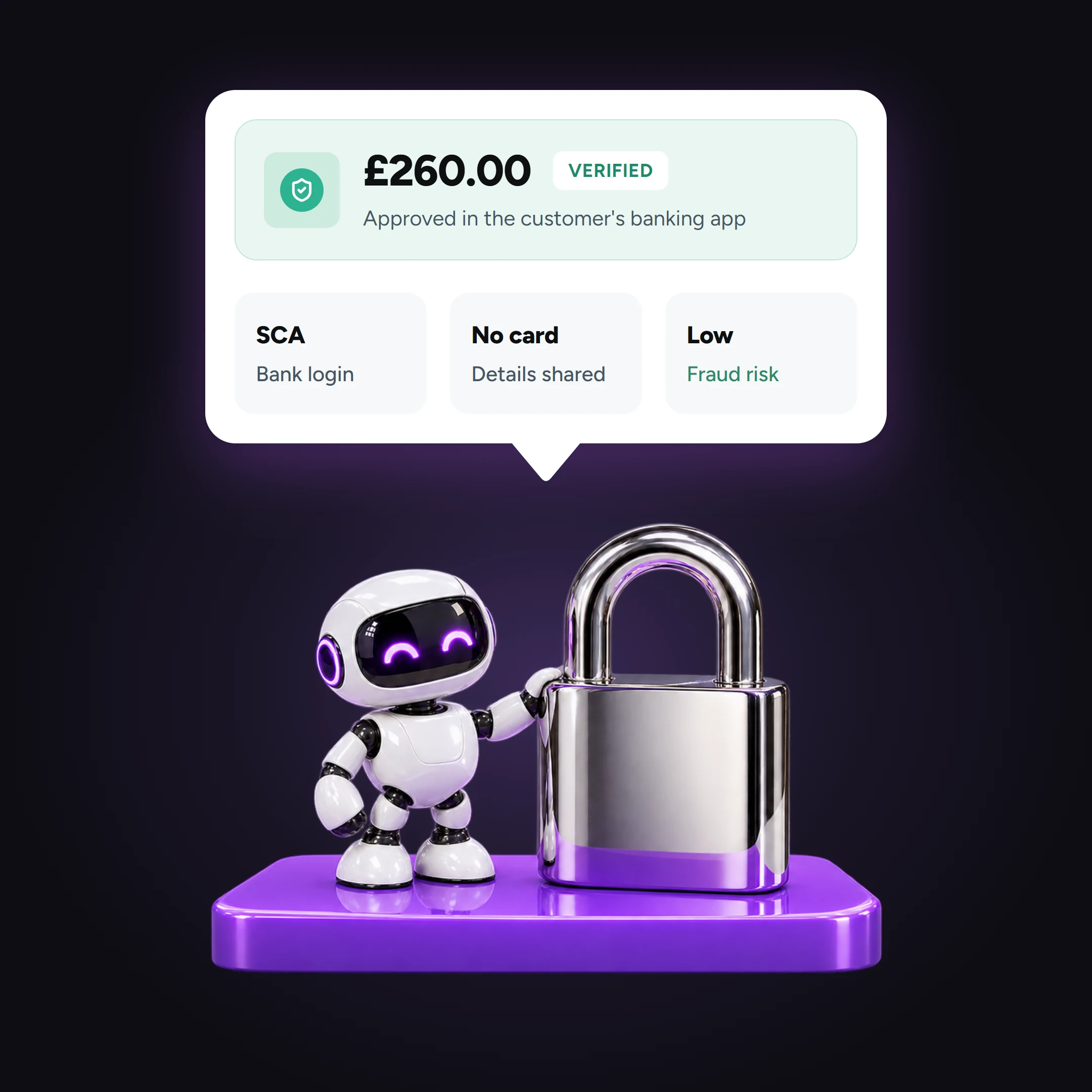
If you use a shopping agent, treat it like any tool that can spend your money: set clear limits, check what it proposes before you approve, and understand who you are actually buying from. The safest setups keep you in control, with a spending cap and a clear approval step, and settle on a payment method that is authenticated in your own Bank app.
What it means for merchants
The discovery-first reality reshapes the priorities. Being findable by agents now matters as much as being ready to accept an agent-initiated payment.
- Be discoverable: Agents read structured product data, not marketing copy. Clean feeds, accurate pricing, and clear availability make your catalogue easy for an agent to surface and recommend. This is increasingly referred to as Generative Engine Optimisation (GEO), the equivalent of SEO for AI-powered search.
- Keep checkout yours, but agent-ready: Shoppers are completing purchases on merchant sites, not inside AI interfaces. A fast, reliable checkout that can also accept an agent-initiated payment when the infrastructure matures is the right setup now.
- Make consent provable: Design for a world where you may need to show a purchase was genuinely authorised.
- Offer authenticated payment rails: Favour a rail like Pay by Bank, approved in the customer’s Bank app, alongside an online checkout that is ready for agent traffic.
Risks and open questions
Risks, trust and who is liable
The genuine risks are that an agent is tricked by bad data, overspends, or buys the wrong thing, and that it is not always clear who is responsible when that happens. In the UK, that liability question is not yet settled as of 2026. For how agent payments are secured, through authentication, provable consent and hard-to-reverse rails, see our guide to AI payment security.
Getting agent-ready
Atoa is building toward agentic payments, with support for both Pay by Bank and card. You can see how the payment layer fits on our agentic payments page.
FAQs
What is an AI shopping agent?
Software that shops on your behalf, finding and comparing products and, within limits you set, taking the purchase to checkout or completing it. It is the front end of agentic commerce.
Can you buy things directly in ChatGPT?
For a period you could, through Instant Checkout, but OpenAI retired that in March 2026 and moved to a discovery-first model. ChatGPT now recommends products and routes you to the merchant’s site or app to complete the purchase, using the ACP protocol.
How do AI shopping agents pay?
They follow a discover, decide, authorise, pay flow, completing payment through a checkout or rail that accepts agent-initiated payments. The authorisation step, proving you approved the purchase, is what makes it trustworthy.
Is autonomous shopping safe?
It can be, with clear spending limits, provable authorisation, and a hard-to-reverse payment rail. Liability when something goes wrong is not yet settled in UK law.
How do merchants prepare for AI shopping agents?
Prioritise clean, structured product data so agents can find and recommend you accurately. Keep your own checkout fast. Design for provable consent. And consider payment rails that are authenticated at the source.
Sources
- ChatGPT Instant Checkout launch and the Agentic Commerce Protocol: OpenAI, Buy it in ChatGPT.
- Instant Checkout retirement and pivot to discovery (March 2026): CNBC; Checkout.com, OpenAI’s agentic commerce shift.
- “Discover in AI, buy on site” pattern and conversion penalty: Digital Applied.
- Agent adoption and consumer caution: Checkout.com Agentic Commerce Report 2026.
SHARE ARTICLE
Share link copied!