
Ready to get started?
Easily integrate next-generation payments and financial data into any app. Build powerful products your customers love.
SHARE ARTICLE


 Share link copied!
Agentic commerce is where AI agents act on a person’s behalf to discover products, make decisions and complete purchases, often paying autonomously within limits the person has set. It is sometimes called AI-driven or AI-agent commerce. Instead of a shopper clicking through a website themselves, they give an AI assistant an instruction, and the agent does the finding, choosing and paying.
This guide explains, in plain English, how agentic commerce works, the protocols emerging behind it, where the UK market and regulation stand in 2026, and what it means for merchants. It is written for UK business owners and ecommerce, finance and operations leaders who keep hearing the phrase and want a clear, trustworthy explainer.
What is agentic commerce?
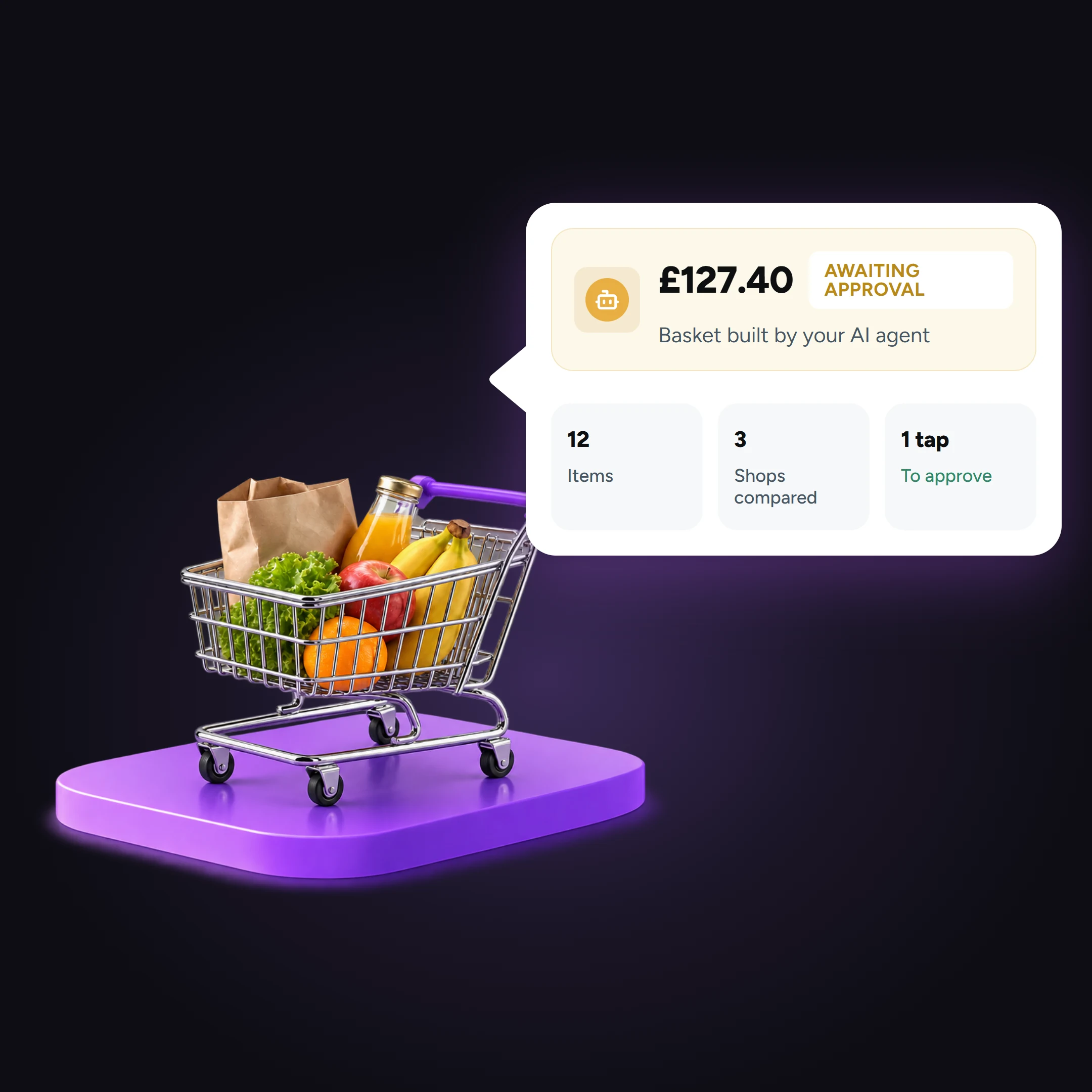
Agentic commerce is online buying carried out by an AI agent rather than directly by a person. You tell an assistant what you want, for example “reorder my usual coffee” or “find and book the cheapest same-day courier,” and the agent searches, compares, decides and pays, reporting back when it is done.
The word “agentic” is the key part. A chatbot answers questions; an agent takes actions. In commerce, that action is a purchase. What makes this different from an ordinary online order is autonomy: within rules you set, such as a spending cap or an approved merchant list, the agent can complete the transaction without you tapping “buy”. This is why agentic commerce sits at the meeting point of AI and ecommerce, and why payments are central to it. A recommendation is easy; handing an agent the authority to spend your money safely is the hard part.
How does agentic commerce work?
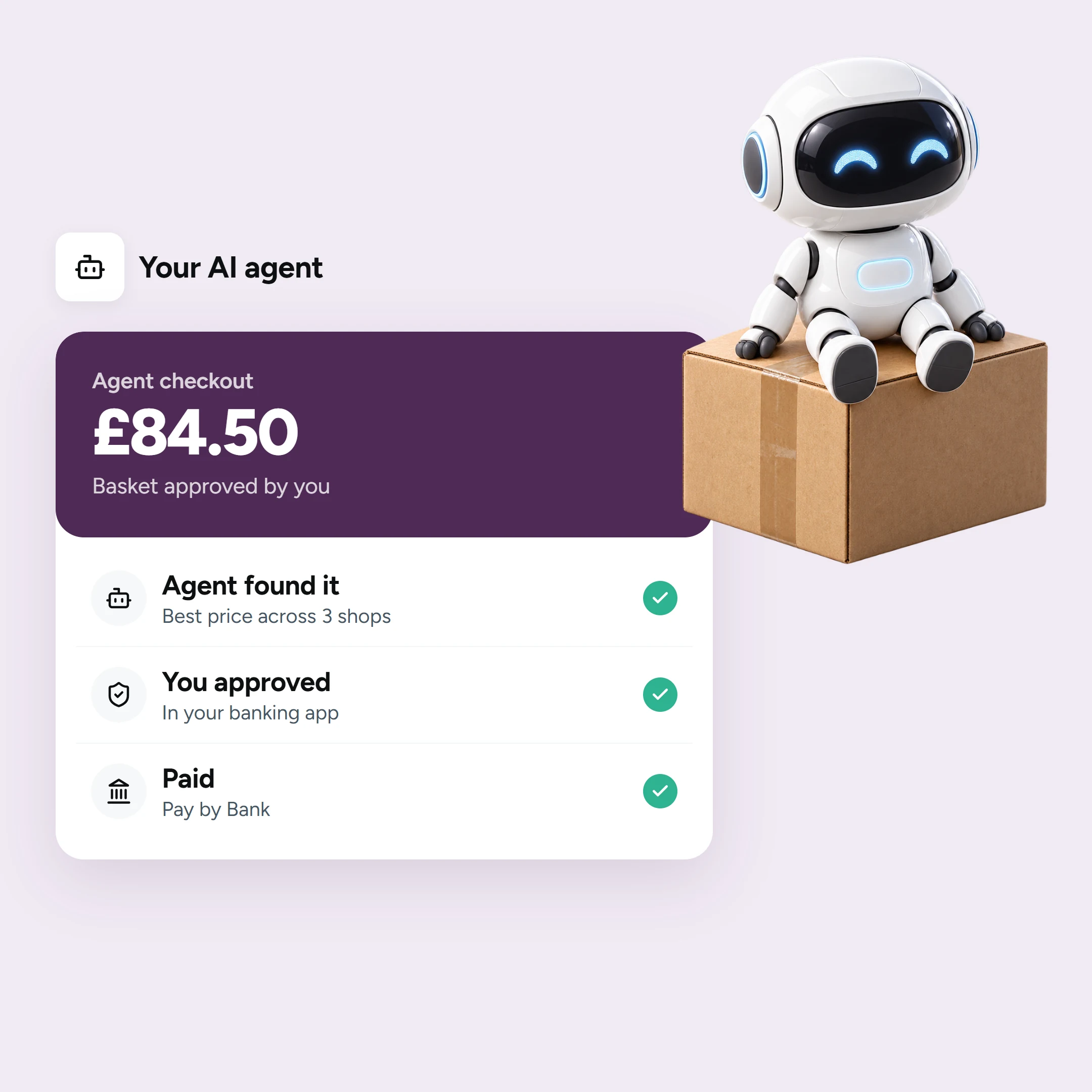
Most agentic purchases follow the same broad flow: the agent finds, decides, then pays.
- Discovery. The agent searches catalogues, APIs or marketplaces for products that match your instruction, often reading structured product data rather than a human-facing web page.
- Decision. It compares options against your stated preferences (price, delivery time, brand) and picks one.
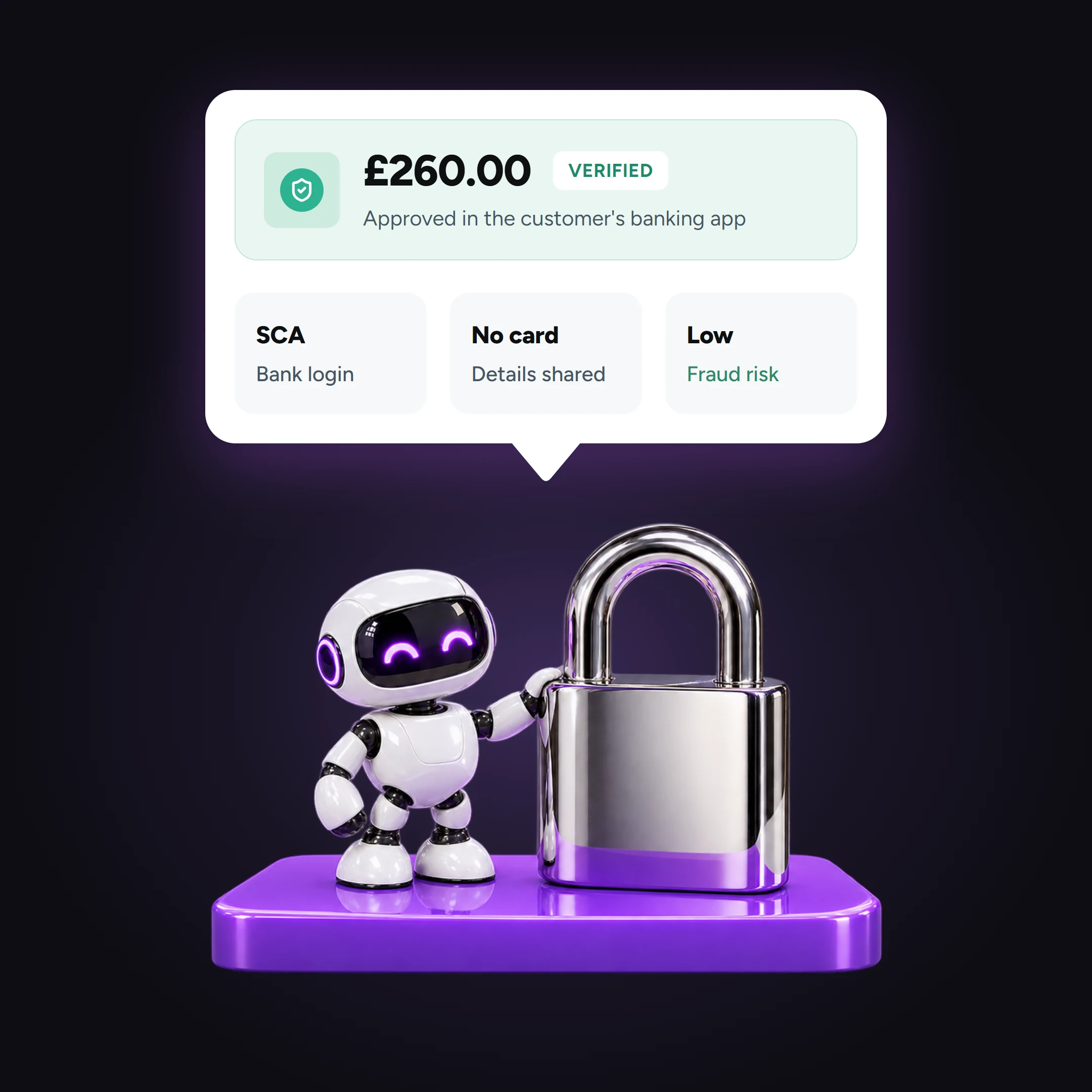
- Authorisation. Before spending, the agent needs proof that you actually approved this purchase, within the limits you set. This is the consent step.
- Payment execution. The agent completes payment through a checkout or payment rail that can accept an agent-initiated transaction.
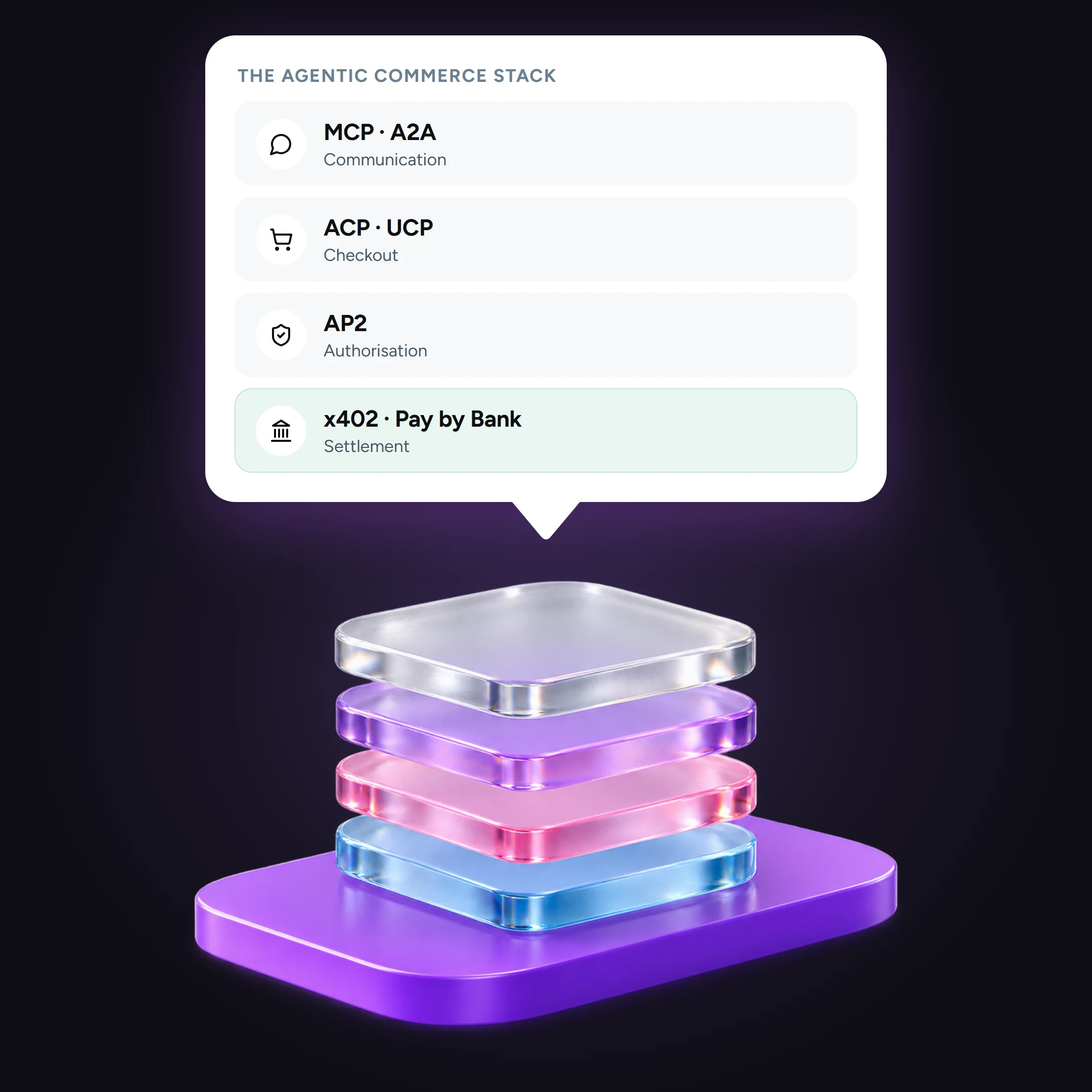
An “agentic commerce stack” is forming around these steps: a discovery layer, a checkout layer, an authorisation layer that proves consent, and a payment layer that moves the money. No single company owns the whole stack, which is why a set of open protocols has appeared to connect the parts.
The protocols behind agentic commerce
Several protocols are emerging, and they tend to compose rather than compete. Each handles a different layer.
- ACP (Agentic Commerce Protocol). From Stripe and OpenAI, and already live in ChatGPT checkout. It gives merchants a small set of REST endpoints to create, update, complete and cancel an order, plus “shared payment tokens” scoped to one merchant and amount. This is the retail checkout layer.
- AP2 (Agent Payments Protocol). From Google. A trust and authorisation layer that uses cryptographic “mandates” (an intent mandate, a cart mandate and a payment mandate) to prove the user authorised the agent to buy. This is how a merchant or bank can trust that a purchase was genuinely consented to.
- x402. From Coinbase. It revives the long-dormant HTTP status code 402, “Payment Required”, so agents and APIs can pay each other programmatically, often in tiny sub-cent amounts using stablecoins. This is the machine-to-machine payment layer.
- MCP (Model Context Protocol). An open standard (originally from Anthropic) for connecting AI models to tools and data. In commerce it acts as a discovery and tool layer, letting an agent find and call a merchant’s capabilities.
- UCP (Universal Commerce Protocol). An effort to standardise retail commerce interactions across agents and merchants.
In practice they slot together: MCP for discovery, x402 for machine-to-machine API payments, ACP or UCP for retail checkout, and AP2 for the authorisation signature that proves consent. The stack is young and still shifting, so expect consolidation.
Agentic commerce in the UK right now
Adoption is early but the direction is clear. As of 2026, only around 3% of transactions involve AI agents, yet 89% of merchants say they are actively preparing for agentic commerce (Checkout.com Agentic Commerce Report 2026). In other words, almost everyone is getting ready for something that is still a sliver of actual sales.
Readiness lags intent. In the UK, just 15% of the top 100 retailers say their payment systems are prepared for agent transactions, even though 49% are investing in agentic AI (Checkout.com 2026). Separate research suggests almost three-quarters of merchants are not yet agent-ready, and that only around 41% of finance and risk leaders feel very confident in current liability frameworks (Ballerine Agentic Commerce Readiness Report 2026).
Consumer appetite is forming but cautious. UK shoppers are interested in AI doing the legwork, yet wary of handing over control of their spending, which is exactly the trust gap the protocols above are trying to close.
The machine-to-machine side is moving fastest. By April 2026, the x402 network alone had roughly 69,000 active agents that had processed more than 165 million transactions worth about $50 million cumulatively (Chainalysis analysis of Coinbase’s x402). Most of that is small, automated API payments between agents rather than consumer shopping, but it shows how quickly agent-to-agent payment volume can build.
UK regulation and the liability question
For a payments topic, the regulation matters, and in the UK it is moving on several fronts at once.
- CMA (March 2026). In its paper “Agentic AI and consumers”, the Competition and Markets Authority made clear that existing consumer-protection law applies whether a decision is made by a person or by an AI. It expects businesses to keep human oversight, monitor for errors and bias, and fix models where consumers are harmed.
- FCA Mills Review. The FCA’s review into the long-term impact of AI on retail financial services, led by Sheldon Mills, is under way and is due to report in summer 2026.
- HM Treasury (Q2 2026). A consultation on the future of UK payment services law is expected, and is likely to consider whether the consent and Strong Customer Authentication (SCA) rules under the Payment Services Regulations need updating for agent-initiated payments.
- ICO (January 2026). The Information Commissioner’s Office has set out data-protection expectations for AI “shopping agents”.
The unresolved issue running through all of this is liability. If an agent buys the wrong thing, is tricked, or overspends, who is responsible: the shopper, the merchant, the agent’s developer, or the bank that moved the money? As of 2026, no one in the payments chain has agreed the answer, and that open question is one of the biggest brakes on adoption (The Payments Association, 2026).
What agentic commerce means for UK merchants
You do not need to rebuild your business around agents in 2026, but it is worth getting ready deliberately.
- Make your products machine-readable. Agents read structured data, not marketing pages. Clean product feeds, clear pricing and good APIs make your catalogue easier for an agent to find and buy from.
- Sort out consent and authorisation. The safe agent purchase is one where consent is provable. Watch AP2 and the SCA consultation, and design for a world where you must show a purchase was genuinely authorised.
- Choose payment rails that suit agents. Agent payments favour rails that are authenticated, instant and hard to reverse fraudulently. An authenticated, real-time bank payment fits that better than a card number typed into a form. Pay by Bank is one such rail: the payment is approved in the customer’s own banking app, settles in seconds and carries no card-style chargeback.
- Keep a human in the loop. The CMA expects oversight, so build in limits, logging and the ability to review what an agent did.
This is the area we work in. Atoa is a UK, FCA-authorised payments platform for Pay by Bank and cards, and we are building for agentic commerce: we run a live Model Context Protocol server, offer commercial Variable Recurring Payments, and are building support for Google’s AP2 authorisation standard (on our roadmap, not yet shipped). If you want to see how the payment layer fits, our agentic payments page goes into more detail.
Examples and use cases
- AI shopping assistants. A consumer asks an assistant to find and buy a product within a budget, and the agent completes the purchase through an agentic checkout.
- Agent-to-API purchases. Software agents buy services or data from other services programmatically, paying per call in tiny amounts, which is where machine-to-machine rails like x402 are already busy.
- Autonomous reordering. A business or household agent watches stock or usage and reorders supplies automatically when they run low, within pre-set rules.
- Agentic checkout on a merchant site. A retailer exposes its catalogue and checkout to agents so an AI can complete a purchase directly, using an online checkout built to accept agent-initiated payments.
The bottom line
Agentic commerce moves the buyer from a person clicking “pay” to an AI agent acting on their behalf, within limits they set. In 2026 it is early in the UK, adoption is small but preparation is widespread, the protocols are still settling, and the liability question is genuinely unresolved. The sensible move for merchants is to get the foundations right: machine-readable products, provable consent, human oversight, and payment rails built for authenticated, instant, low-risk transactions.
To see how the payment side of agentic commerce works in practice, take a look at Atoa’s agentic payments.
Frequently Asked Questions
What is agentic commerce?
Agentic commerce is where AI agents act on a person’s behalf to find products, make decisions and complete purchases, often paying autonomously within limits the person has set. It is also called AI-agent or AI-driven commerce.
How does agentic commerce work?
An agent follows a find, decide, pay flow: it discovers products (often via APIs and structured data), compares them against your preferences, checks that you authorised the purchase, and then completes payment through a checkout or rail that accepts agent-initiated transactions.
What is the agentic commerce protocol (ACP, AP2, x402)?
These are the emerging standards behind agentic commerce. ACP (Stripe and OpenAI) handles retail checkout, AP2 (Google) proves the buyer authorised the agent, and x402 (Coinbase) lets agents and APIs pay each other programmatically. They tend to compose rather than compete, each covering a different layer of the stack.
Is agentic commerce safe?
It can be, but safety depends on consent and controls. The safest agent purchases are ones where the buyer has set clear limits, the consent is provable (the job AP2 is built for), and the payment runs on an authenticated, hard-to-reverse rail. UK regulators, including the CMA, expect human oversight, and the question of who is liable when something goes wrong is not yet settled.
What does agentic commerce mean for UK businesses and merchants?
It means preparing rather than panicking. Make your products machine-readable, design for provable consent and Strong Customer Authentication, keep a human in the loop as the CMA expects, and choose payment rails suited to agents, such as authenticated, instant bank payments. Adoption is still small in 2026, so there is time to get the foundations right.
Sources
- Checkout.com Agentic Commerce Report 2026 (3% of transactions involve agents; 89% of merchants preparing; UK top-100 retailers 15% payment-ready, 49% investing): Checkout.com
- Ballerine Agentic Commerce Readiness Report 2026 (merchants not agent-ready; liability confidence): Ballerine
- PYMNTS / Retail Times 2026 (UK consumer demand and caution)
- x402 adoption (approx 69,000 agents, 165M+ transactions, ~$50M by April 2026): Chainalysis, “Inside x402: agentic payments on Base”; Coinbase
- CMA, “Agentic AI and consumers” (March 2026): GOV.UK
- FCA Mills Review (reports summer 2026); HM Treasury payment services / SCA consultation (Q2 2026); ICO AI shopping agents (Jan 2026): The Payments Association, “Agentic commerce in UK retail: an unresolved liability question” – The Payments Association
- Protocol explainers (ACP, AP2, x402, MCP, UCP): Orium; Universal Commerce Protocol blog; Descope developer guide
SHARE ARTICLE
Share link copied!