Ready to get started?
Easily integrate next-generation payments and financial data into any app. Build powerful products your customers love.
SHARE ARTICLE


 Share link copied!
The right payment system for a business is the set of ways its customers actually pay, usually a card terminal, an online checkout, payment links and, increasingly, Pay by Bank, run through as few providers as possible at a cost worked out in pounds rather than percentages. Most choices go wrong on that last point. A retailer with three shops and a website, or a restaurant group opening its fourth site, is quoted a headline rate by each provider and left to work out the rest: what the fixed fee adds on small baskets, which published rates stop applying above a certain volume, what each new location costs, and how many dashboards the finance team will reconcile each month.
This guide answers those questions with UK providers’ published rates, checked on 27 September 2026. It sets out the payment methods a business can accept and what each costs, works a £100,000 month through eight providers, matches setups to types of business, and covers what changes once you run more than one site.
The payment methods a UK business can accept
Cards are still how most people pay. They accounted for 64% of the 48.8 billion payments made in the UK in 2024, debit cards alone for 53%, and half of UK adults now pay regularly with Apple Pay or Google Pay, according to UK Finance, while cash fell below one payment in ten for the first time. The newer option is Pay by Bank, where the customer approves the payment in their own Bank app and the money moves straight from their account to yours without a card; Open Banking Limited recorded 40.16 million open banking payments in June 2026 alone. Most businesses need several of these methods at once, and each is priced differently.
| Method | Where it fits | Published UK cost, ex VAT | When the money arrives | Chargeback risk |
|---|---|---|---|---|
| Card terminal, including phone taps | Counter, table, reception | From 0.99% (SumUp Payments Plus, £19 a month) and 1.2% (Dojo, below £100,000 a year) to 1.75% (Square, Zettle); Atoa from 1.3% | By provider: Zettle to a PayPal balance within minutes, Dojo next day, Atoa cards typically two working days | Yes |
| Online card checkout | Website, app, booking system | 1.3% + 20p (Atoa), 1.4% + 25p (Square), 1.5% + 20p (Stripe); 2.9% + 30p on a PayPal balance | By provider | Yes |
| Pay by Bank | QR code at the till, online checkout, payment links, invoices | From 0.7% in person and 0.7% + 20p online (Atoa) | Confirmed in seconds; paid out instantly or next working day, depending on settlement setup | None; refunds still possible |
| Payment links | Deposits, phone orders, remote balances | The rate of the method the customer chooses; one Atoa link takes Pay by Bank or card | As for that method | Card payments only |
| Direct Debit | Memberships, plans, repeat invoices | 1% + 20p, capped at £4 (GoCardless) | Three working days | Direct Debit Guarantee refunds instead |
| Cash | Walk-in trade | No transaction fee, but counting, banking and security time | When banked | None |
Two lines in that table decide most of the cost for an established business. Card acceptance is unavoidable, so the question there is what rate you pay. Pay by Bank is the customer’s choice, so the question is how much of your volume you can move onto it, because it sits below every published card rate and cannot be charged back, although a customer can still ask you for a refund.
What a payment system costs on a £100,000 month
Percentages hide the decision, so here is one month worked through. The business has three sites and a website and takes £100,000 a month: £80,000 in person across 2,000 payments averaging £40, and £20,000 online across 400 payments averaging £50. Every figure uses the provider’s published standard UK rate for consumer cards, ex VAT, before software plans and hardware.
| Setup and published rates | In person: £80,000, 2,000 payments | Online: £20,000, 400 payments | Per month | Per year |
|---|---|---|---|---|
| Zettle in store (1.75%), Shopify Payments Grow online (1.7% + 25p) | £1,400 | £440 | £1,840 | £22,080 |
| Square in store and online (1.75%; 1.4% + 25p) | £1,400 | £380 | £1,780 | £21,360 |
| SumUp pay-as-you-go in store (1.69%), Stripe online (1.5% + 20p) | £1,352 | £380 | £1,732 | £20,784 |
| Atoa, all by card (1.3%; 1.3% + 20p) | £1,040 | £340 | £1,380 | £16,560 |
| Atoa, 30% of takings by Pay by Bank (0.7%; 0.7% + 20p) | £896 | £304 | £1,200 | £14,400 |
| SumUp Payments Plus in store (0.99% + £19 a month), Stripe online | £811 | £380 | £1,191 | £14,292 |
| Atoa, half of takings by Pay by Bank | £800 | £280 | £1,080 | £12,960 |
| Dojo | Quoted: the published 1.2% blended rate applies only below £100,000 a year of card turnover | |||
| Worldpay | Quoted: no standard UK rate published | |||
Three things follow. The first is that at this size published rates are a ceiling, not the price. SumUp offers custom pricing from £10,000 a month, Dojo’s published 1.2% blended rate applies only below £100,000 a year of card turnover, Worldpay publishes no standard rate at all, and Atoa’s rates are starting rates that fall as volume rises, with a Custom plan for businesses turning over more than £500,000. A business taking £1.2 million a year should ask every provider on its shortlist to quote on the combined volume of all its sites, and use the table to judge whether each quote is any good.
The second is that the rail moves the cost more than the brand. Every card rate is built on interchange, which the Payment Systems Regulator caps at 0.2% for consumer debit cards and 0.3% for consumer credit cards, plus card scheme fees and the provider’s margin, and business cards and American Express cost more again. A Pay by Bank payment carries none of those costs, which is why its 0.7% is the only published rate here below SumUp’s 0.99%. For this business, every 10% of takings moved from card to Pay by Bank on Atoa saves £60 a month, and taking half by bank brings the month to £1,080, about £8,400 a year less than paying Square’s published rates on everything.
The third is that running costs sit outside the percentages. SumUp’s £19 Payments Plus fee is in the table because it buys the lower rate; software plans are not. Atoa’s Growth plan, which adds multi-location support, is £79 per location a month ex VAT, £237 for three sites; Dojo’s Plus plan is £11.99 per location a month for new customers, normally £25; and a setup split across two providers means two contracts, two dashboards and two sets of payouts to reconcile. Atoa’s pricing page sets out what each plan includes, and our comparison of the cheapest ways to accept online payments takes the online side further.
Which setup suits which business
The right mix depends less on turnover than on how your customers pay, so start from the business rather than the provider. The table sets out setups that work in the sectors Atoa serves most, including the one where Atoa is not the right tool.
| Business | How customers pay | Methods to offer | Check first | Where Atoa fits |
|---|---|---|---|---|
| Restaurant, pub or café group | At the table, at the bar, deposits for bookings | Card terminal; QR code on the bill for Pay by Bank; payment links for deposits | That payments post to the EPOS and close the table; tips; one report across sites | Pay by Bank QR receipts that sync with Tevalis, pointOne, TillTech and Epos Now |
| Retailer with shops and a website | Counter, online, click and collect | Terminal and QR code in store; Pay by Bank and cards at the online checkout | One provider across both channels, so refunds and reporting match | Online checkouts for Shopify, WooCommerce and Magento 2 alongside in-store payments |
| Dental, veterinary or clinic group | At reception, deposits, treatment balances, monthly plans | Terminal; payment links for deposits and balances; Direct Debit for plans | Integration with the practice system; how plans are collected | Dentally integration and payment links; use a Direct Debit provider for monthly plans, as Atoa does not offer Direct Debit |
| Car dealer or workshop | Deposits to hold a vehicle, balances in the thousands, servicing | Payment links; Pay by Bank for large amounts; cards | Per-payment limits; chargeback exposure on large card payments | Pay by Bank up to £15,000 a payment: a £10,000 balance by link costs £70.20, against £130.20 by UK card at 1.3% + 20p |
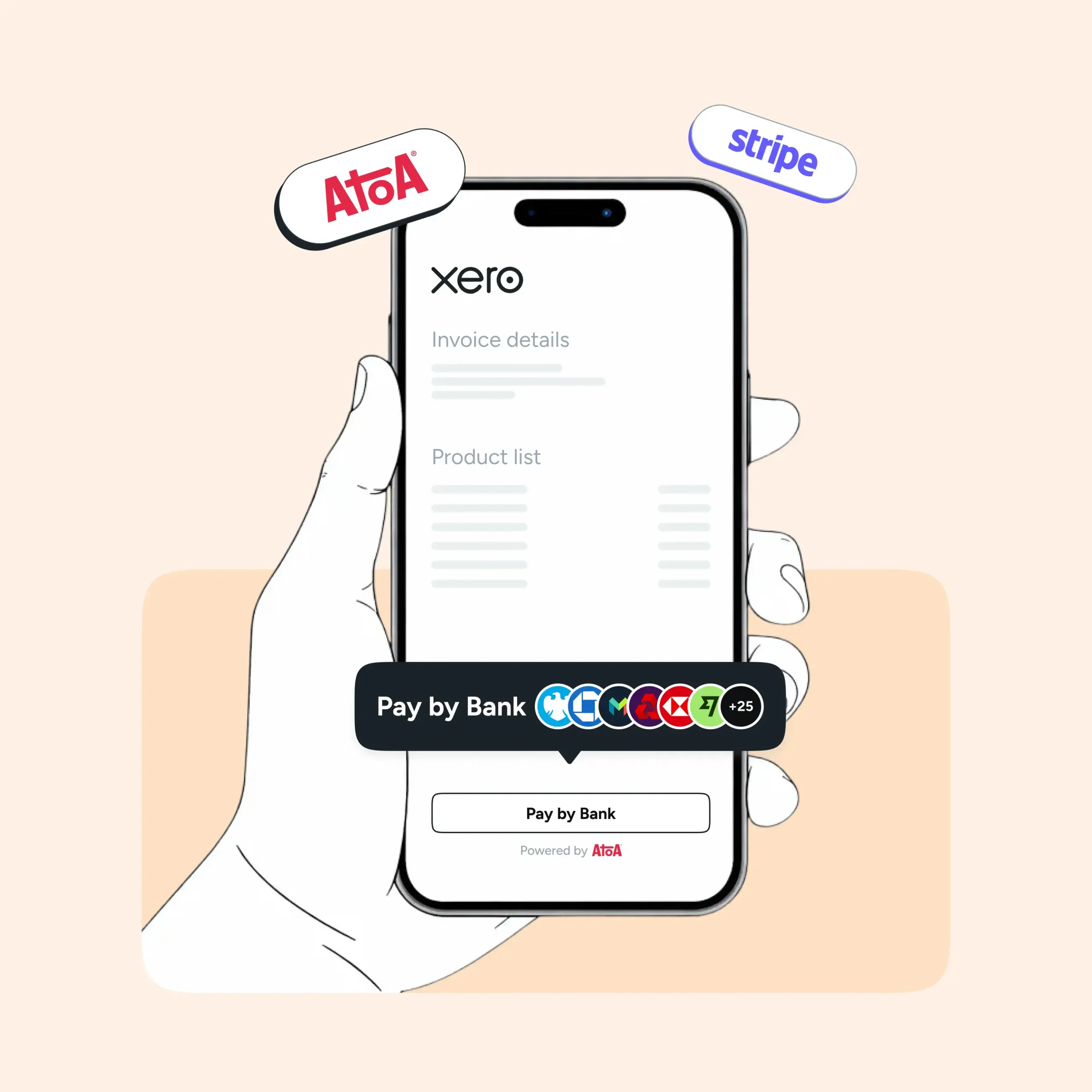
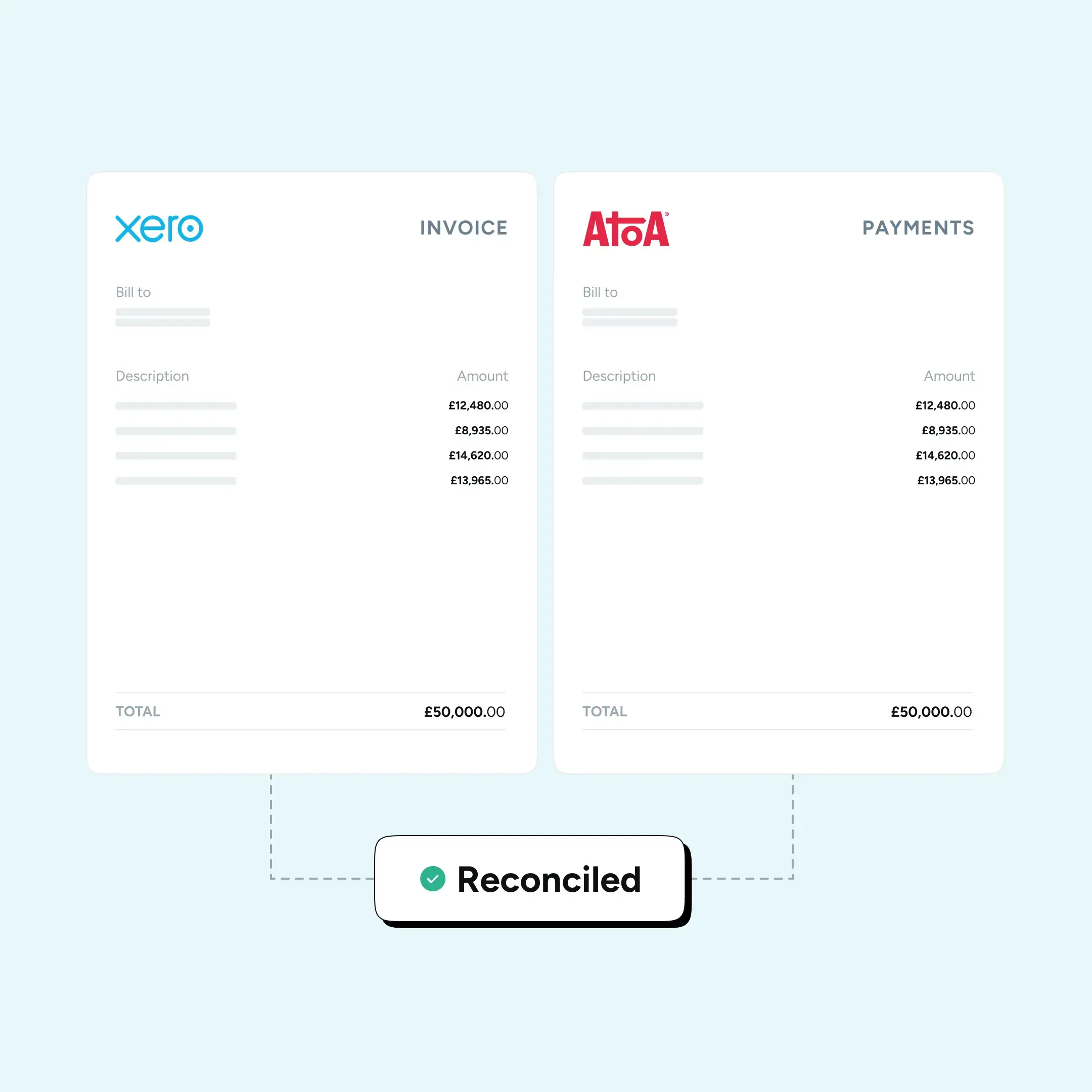
| Professional services and B2B | Invoices and retainers | Pay-now link on each invoice; bank transfer; Direct Debit for fixed retainers | That payments reconcile into the accounting software | Pay by Bank and card links on Xero, QuickBooks and Sage invoices |
| Gym, club or subscription business | The same amount every month | Direct Debit or recurring card payments | Failed-payment retries and cancellations | Not the main tool today: recurring Pay by Bank is listed as coming soon, so GoCardless (1% + 20p, capped at £4) suits the recurring part |
What changes when you run more than one site
A single till can live with almost any provider; several sites expose the differences quickly. The questions become whether every location can sit under one account and one contract, whether each site can settle to its own bank account while its manager sees only that site, whether reporting rolls up into one view for the finance team, whether the rate is set by group volume or site by site, and what adding the next location will cost.
Atoa is built for mid-market and multi-site businesses, and this is where it differs most from a card reader bought for one shop. Each new site is added as a location in the Atoa Business app and verified with a Know Your Business check; every location and till then reports into one dashboard with per-location settlement and reporting, and staff can be limited to their own site. The Growth plan adds multi-location and multi-business support, custom roles and up to five bank accounts. One account takes QR code payments at the counter, card payments on a terminal that accepts contactless cards and phone taps, online checkouts and payment links, so the same platform covers every channel at every site, as our page on omnichannel payments shows. Pay by Bank payments are confirmed in seconds and paid out instantly or on the next working day, depending on your settlement setup; card payments typically settle in two working days.
Integration is the other test. A hospitality group needs each payment to post back to its EPOS so the table closes itself, and Atoa’s Pay by Bank QR receipts sync with Tevalis, pointOne, TillTech and Epos Now; a dental group can take payments from inside Dentally; and invoices raised in Xero, QuickBooks or Sage can carry a pay-now link that reconciles automatically. The full list of Atoa integrations shows what connects today.
If you run a small business from one site
For a single shop, café or practice taking a few thousand pounds a month, a pay-as-you-go card reader is the simplest start: SumUp charges 1.69% with no monthly fee, Square and Zettle 1.75%, and our comparison of card machine providers covers the hardware. At that size fixed costs matter more than the rate, which is why SumUp itself pitches its £19 Payments Plus plan at businesses taking £3,000 or more a month. Run the comparison again with Pay by Bank included once takings reach tens of thousands of pounds a month, a second site is planned, or customers start paying online and by link as well as at the counter.
What to check before you sign
A low rate is only worth having from a provider you can rely on. Look the firm up on the FCA register to confirm it is authorised for the service it is selling: Atoa, for example, is authorised to provide payment initiation and account information services (FRN 1007647), and its card payments are provided by Rapyd Payments Limited (FRN 900688). Anything that handles card numbers must meet PCI DSS, which a hosted checkout or payment link takes care of for you, and online payments are subject to Strong Customer Authentication, which a Pay by Bank payment completes in the customer’s Bank app with Face ID, a fingerprint or a passcode. Then read the contract for the minimum term, any exit fee, terminal rental, monthly minimums and how quickly money reaches your account.
If you already take payments, total a real month of statements rather than trusting the headline rate, because the difference is usually in fees nobody remembers agreeing to; that review is the first step in any business payment strategy. If you are weighing gateways, processors and all-in-one platforms against each other, our guide to payment processing solutions for businesses explains how the types differ.
How The Beauty Wardrobe took deposits up front
The Beauty Wardrobe in Bradford had a problem that many appointment-based businesses share: card fees on every booking and no-shows that left gaps in the diary. Its manager, Harminder, moved deposits onto Atoa QR codes and payment links, so clients pay when they book rather than on the day, and deposits collected rose by 60 to 80%. Each Pay by Bank deposit is confirmed in seconds, so nobody has to wait to find out whether a booking has been paid.
To see these numbers against your own takings, book a demo, or start a 7-day free trial and run Pay by Bank alongside your current provider before you decide.
Frequently asked questions
What is the best payment system for a small business?
The best payment system for a small business matches how its customers pay at the lowest all-in cost, which for one site usually means a pay-as-you-go card reader and payment links: SumUp charges 1.69% with no monthly fee, Square and Zettle 1.75%. Once takings reach tens of thousands of pounds a month or a second site opens, adding Pay by Bank from 0.7% with a provider such as Atoa lowers the cost further.
What payment methods should a UK business accept?
Cards and mobile wallets, in person and online: cards made up 64% of UK payments in 2024, and half of UK adults now pay regularly with Apple Pay or Google Pay, according to UK Finance. Add payment links for deposits and remote sales, Pay by Bank as a lower-fee option at the till, online and on invoices, and Direct Debit if you bill the same customers every month.
How much does a payment system cost a UK business?
On £100,000 a month, split £80,000 in person and £20,000 online, providers’ published rates come to about £1,780 on Square, £1,732 with SumUp pay-as-you-go and Stripe, £1,191 with SumUp Payments Plus and Stripe, and £1,080 to £1,380 with Atoa depending on how much is paid by bank, all ex VAT and before software plans. At that volume most providers will quote below their published rates.
Does Pay by Bank cost less than card payments?
Yes. A Pay by Bank payment moves directly from the customer’s bank account to the business’s over Faster Payments, so there is no interchange or card scheme fee: Atoa charges from 0.7% in person and 0.7% + 20p online, against 1.3% and 1.3% + 20p for UK cards, ex VAT. It also cannot be charged back, although a customer can still ask for a refund.
Can one payment system cover several locations and channels?
Yes, if the provider supports multiple locations under one account. With Atoa, each site is added in the app and verified, every location reports into one dashboard with per-location settlement and staff roles, and the same account takes QR code, terminal, online checkout and payment link payments. Multi-location support is part of the Growth plan at £79 per location a month ex VAT.
What should I check before switching payment provider?
Test the published rate against a real month of your own transactions, then check monthly, terminal and exit fees, how quickly money reaches your account, whether payments reconcile into your accounting or EPOS software, and that the firm is authorised on the FCA register. Run the new provider alongside the old one for a few weeks before cancelling, so no sale is lost in the switch.
Sources
- UK Finance, UK Payment Markets 2025, summary (2024 payment volumes and shares)
- Open Banking Limited, Open Banking surpasses one billion payments, 30 July 2026 (June 2026 volumes)
- Payment Systems Regulator, Interchange Fee Regulation
- SumUp, UK pricing; Square, UK pricing; PayPal Point of Sale (Zettle), pricing; Dojo, pricing
- Stripe, UK pricing; Shopify, UK pricing; PayPal, UK merchant fees; GoCardless, pricing
- Atoa, pricing, Pay by Bank and omnichannel payments pages
SHARE ARTICLE
Share link copied!