
Ready to get started?
Easily integrate next-generation payments and financial data into any app. Build powerful products your customers love.
SHARE ARTICLE


 Share link copied!
Magento gives you more control over your ecommerce setup than almost any other platform. That flexibility extends to payments, which means the decisions you make about your payment stack carry more weight than they would on a more opinionated platform like Shopify.
For Magento merchants processing significant volumes, payment infrastructure is not just a checkout feature. It shapes transaction costs, settlement speed, and the rate at which disputes eat into your margins. According to Store Leads, Magento powers over 112,000 active ecommerce stores globally in 2026 and for many of them, payment configuration is one of the most consequential technical decisions they make.
How Magento payment processing works
Magento handles payments through modular extensions. Each payment gateway connects to the checkout via a module that communicates with external payment infrastructure, which means stores can support multiple payment methods simultaneously and customers can choose how they want to pay at checkout.
That modularity is actually one of Magento’s strongest arguments for running a mixed payment setup. Adding Pay by Bank alongside your existing card gateway does not require rebuilding your checkout. It plugs in.
Traditional gateways: what you’re working with
Most Magento stores still run card-based gateways like Stripe, PayPal, Worldpay, and similar. These are familiar, trusted, and support a wide range of payment methods including debit and credit cards, digital wallets, and Buy Now Pay Later options.
The infrastructure behind them is well established. But that infrastructure has layers – the payment gateway, the card network, the issuing bank, the acquiring bank – and each layer has a cost attached to it. For merchants processing high order values or large volumes, those costs compound. Settlement typically takes 1-3 working days, and chargebacks remain the merchant’s problem to manage and absorb.
None of this makes traditional gateways wrong. It just means the cost and risk profile is worth understanding clearly before assuming they are the only option.
Pay by Bank in Magento checkout
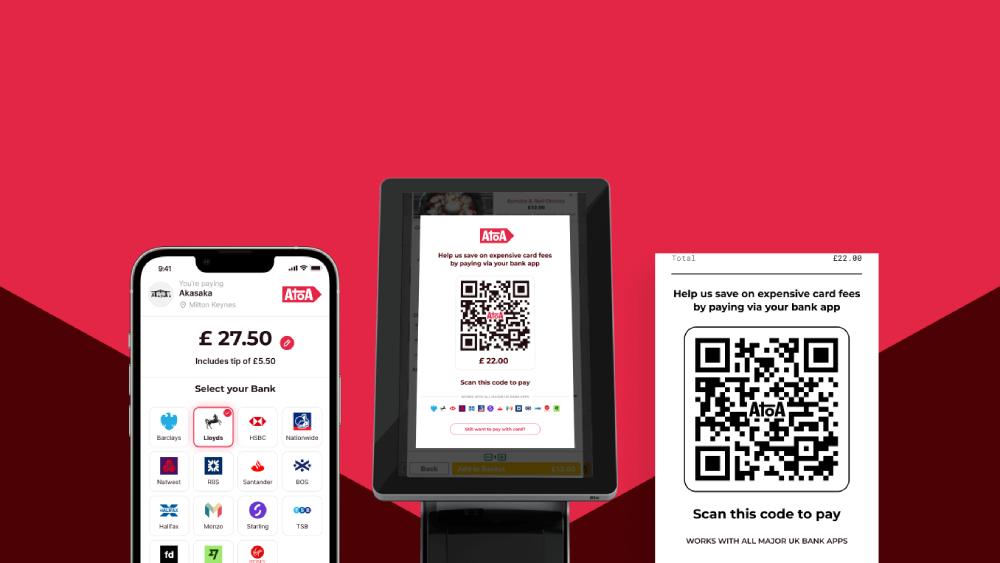
Pay by Bank uses open banking technology to move funds directly between bank accounts. There is no card network involved. At checkout, the customer selects Pay by Bank as a payment method, chooses their bank, and approves the payment inside their own banking app using Face ID or fingerprint. Confirmation returns to Magento in real time and the order updates immediately.
Because authentication happens within the customer’s own bank environment, a number of the intermediaries that exist in card transactions are removed entirely. That is where the fee difference comes from and why settlement is typically instant rather than batched overnight.
How Atoa integrates with Magento
Atoa provides a dedicated Magento module that adds Pay by Bank as a checkout option alongside whatever gateways you are already running. Installation is done via Composer or the Magento marketplace, configured through the admin panel, and connected using an API key from the Atoa dashboard.
Once live, Pay by Bank appears at checkout the same way any other payment method does. No changes to your storefront architecture are required.
Pay by Bank vs traditional gateways: a direct comparison
| Category | Pay by Bank (Atoa) | Traditional Gateways (Stripe, PayPal, etc.) |
|---|---|---|
| Payment route | Direct bank-to-bank transfer | Gateway, card network, issuing and acquiring banks |
| Authentication | Approved in customer’s banking app | Card checks, 3D Secure, fraud screening |
| Transaction fees | Lower, with no card network markup | Percentage-based, often with fixed fee per transaction |
| Settlement speed | Instant or near-instant | Typically 1-3 working days |
| Chargeback risk | Significantly reduced | Merchant responsible for disputes |
| International payments | UK bank accounts required | Broad international card support |
| Customer familiarity | Growing rapidly in the UK | High, widely expected at checkout |
The last two rows matter. Traditional gateways still have the edge on international reach and consumer recognition, which is why most Magento merchants should run both, not choose between them.
Building the right Magento payment setup
The strongest Magento checkout offers customers a choice. Cards remain important for everyday purchases, international buyers, and customers who prefer familiar methods. Pay by Bank is increasingly the better option for larger transactions where card fees and dispute risk become more costly and for UK-based customers where open banking adoption is growing fast.Running Atoa alongside your existing Magento payment gateway gives you that flexibility, without friction on either side.
SHARE ARTICLE
Share link copied!