
Ready to get started?
Easily integrate next-generation payments and financial data into any app. Build powerful products your customers love.
SHARE ARTICLE


 Share link copied!
Card machines have been the default for in-person payments for decades. But for a growing number of UK businesses they are no longer the obvious choice. They come with rental costs, transaction fees, connectivity issues, and a fixed physical presence that does not suit every business model. A carpenter on a job, a nutritionist running remote consultations, a dental practice collecting deposits ahead of appointments, none of these situations actually requires a card terminal.
The good news is that accepting payments without a card machine in the UK is now straightforward, and in many cases cheaper and faster than using one. Here is how it works.
Payment links by SMS or email
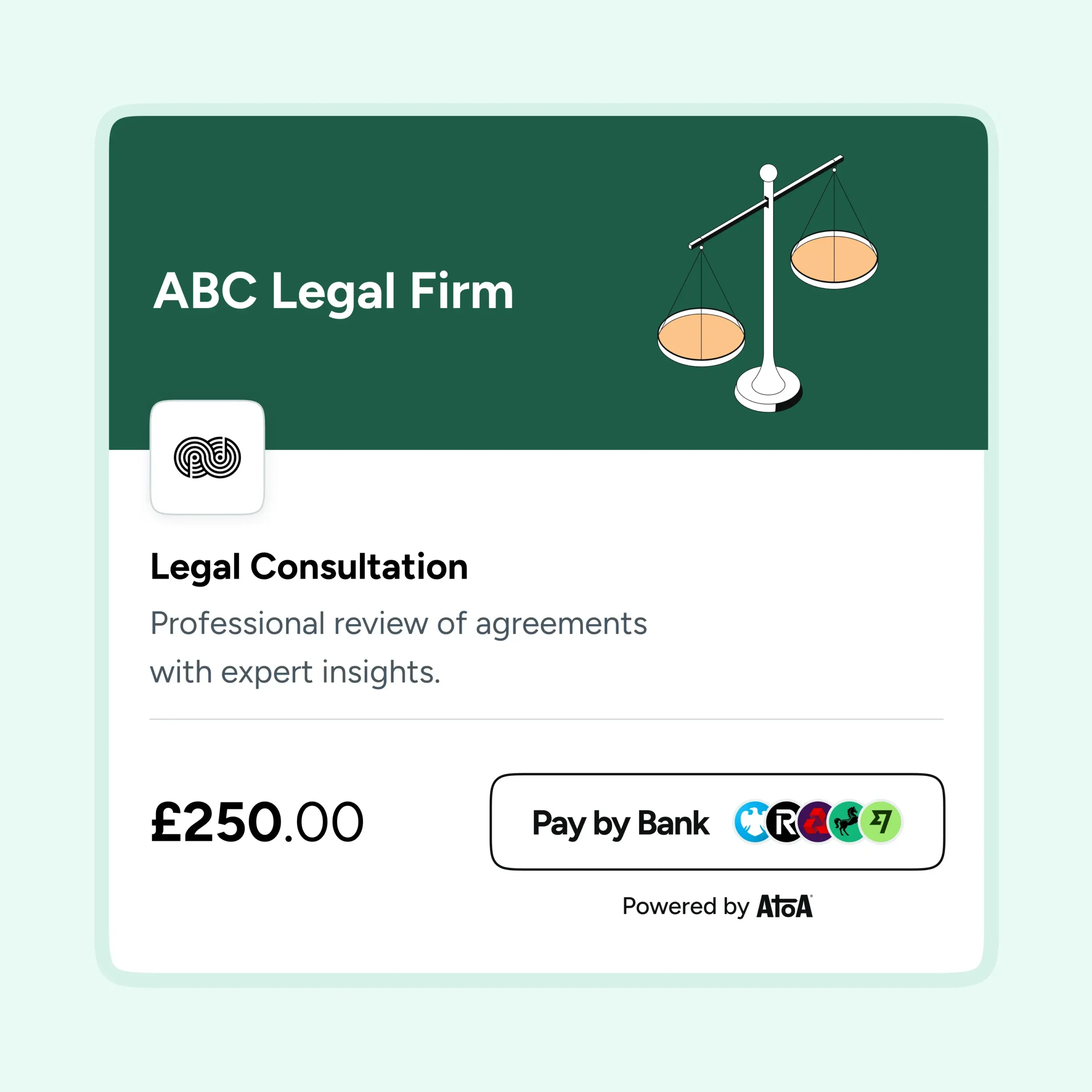
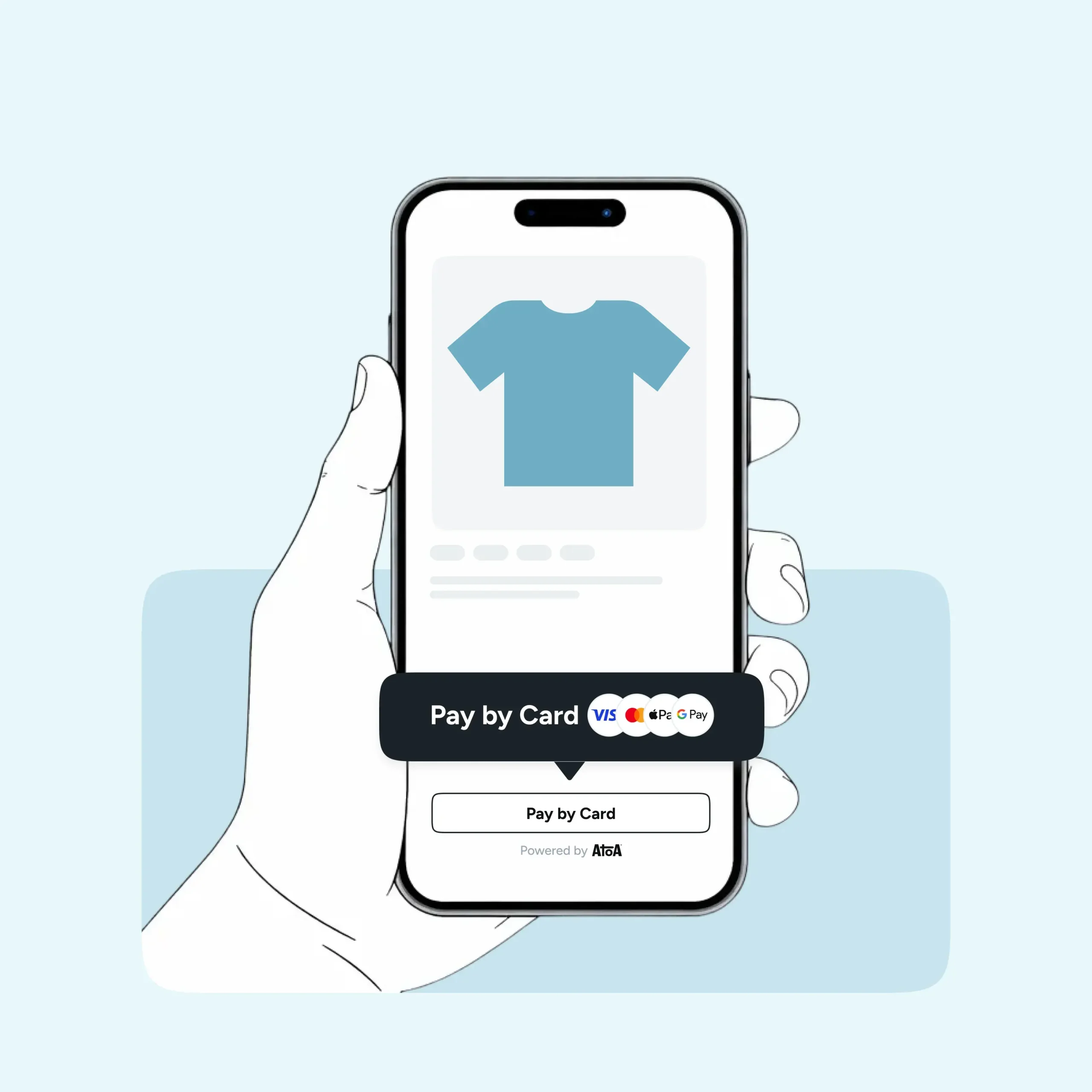
A payment link is a secure URL sent to a customer by SMS or email. The customer clicks it, lands on a payment page, and chooses how to pay: Pay by Bank or card. No hardware, no app to download, no card details taken over the phone.
For businesses that work remotely or on the move, this covers most payment scenarios. A plumber can send a link when the job is done. A clinic can send one before an appointment to collect a deposit. A consultant can send one at the end of a project. The payment is confirmed in real time and the funds settle instantly for Pay by Bank transactions.
Hardware-free in-person payments with QR codes
For businesses that do need an in-person payment option, a QR code removes the need for a card terminal entirely. It can be displayed on a phone screen, a printed stand, or a tablet at reception. The customer then scans it, selects their payment method, and approves it in their Bank app. No machine to buy, no monthly rental, no connectivity problems.
This works particularly well in clinic settings, hospitality, and anywhere a physical card machine would feel out of place or impractical.
Card on file: charge repeat customers without asking twice
For businesses with returning clients, card on file removes the need to collect payment details repeatedly. The customer saves their card once, verified with a one-time passcode, and future charges go through without them needing to take any action. Ideal for retainer-based businesses, treatment packages, and regular service appointments where collecting payment each time adds unnecessary friction.
Card on file is available to Atoa businesses that have card payments enabled on their account.
Digital invoices with a Pay Now button
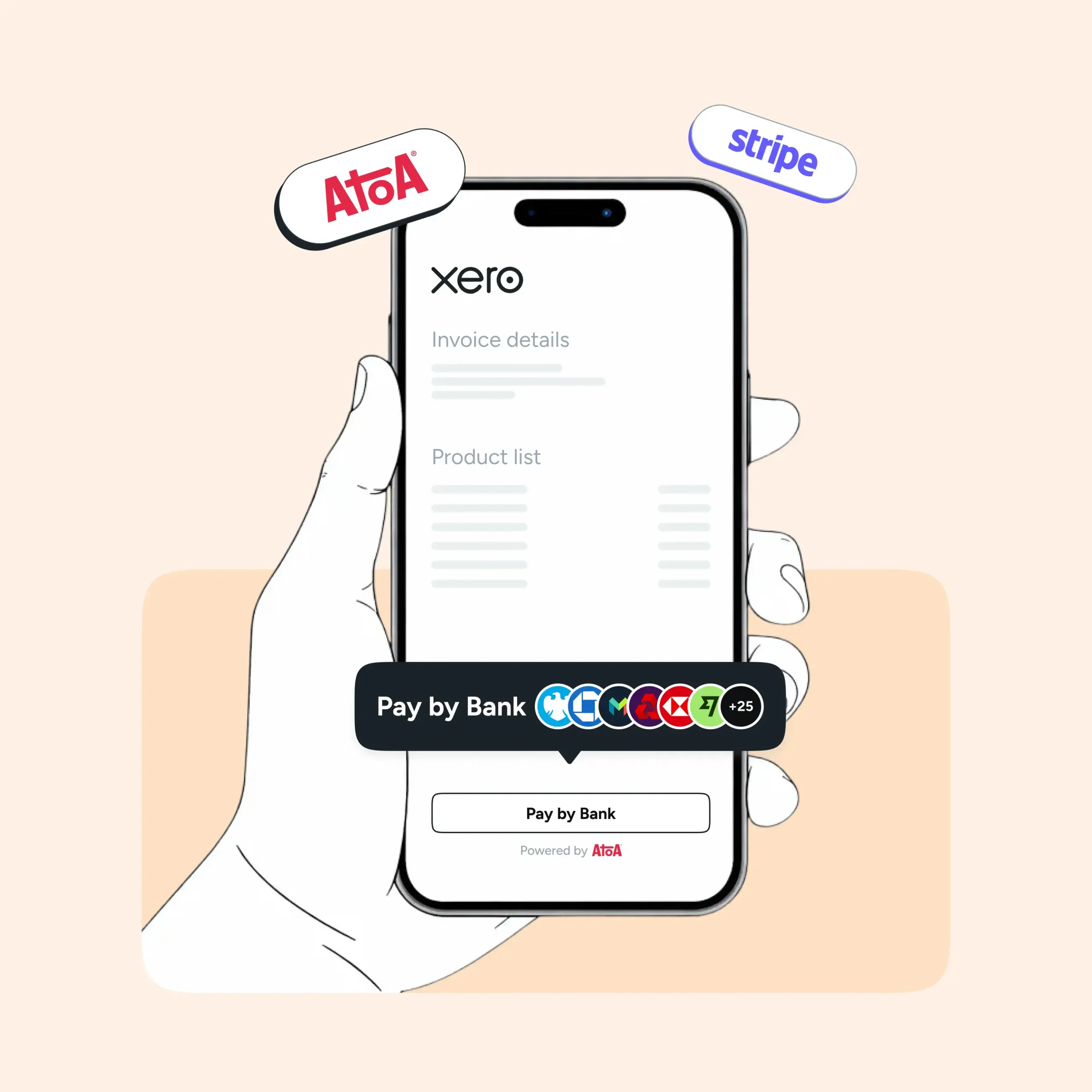
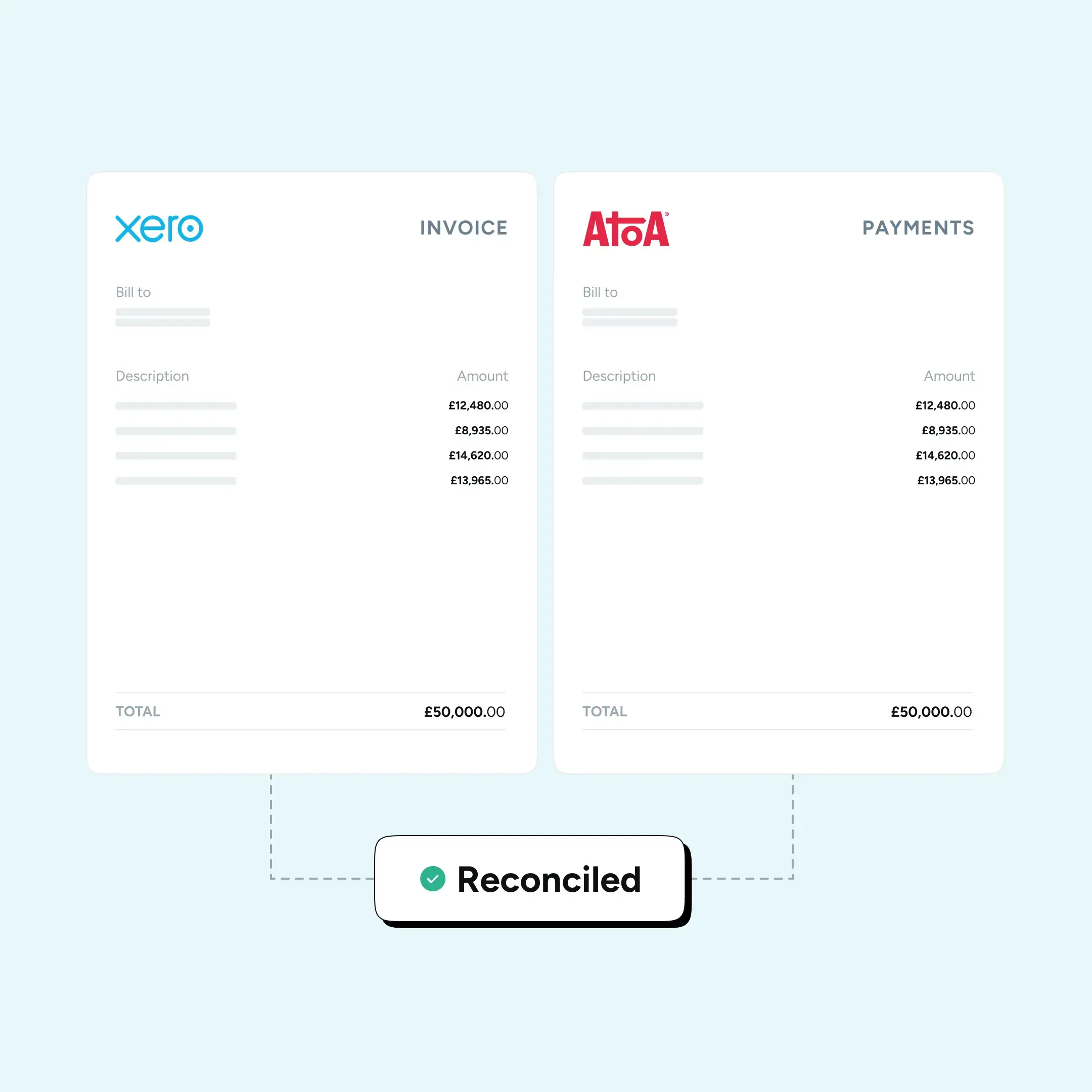
A digital invoice sent through Xero, QuickBooks, or Sage with a Pay Now button gives clients an easier way to settle up. Rather than hoping a client remembers to make a bank transfer, the invoice becomes the payment prompt. The client clicks, chooses their payment method, and it is done.
Why the shift away from card machines is already happening
According to UK Finance’s Payment Markets Report, there were 18.9 billion contactless debit and credit card payments in the UK in 2024, accounting for 61% of all card payments. In the same period, Faster Payments, the network that powers Pay by Bank, became the second most-used payment method in the country, with 75% of adults using mobile banking. Customers are already paying digitally from their phones. The question for businesses is whether their payment setup keeps up with that.
Card machines also carry costs that are easy to overlook: monthly rental, transaction fees, replacement when hardware fails. Removing the machine removes those overheads, and with Pay by Bank fees running up to 50% lower than standard card processing, the saving goes further than just the hardware.
For most UK businesses, the ability to accept payments without a card machine means fewer fixed costs, faster settlement, and a payment experience that works wherever the business does.
Want to see how Atoa’s payment links, QR codes, and card on file work together? Book a free demo with the UK-based team.
SHARE ARTICLE
Share link copied!