
Ready to get started?
Easily integrate next-generation payments and financial data into any app. Build powerful products your customers love.
SHARE ARTICLE


 Share link copied!
Most people do not budget for car repairs. The MOT that uncovers a brake issue, the service that turns into something bigger once the vehicle is in the workshop, the warning light ignored for a fortnight, it is rarely convenient, and the bill is rarely small. According to the RAC, the average car repair bill in the UK now stands at £650, and more than half of drivers say they would struggle to pay an unexpected repair cost. For garages, the moment that a customer sees the total is one of the most important in the whole job.
Get it right and you keep a customer. Get it wrong and the customer may hesitate, delay, or walk away. That’s when you lose both the job and the relationship. Offering flexible payments auto repair UK garages can easily implement is one of the most practical things you can do to make that moment easier for everyone.
Understanding what flexibility actually means
Flexible payments are not a single feature. They’re a combination of three things working together:
- How you structure the payment – whether the customer pays upfront, in stages, or through a deposit followed by a final balance.
- How you send the payment request – whether it’s through a payment link, SMS, email, QR code, or invoice.
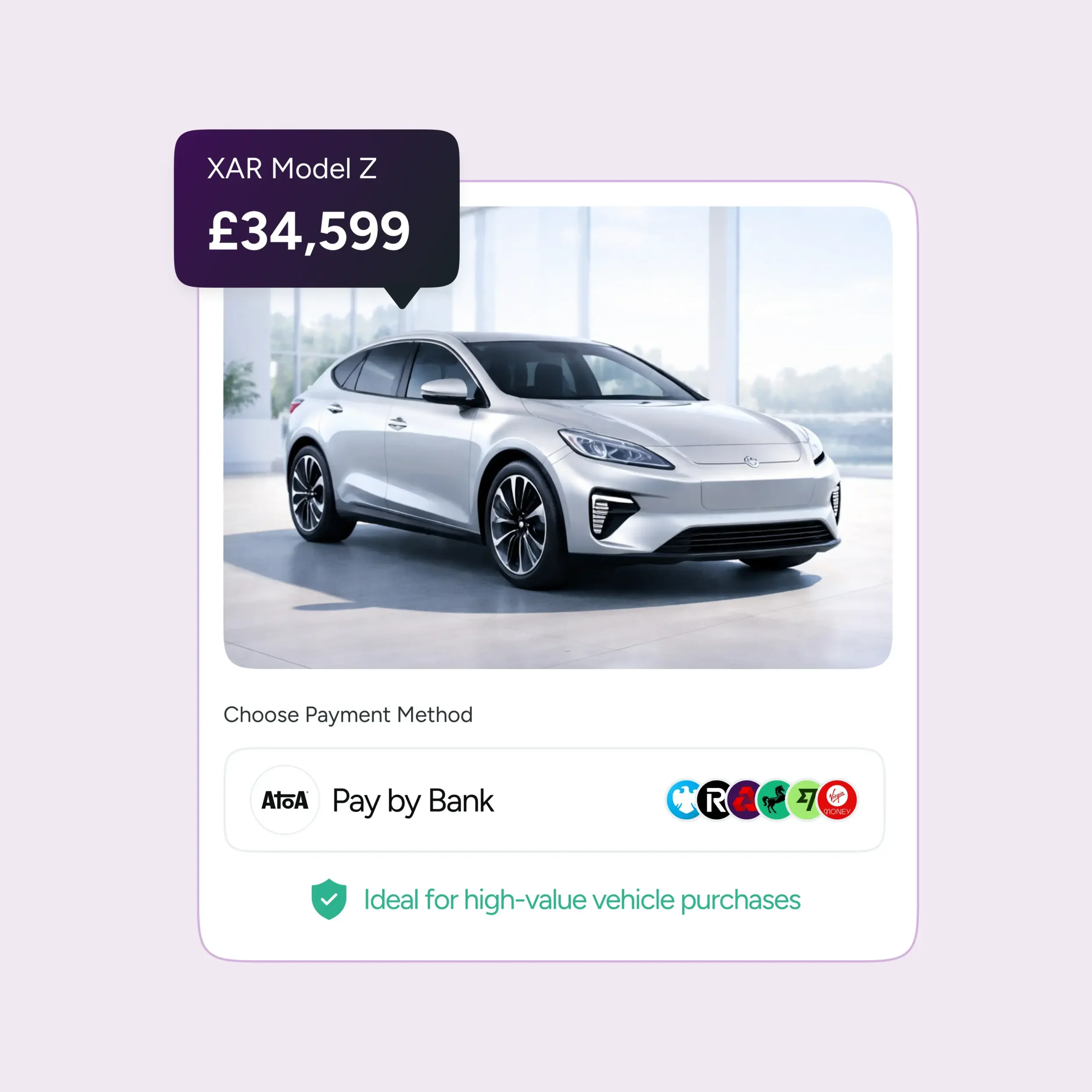
- How the customer chooses to pay – whether that’s Pay by Bank, card, or another payment method.
Getting all three right is what separates a genuinely flexible payment experience from simply having a card machine on the counter.
Payment structures: The timing and shape of what the customer pays
This is where flexibility really lives, giving customers options around when they pay and whether they pay in one go or in stages.
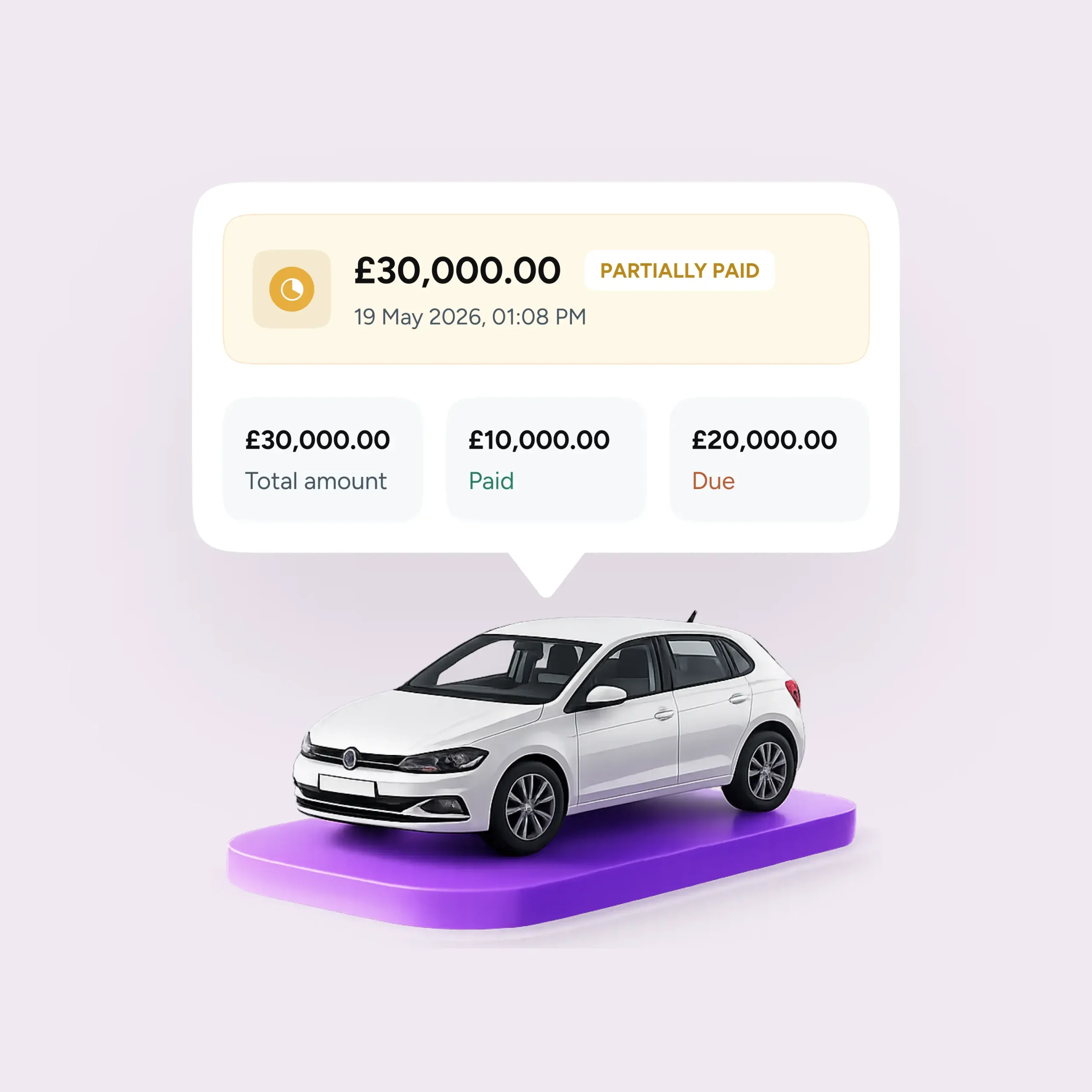
Deposits: Taking a deposit at booking confirms the job and covers parts costs upfront. It removes the financial risk of ordering parts for a customer who does not show, and gives the garage working capital before the work begins.
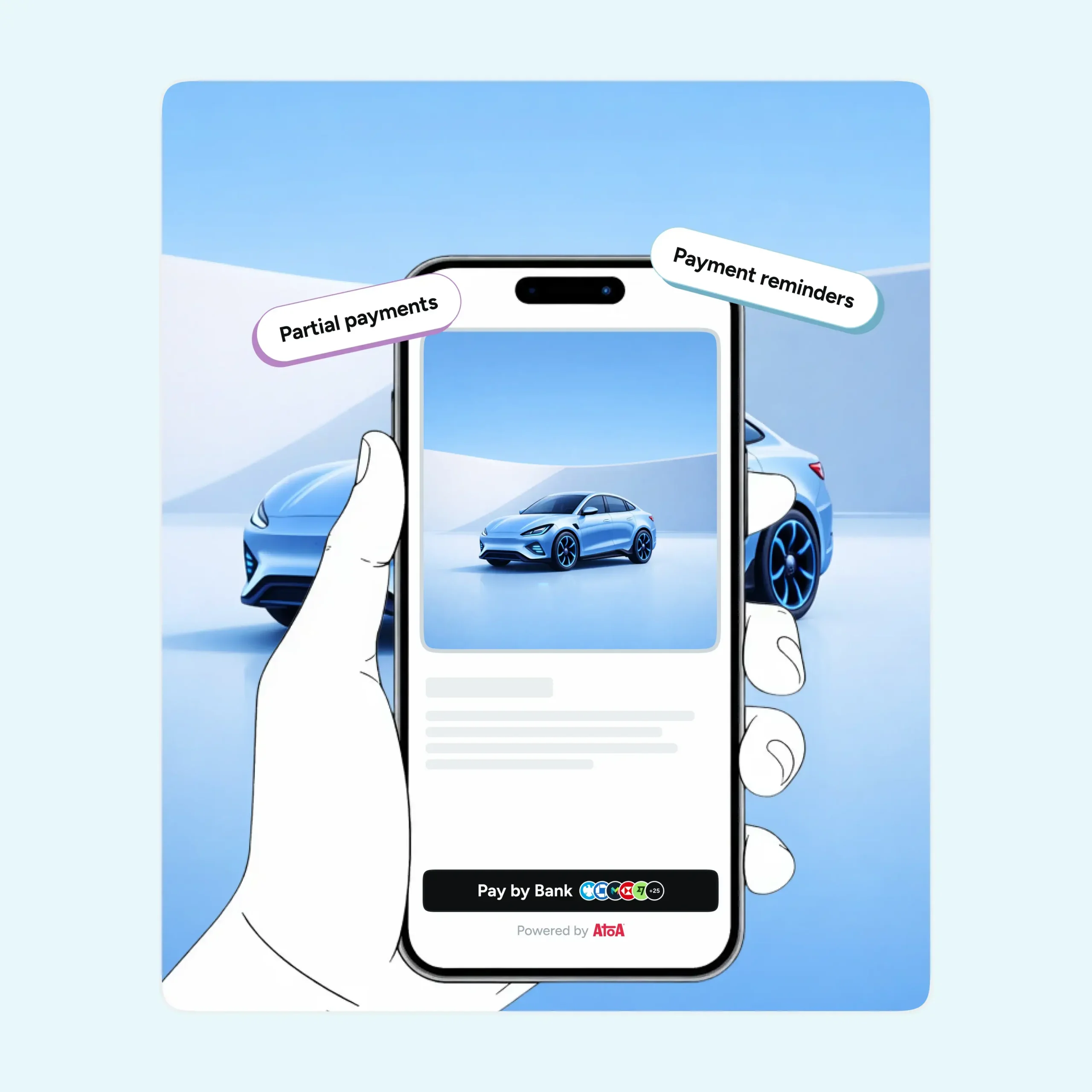
Staged payments: For larger repairs running into several hundred pounds, splitting the bill into stages makes the total feel more manageable. A deposit on booking, a payment when parts arrive, and the balance on collection is a structure that works well for bodywork, engine work, or any job where the customer needs breathing room. It keeps the work moving without putting pressure on the customer all at once.
Pay on collection: The most common structure for everyday servicing and repair jobs. The full bill is settled when the customer comes to collect.
Payment delivery channels: How the request reaches the customer
Before a customer can pay, they need to receive a payment request. How that request is delivered matters more than most garages realise.
Payment links
A payment link sent by SMS or email turns the billing process into a fully remote experience. The customer does not need to be present, have their card to hand, or wait until collection. They can review the job, see the total, and pay from wherever they are, at a time that suits them.
For garages, it means the bill is often settled before the customer even walks through the door to collect their vehicle. The customer clicks the link, is taken to a secure checkout, and chooses how to pay, by card or by Pay by Bank. For workshops handling multiple jobs a day, that convenience at both ends of the transaction makes a real difference to how smoothly the day runs.
QR codes
A QR code printed on the invoice or displayed at the counter serves the same purpose in person. The customer scans it on their phone and pays instantly, without needing the garage to handle a card terminal for every transaction. It is particularly useful in busy workshops where staff are moving between vehicles.
Digital invoices
A digital invoice sent after the job is complete gives the customer a clear, itemised record of the work carried out. It also includes a direct link to pay. It is more professional than a printed receipt handed over at the counter. It’s also easier for customers to reference later, and keeps a clean paper trail for the garage. For customers who prefer to review the bill at home before paying, a digital invoice with an embedded payment link removes any reason to delay.
Point of sale (POS)
For smaller, straightforward payments taken in person, a POS terminal at the counter is the fastest and simplest option. This could be a quick tyre check, a bulb replacement or even an MOT with no advisory work. A reliable POS setup is the baseline for in-person transactions, handling the smaller, everyday jobs while payment links and QR codes take care of the larger or more complex ones.
Payment methods: How money actually moves
Once a customer receives a payment request, whether through a link, a QR code, or a card terminal, they choose how to pay.
Pay by Bank
Pay by Bank lets customers approve a payment directly from their Bank app using Face ID, a fingerprint, or a passcode. It’s powered by open banking technology, which continues to gain momentum across the UK. In fact, open banking payments grew by 53% year-on-year in 2025. For garages, it offers lower fees, no chargebacks, and instant payment confirmation, with funds settling directly into your business account.
Card payments
Visa, Mastercard, Apple Pay, and Google Pay cover the vast majority of what UK customers expect. Card payments remain the default expectation for most consumers, and any garage without reliable card acceptance is already behind.
Buy now, pay later
BNPL providers such as Klarna and Clearpay operate as their own payment rails. This sits alongside cards and Pay by Bank rather than within them. In this scenario, the customer enters into a short-term credit arrangement with the BNPL provider. They pay the garage upfront and collects from the customer in instalments over several weeks or months. For garages handling higher-value jobs, offering BNPL as a payment method gives customers who need more time a structured way to commit to the work now and settle the cost later.
Making it work day to day
The payment conversation should happen at the booking stage. And not when the customer is standing at the counter waiting to collect. A brief mention of the available options when the job is confirmed removes the element of surprise. Businesses could also take a deposit taken upfront where appropriate, and a payment link sent ahead of collection.
Flexible payments auto repair garages offer help remove the friction that causes customers to hesitate. They replace it with a simpler process that makes saying yes to the work, and paying for it, as straightforward as possible.
FAQs
What are flexible payments for auto repair?
Flexible payments for auto repair refer to the range of options a garage can offer customers. This includes taking deposits at booking, splitting larger bills into staged payments, sending payment links remotely before collection, and accepting multiple payment methods such as card and Pay by Bank.
Can a garage take payment before the customer collects their car?
Yes. Garages can send a payment link by SMS or email before the customer arrives to collect their vehicle. The payment is settled before they walk through the door. This removes friction at the counter and speeds up the collection process.
Do flexible payment options help garages retain customers?
Yes. Offering flexible payments reduces the friction customers face when an unexpected or large repair bill arrives. When customers have options, they are more likely to approve the work. They may even return for future services, and recommend the garage to others.
SHARE ARTICLE
Share link copied!