
Ready to get started?
Easily integrate next-generation payments and financial data into any app. Build powerful products your customers love.
SHARE ARTICLE


 Share link copied!
Walk into a modern dental practice in 2026 and you will notice something subtle but important. The clinical equipment may look advanced, but the real transformation is happening behind reception. Dental payment processing 2026 is no longer about waiting for a card machine to approve a transaction. It is about real-time confirmation, automation, and control.
Treatment values have risen. Cosmetic dentistry, implants, orthodontics, and private plans often run into the thousands. At the same time, patients expect the same digital ease they experience in retail and banking. When those expectations are not met, payments slow down and admin time increases.
Why traditional payment models are struggling
Many practices still rely heavily on card payments and manual bank transfers. Cards introduce limits, especially on higher-value treatments. Settlements can take days. Chargebacks on elective or cosmetic procedures create unnecessary stress. Manual transfers require staff to check bank accounts and confirm funds before proceeding.
This is where dental practice revenue optimisation becomes a real conversation. Delayed payments affect cash flow. Chasing instalments drains reception time. Payment friction interrupts what should be a smooth patient journey.
The rise of instant dental payments
In 2026, more practices are adopting instant dental payments powered by real-time bank transfers. Instead of entering card details, patients approve the payment inside their own banking app. The funds move directly and confirmation is immediate.
For practices, this means:
- Deposits secured before treatment begins
- Clear confirmation before high-value procedures
- Faster access to funds
- Fewer failed transactions
When payment happens at the point of agreement, delays reduce naturally.
Real-time reimbursement in mixed practices
Private and mixed practices often juggle insurance reimbursements and patient contributions. A real-time reimbursement dental model allows patient payments to be settled immediately while insurance elements are processed in parallel.
This reduces uncertainty around outstanding balances and gives finance teams clearer visibility over what has been paid and what remains due. It also shortens the gap between treatment delivered and revenue recognised.
Dental payment automation is becoming standard
The technology behind dental practices is evolving quickly. Research from Grand View Research shows the UK cloud-based dental practice management software market generated USD 33.4 million in revenue in 2022 and is expected to reach USD 78.8 million by 2030, reflecting the rapid adoption of digital systems across the sector.
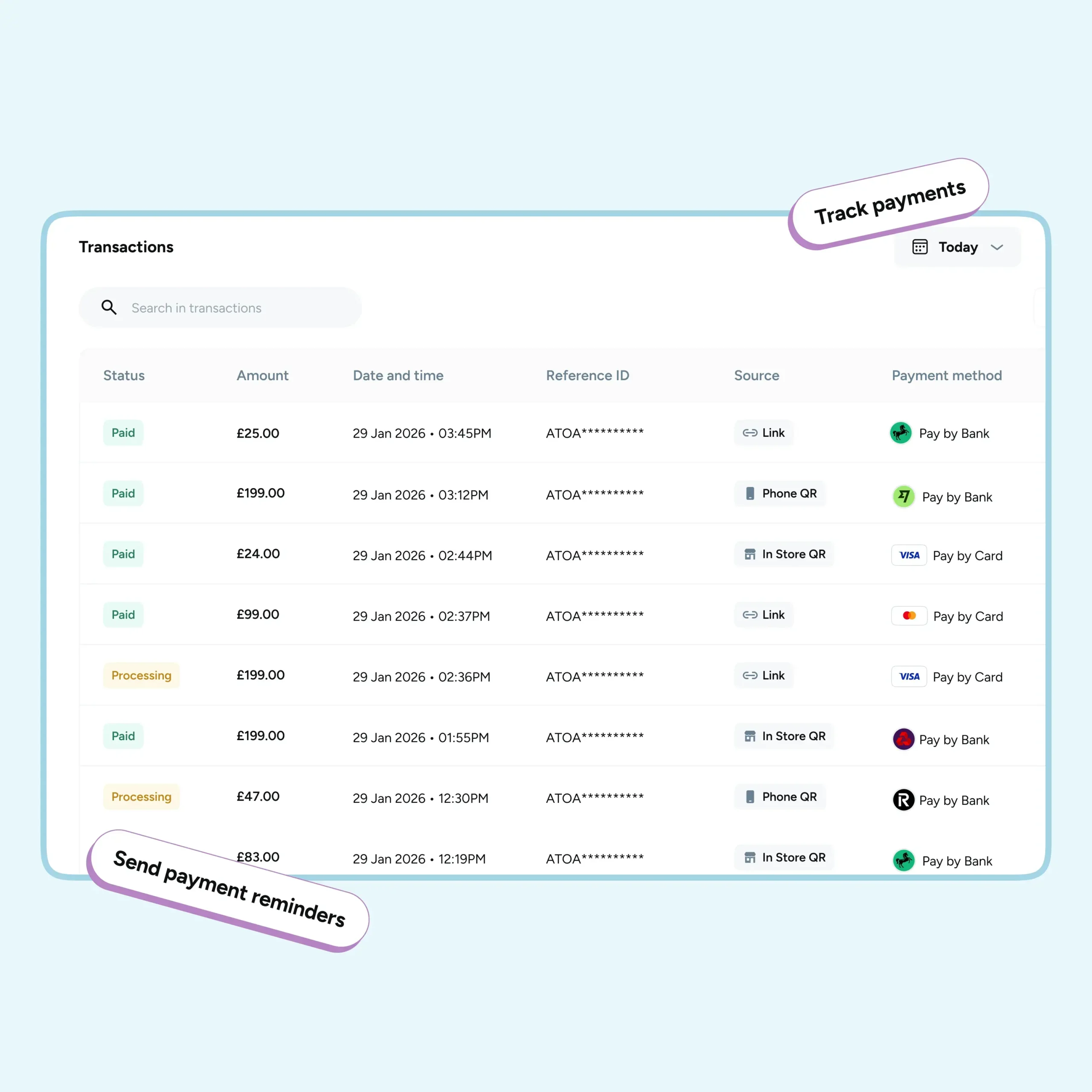
As clinics rely more on cloud platforms for scheduling, records, and billing, dental payment automation is becoming part of the same infrastructure. In 2026, forward-thinking clinics are not waiting for patients to remember invoices. Payment links are sent automatically after consultations, instalments are scheduled at agreed intervals, and reminders are triggered before due dates.
Automation does not replace personal service. It removes administrative repetition so staff can focus on patients rather than spreadsheets.
Digital dental payments improve patient experience
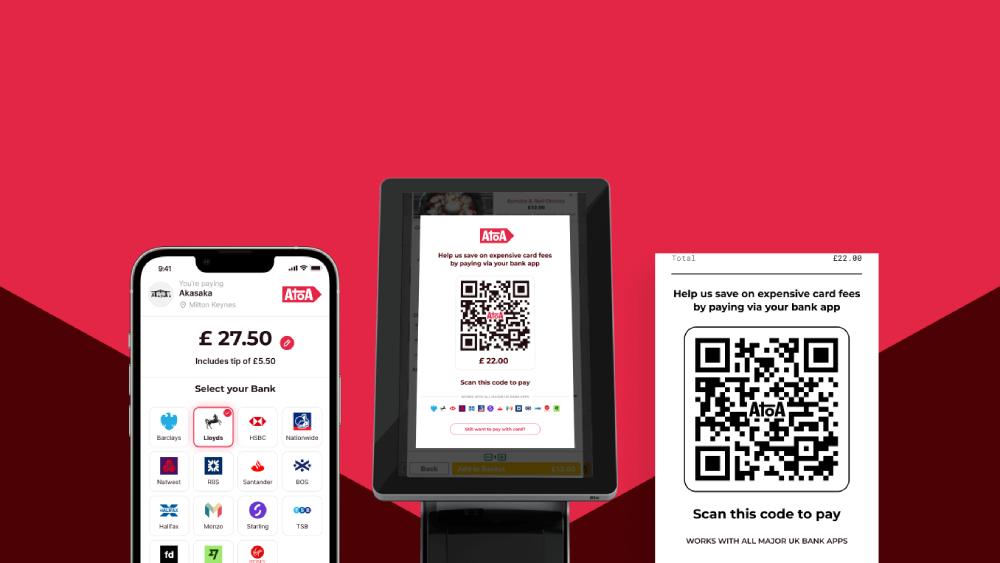
Patients are increasingly comfortable with digital dental payments. QR codes at reception, secure SMS links, and online treatment plan approvals make paying feel straightforward rather than awkward.
Importantly, practices do not have to abandon cards. A balanced approach works best. Cards remain useful for smaller payments, while bank-based real-time transfers offer greater certainty for higher-value treatments.
Providers such as Atoa are helping dental practices modernise their payment infrastructure, offering Pay by Bank alongside cards and enabling real-time confirmation without disrupting existing workflows.
Final thoughts
Dentistry is evolving beyond the treatment room. Today’s practices manage digital records, online bookings, treatment plans, and patient communication through integrated systems. Payments are becoming part of that same ecosystem.
Real-time payment infrastructure simply brings the financial side of a practice up to the same standard as the clinical side. When payments are confirmed instantly and tracked automatically, reception teams spend less time chasing invoices and more time supporting patients.In a sector where trust and efficiency matter equally, the way a practice collects payments is quietly becoming part of the overall patient experience.
SHARE ARTICLE
Share link copied!