
Ready to get started?
Easily integrate next-generation payments and financial data into any app. Build powerful products your customers love.
SHARE ARTICLE


 Share link copied!
Most vet practices accept card payments. Most vet practices also accept only card payments. And for a sector processing thousands of transactions a week, often on bills running into hundreds or thousands of pounds, that default is quietly costing a significant amount of money.
Card processing fees in the UK typically run between 1.5% and 2.5% per transaction depending on the provider, card type, and whether the payment is in person or remote. For a routine consultation at £60, that is manageable. For a complex procedure costing £800, that same percentage starts to feel like a real number.
Where the cost adds up for vet practices
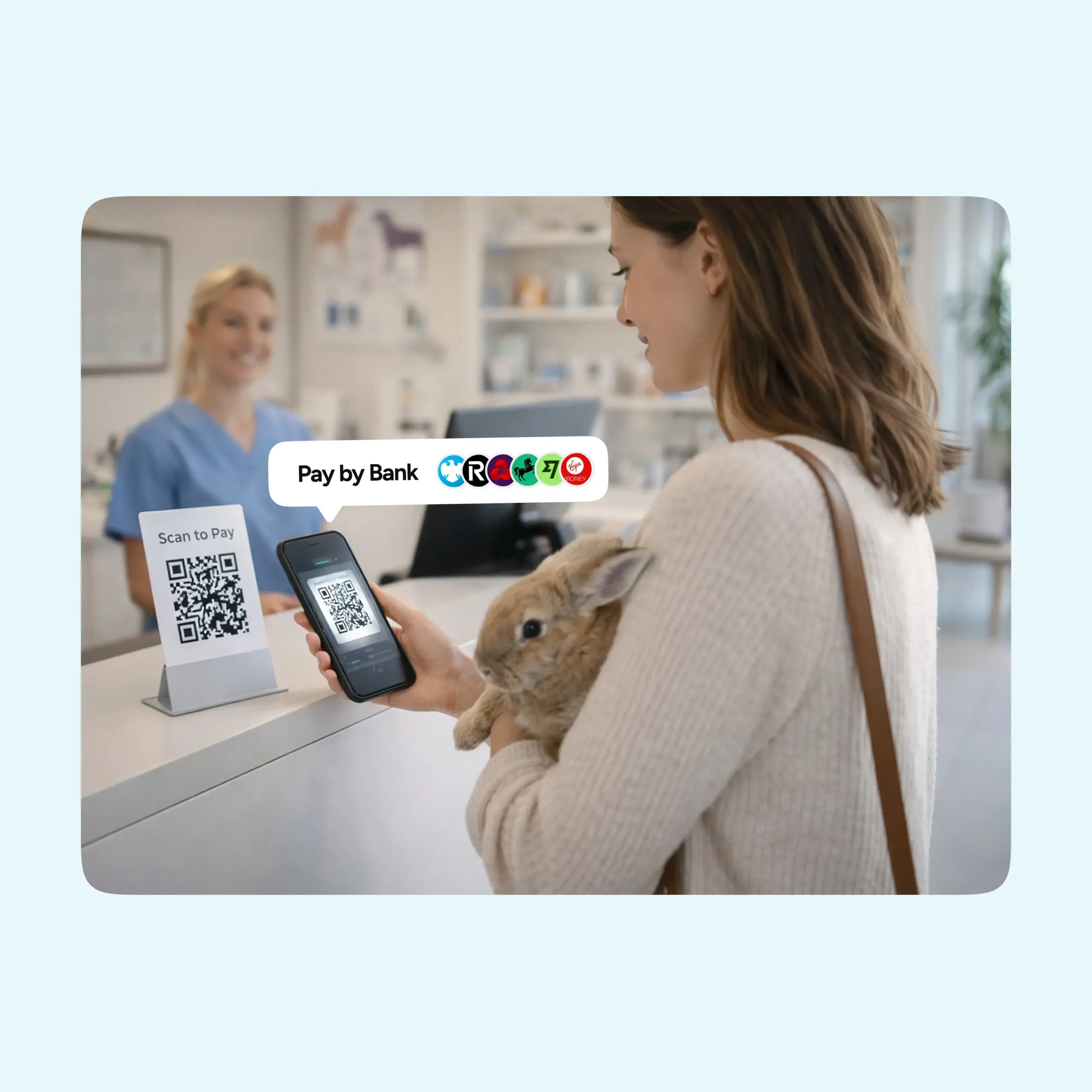
Take a fairly typical scenario. A rabbit owner brings in their pet after noticing it has stopped eating. The vet diagnoses GI stasis, a common but serious condition in rabbits that requires fluids, gut motility medication, and monitoring. The bill comes to around £400.
At a standard card processing rate of 1.75%, the practice pays £7 in fees on that single transaction. That might not sound like much in isolation, but a busy practice handling fifty transactions a day at an average bill of £150 is paying roughly £130 a day in card fees. Over a year, that is close to £50,000 going to card networks rather than back into the business.
The rabbit owner’s situation also illustrates another gap in card-only setups. If the animal needs follow-up treatment or a second visit the same week, and the owner cannot get back to the practice immediately to pay, the options are limited. A payment link sent by SMS or email solves this, but only if the practice has the infrastructure to send one.
What Pay by Bank changes
Pay by Bank is an account-to-account payment method that uses open banking technology to move money directly from the client’s bank account to the practice’s, bypassing card networks entirely. Because Visa and Mastercard are not involved, the fees are significantly lower than standard card processing rates.
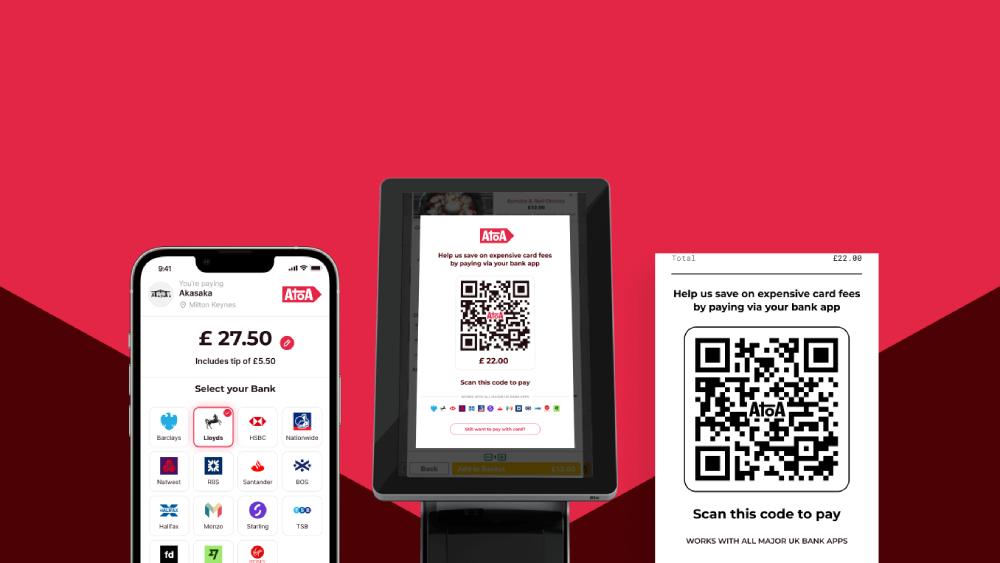
For the practice, this means keeping more revenue on high-value transactions. For the client, the experience is straightforward: they tap a link or scan a QR code, approve the payment in their banking app using Face ID or fingerprint, and the money arrives instantly. No card required.
This is particularly relevant for vet practices given the scale of transactions flowing through the sector. According to the Association of British Insurers, a record £1.23 billion was paid out in pet insurance claims in 2024 alone and that covers only insured pets. The uninsured portion of the market is substantial, meaning practices are processing large sums daily, often on card. On a £600 dental procedure or a £1,000 ear treatment, switching even a portion of those payments to Pay by Bank translates directly into money the practice keeps.
Offering both, not choosing one
The sensible approach for most practices is not to replace card payments but to add Pay by Bank alongside them. Some clients will always prefer to tap their card. Others will be happy to pay from their banking app. Especially if it is presented clearly at checkout or sent as a payment link.
Atoa supports both veterinary payment methods from the same platform. QR codes at reception handle in-person payments. Payment links sent by SMS or email handle remote billing, follow-ups, and deposits for upcoming procedures. All transactions settle quickly and reconcile automatically, reducing admin for front-of-house staff.
A practical place to start
Vet practice revenue does not need to be eroded by payment infrastructure. Expanding the veterinary payment methods you offer, starting with Pay by Bank alongside cards, is one of the more straightforward ways to reduce transaction costs without overhauling an entire payment setup.
Book a demo with the Atoa team to see how it works in practice.
SHARE ARTICLE
Share link copied!