


Card on file. Save a card, charge it later.
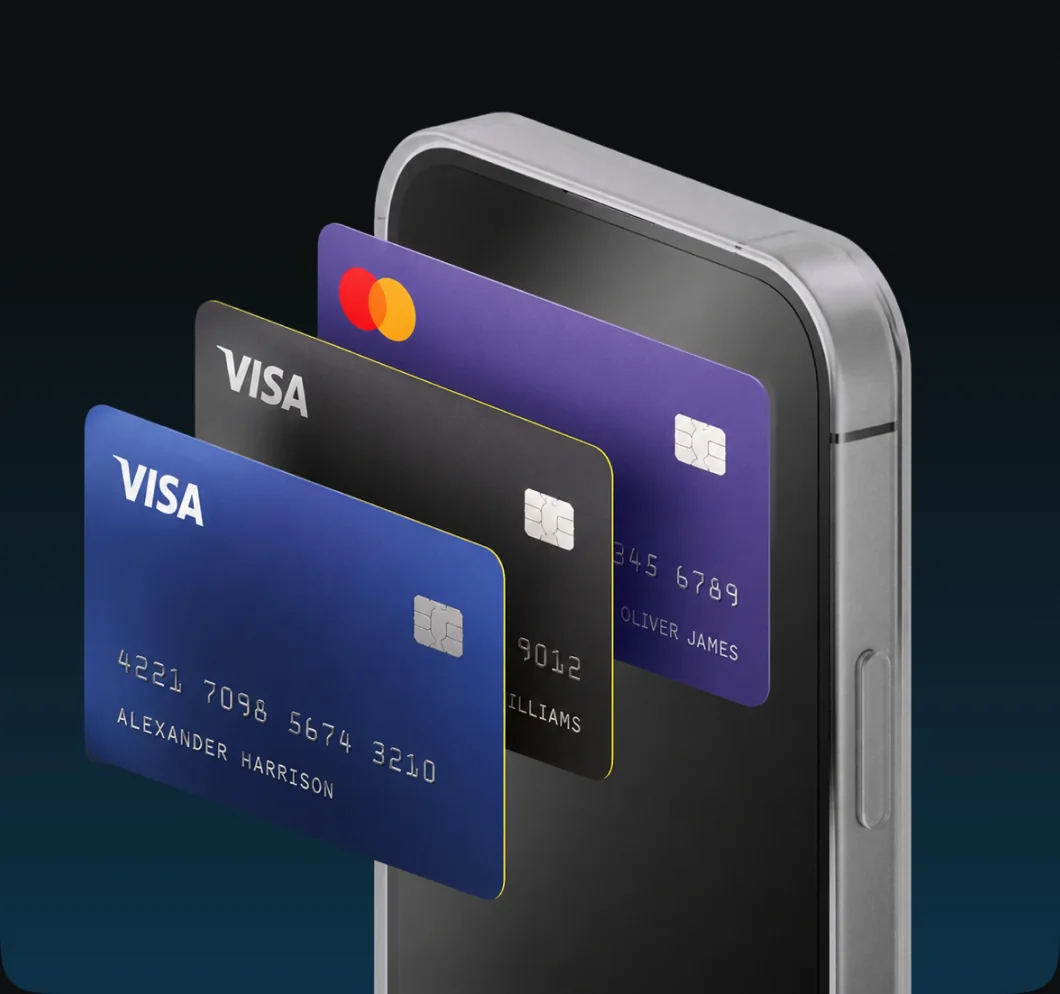
How card on file works with Atoa
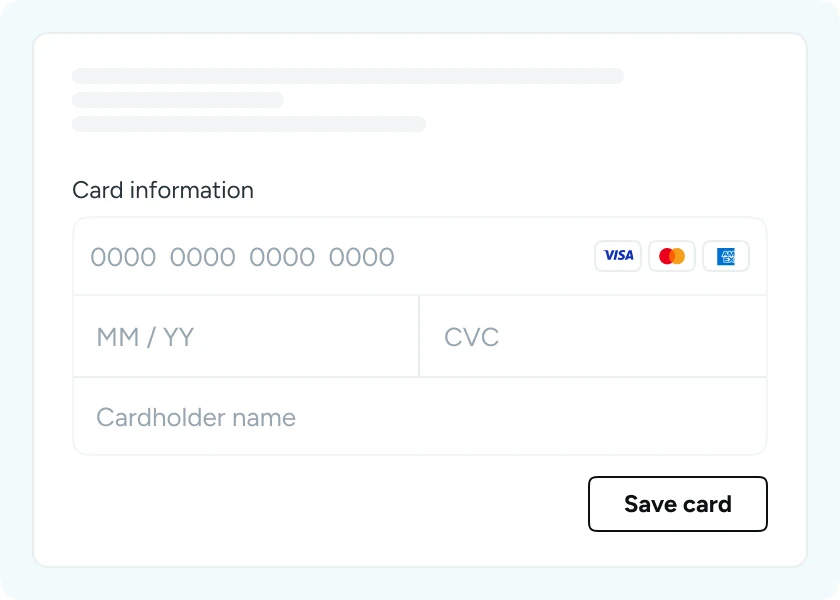
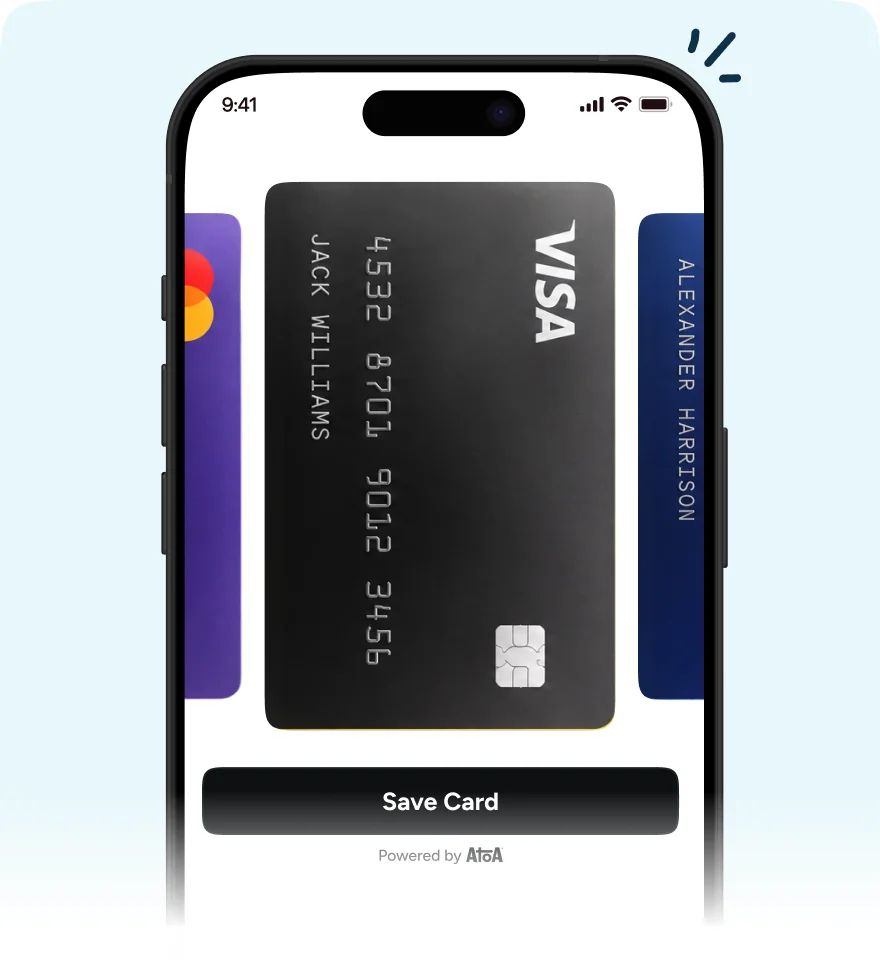
The customer saves their card
At checkout, they pay and choose to save the card. It is verified with a one-time passcode and confirmed with 3D Secure, then stored securely as a token.
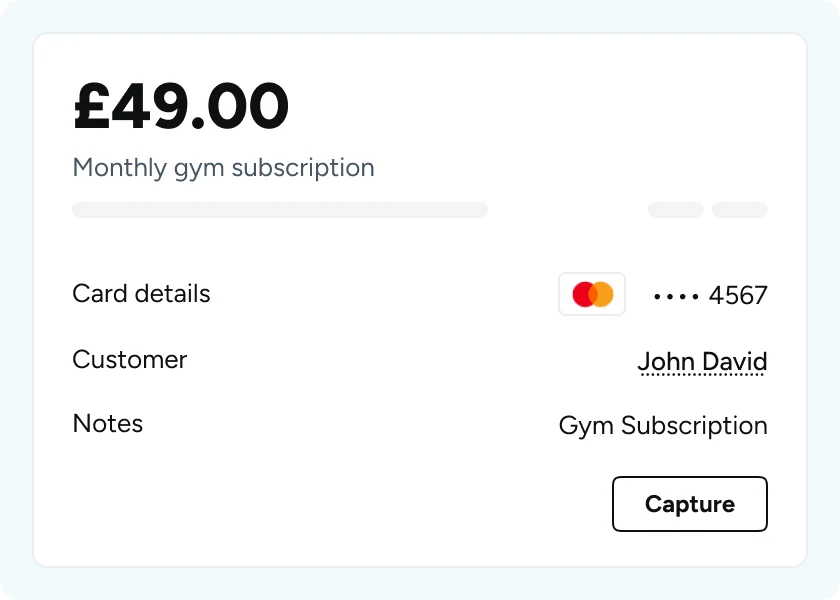
You charge it again for future payments
Take a one-click repeat payment or collect a subscription or on-demand bill. The amount can change each time, and you collect when the work is done or the invoice is due.
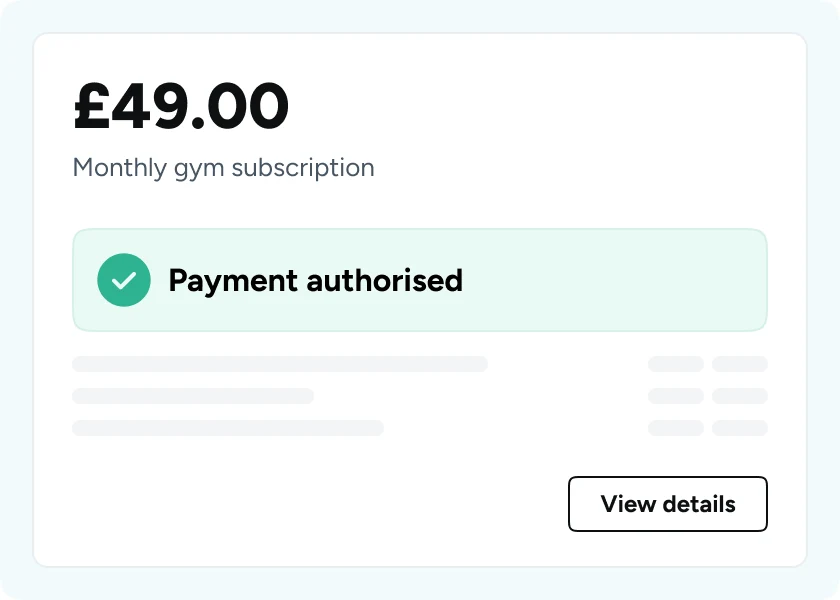
You stay in control of settlement
Capture the payment straight away, or authorise now and capture later. Every charge appears in your Atoa dashboard the moment it is taken, so there is nothing to reconcile by hand.

What is Card on file?
What businesses use card on file for
Try Atoa-
Faster repeat checkout
Returning customers pay in one tap with the card they saved, instead of entering it again.
-
Subscriptions and memberships
Bill a saved card on a schedule, without the customer re-authorising every time.
-
On-demand and usage billing
Collect payment for a service after it has been delivered without needing the customer present.
-
Deposits and pre-authorisations
Returning customers pay in one tap with the card they saved, instead of entering it again.
-
Invoice settlement
Send a payment request against a saved card so clients can settle invoices without a phone call or a card machine.


Why take card on file payments with Atoa
Try Atoa
Secure by design
Cards are saved after 3D Secure and an explicit one-time passcode, then stored as tokens. You never handle or see the raw card number, only a masked version.

Real-time tracking
Every charge is confirmed in real time and visible in your Atoa dashboard, so your records are always current without manual reconciliation.

A lower-cost option for recurring
For subscriptions and memberships, you can also collect through open banking with recurring payments (VRP), which avoids card fees and expired-card failures.

One-click for customers
Saved cards appear at checkout, so returning customers pay in a tap. No re-entering details, no drop-off.

Cards you know
Visa, Mastercard, American Express, Apple Pay and Google Pay, with card payments from 1.3%*

Flexible capture
Capture immediately, or authorise now and capture later for deposits and pre-authorisations.
Is card on file safe?
The customer authorises the save
Cards are saved after 3D Secure (Strong Customer Authentication) and an explicit one-time passcode, so it is the customer who actively approves storing the card.
The customer stays in control
The customer can withdraw consent at any time. Under FCA guidelines on recurring card payments, they can also instruct their card issuer to stop future charges, even without contacting the business first.
You control each charge
Every charge is initiated by you against the saved token, with a clear record and status for each transaction.
Tokenised, not stored raw
The card is held as a secure token. You and your systems never see or keep the full card number, only a masked version.
Integrate with the tools you already use
Explore Integrations
A trusted partner
for businesses in the UK
See how much you can save with Pay by Bank
- Up to 50% lower payment fees
- Faster access to funds
- One platform for modern payments

ISO-27001 and SOC2 Secure

Security backed by UK banks

Authorised by the FCA

Schedule a quick chat with our team!
Select your preferred time, and our team will give you a short demonstration of how Atoa can work for your business. Book a call
Book a callCard on file is when a business securely saves a customer’s card so it can charge the same card again later, without the customer re-entering their details. It’s used for repeat purchases, subscriptions and on-demand payments.
It means a customer’s card is kept “on file”, stored securely as a token, so a business can charge it again with the customer’s agreement. The customer doesn’t have to type their card number each time they pay.
A card on file transaction is a payment charged to a card that was saved earlier. It can be one the customer completes in one click at checkout, or one the business charges when the customer isn’t present (off-session), such as a subscription renewal.
Tokenisation replaces the customer’s real card number with a unique token when the card is saved. The business charges the token, not the card number, so the raw card details are never stored in your systems. This keeps saved cards secure and reduces your handling of card data.
Yes. With Atoa, cards are saved after 3D Secure authentication and a one-time passcode, and stored as tokens, so the full card number is not held in your systems. Atoa is FCA authorised (FRN #1007647) and ISO 27001 and SOC 2 certified.
Yes. Once a customer has saved their card, you can charge it off-session for subscriptions or on-demand billing. You can capture the payment immediately, or authorise it and capture later.
Yes. Card on file uses card payments, so card payments need to be activated on your Atoa account. Our UK team can help you enable it.
Yes. As well as card on file, Atoa offers open banking recurring payments (VRP), which collect from the customer’s bank rather than a card, so there are no card fees and no expired-card failures.
