Ready to get started?
Easily integrate next-generation payments and financial data into any app. Build powerful products your customers love.
SHARE ARTICLE


 Share link copied!
When customers are paying £10 or £20, convenience matters most. But when the amount jumps into the hundreds or thousands, the priorities change. People want trust, certainty, and security. So do businesses and that is why across the UK, more merchants are turning to Pay by Bank for high-value transactions. What started as an alternative payment method is quickly becoming the preferred choice for large one-off payments, deposits, and invoices.
The problem with cards at higher amounts
Card payments were built for everyday spending. For high-value transactions, they start to show their limits. Percentage-based fees quickly become expensive when the ticket size grows. A 2-3% fee on a £2,000 payment is real money lost. Large card payments are also more likely to be flagged, declined, or challenged by spending limits, especially for personal debit cards.
Then there is the risk of chargebacks and disputes. Even genuine payments can be reversed weeks later, leaving businesses exposed after delivering goods or services. For many merchants, this uncertainty is the biggest barrier to accepting big payments by card.
From the customer side, typing card details for a large amount often feels uncomfortable. The higher the value, the higher the hesitation.
What makes Pay by Bank different
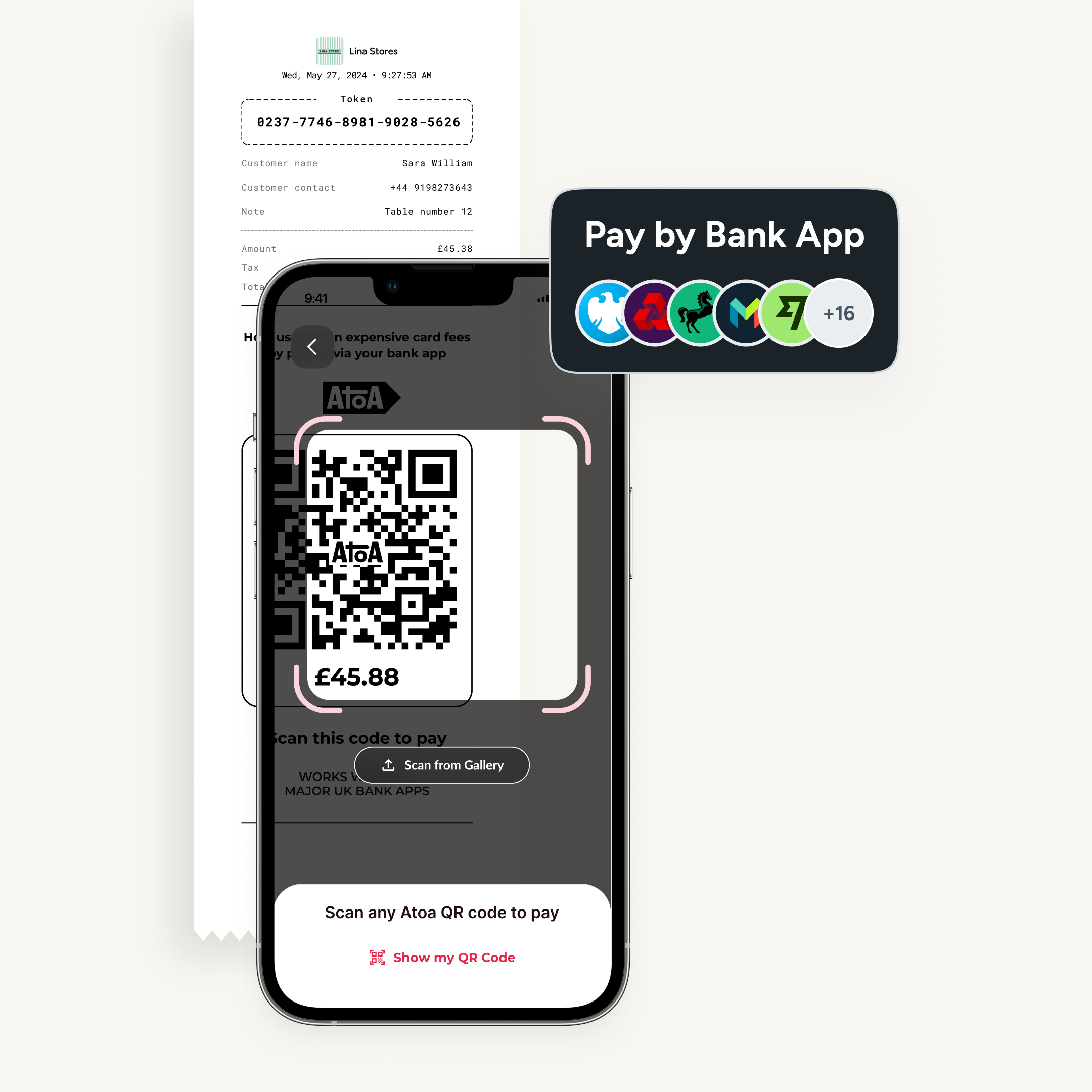
Pay by Bank uses open banking technology to let customers pay directly from their own banking app. There are no card numbers to enter and no third parties holding funds in between. The customer simply selects their bank, confirms the payment in their app, and the money moves straight from their account to the business.
It feels familiar, because it is a flow similar to the one people already use for everyday bank transfers. But it is faster, more structured, and built for payments.
Why it works so well for high-value payments
As amounts grow, the benefits of Pay by Bank become clearer:
- Lower fees instead of card percentages
- No chargebacks on authorised payments
- Higher trust as customers pay through their own bank app
- Fewer failures without card limits or expiry issues
- Faster settlement, improving cash flow
For large invoices, deposits, or one-off purchases, this combination is hard to beat.
Where we see it in action
High-value Pay by Bank payments are already common across:
- Professional and legal services
- Private healthcare and dental treatments
- Vehicle purchases and deposits
- Property-related payments
- B2B invoices and supplier settlements
Merchants want certainty. Customers want reassurance. Pay by Bank gives both.
A high-value example from the automotive sector
At Atoa, this shift is something we see in real businesses every day. Ponko, a well-established car dealership and workshop in Cambridge, is a good example. With hundreds of vehicles and frequent high-value transactions, Ponko needed a payment method that was fast, reliable, and cost-effective.
By moving the majority of their payments to Pay by Bank through Atoa, Ponko now accepts instant payments directly from customers’ banking apps for a majority of transactions. The change has significantly reduced card fees, saving thousands of pounds each month, while also improving cash flow by getting funds settled quickly.
The team also uses SMS payment links to take deposits, vehicle payments, and servicing fees remotely. This means customers can pay securely even when they are not physically at the dealership, helping Ponko complete sales faster and deliver a smoother buying experience.
Big payments need a better way
As transaction values rise, expectations change. Businesses need to protect margins and cash flow. Customers want to feel safe moving larger sums. Pay by Bank is no longer just a nice-to-have option. For many UK businesses, it is becoming the default way to take high-value payments, combining trust, speed, and cost control in one simple flow.Book a demo with Atoa’s team to see how Pay by Bank can help you take high-value payments with confidence and give your customers a smoother way to pay. Thousands of UK businesses are already benefiting from it.
SHARE ARTICLE
Share link copied!