
Ready to get started?
Easily integrate next-generation payments and financial data into any app. Build powerful products your customers love.
SHARE ARTICLE


 Share link copied!
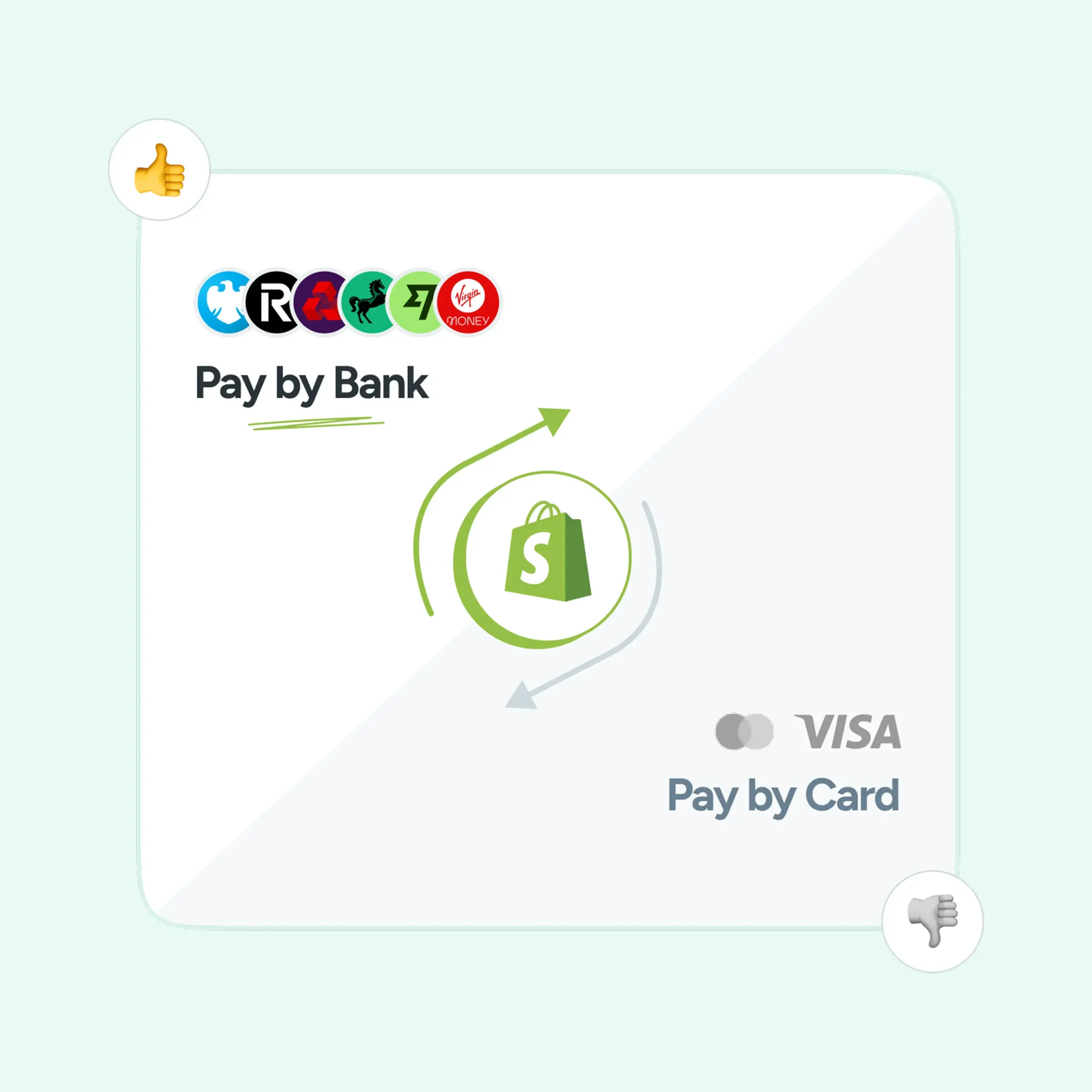
The way businesses collect payments through Xero hasn’t changed much in years. Most invoices still rely on card payments or Direct Debit, even though both come with trade-offs around fees, settlement times or flexibility. Open banking has introduced another option. Pay by Bank gives businesses a faster, lower-cost way to collect one-off payments, while Variable Recurring Payments (VRP) are opening the door to a new generation of recurring payments that are more flexible than traditional Direct Debit.
If you’re deciding between Pay by Bank and Direct Debit in Xero, this guide explains the differences, the costs, and which option makes the most sense for your business, and where VRP fits in.
How each works
Before comparing costs and use cases, it’s worth understanding how each payment method actually works. While all three help you collect payments through Xero, the customer journey, settlement times, and level of control are very different.
Direct Debit
The customer signs a mandate and you collect payments on an agreed schedule. Payments are submitted in batches and typically take a few working days to clear.
The Direct Debit Guarantee gives customers the right to a full and immediate refund if a payment is taken in error. It’s one of the reasons Direct Debit remains a trusted payment method. However, failed collections, re-presentations, and indemnity claims are all part of managing Direct Debit at scale.
Pay by Bank
The customer approves a payment in their own Bank app, using Face ID, fingerprint, or passcode, and the money settles in seconds over the Faster Payments network. The payment carries the invoice reference from the start, so reconciliation in Xero is clean and automatic. There are no card details involved and no chargebacks on bank-approved payments.
Variable Recurring Payments (VRP)
VRP is an open banking payment method designed for recurring payments. Customers approve a recurring payment once, within agreed limits, and can view or cancel that permission directly from their Bank app whenever they choose.
Commercial VRP, which allows businesses to collect recurring payments, is now live in the UK and is gradually becoming available across more sectors. Availability still depends on your payment provider and use case, but it’s expected to play an increasingly important role in recurring billing.
How they compare
| Pay by Bank / VRP | Direct Debit | |
|---|---|---|
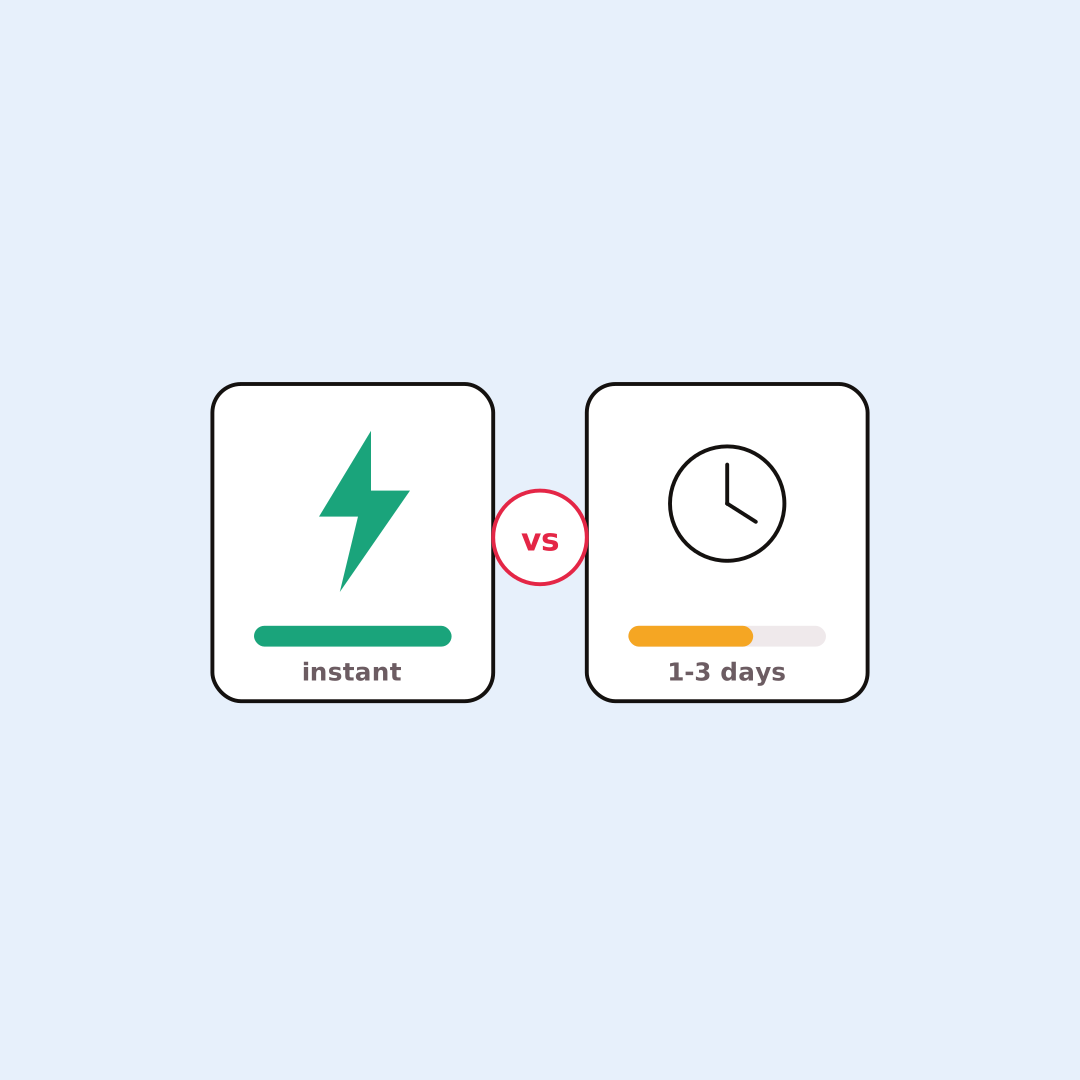
| Settlement | Instant for smaller businesses and next day for larger businesses | A few working days |
| Cost | Usually lower (Pay by Bank from 0.6% + VAT) | Low, but batch-based |
| Control and cancellation | Customer manages and cancels in their Bank app | Mandate managed by you and the scheme |
| Failed payments | Fewer, no stored details to expire or fail | Failures and re-presentations are a possibility |
| Buyer protection | SCA on each approval or mandate | Direct Debit Guarantee |
| Reconciliation | Payment carries the invoice reference | Depends on setup |
When Direct Debit still makes sense
Direct Debit is not going anywhere. It is reliable, deeply familiar to UK customers, and well suited to fixed recurring bills on a predictable schedule. The Direct Debit Guarantee gives customers confidence, particularly for larger or long-term commitments. If you collect the same amount on the same date each month and your customers already expect to set up a Direct Debit, it remains a sound and proven choice.
The honest position in 2026 is that commercial VRP is live and growing but still early in its rollout for many sectors. For most businesses it complements Direct Debit rather than replacing it outright… at least for now.
When Pay by Bank makes more sense
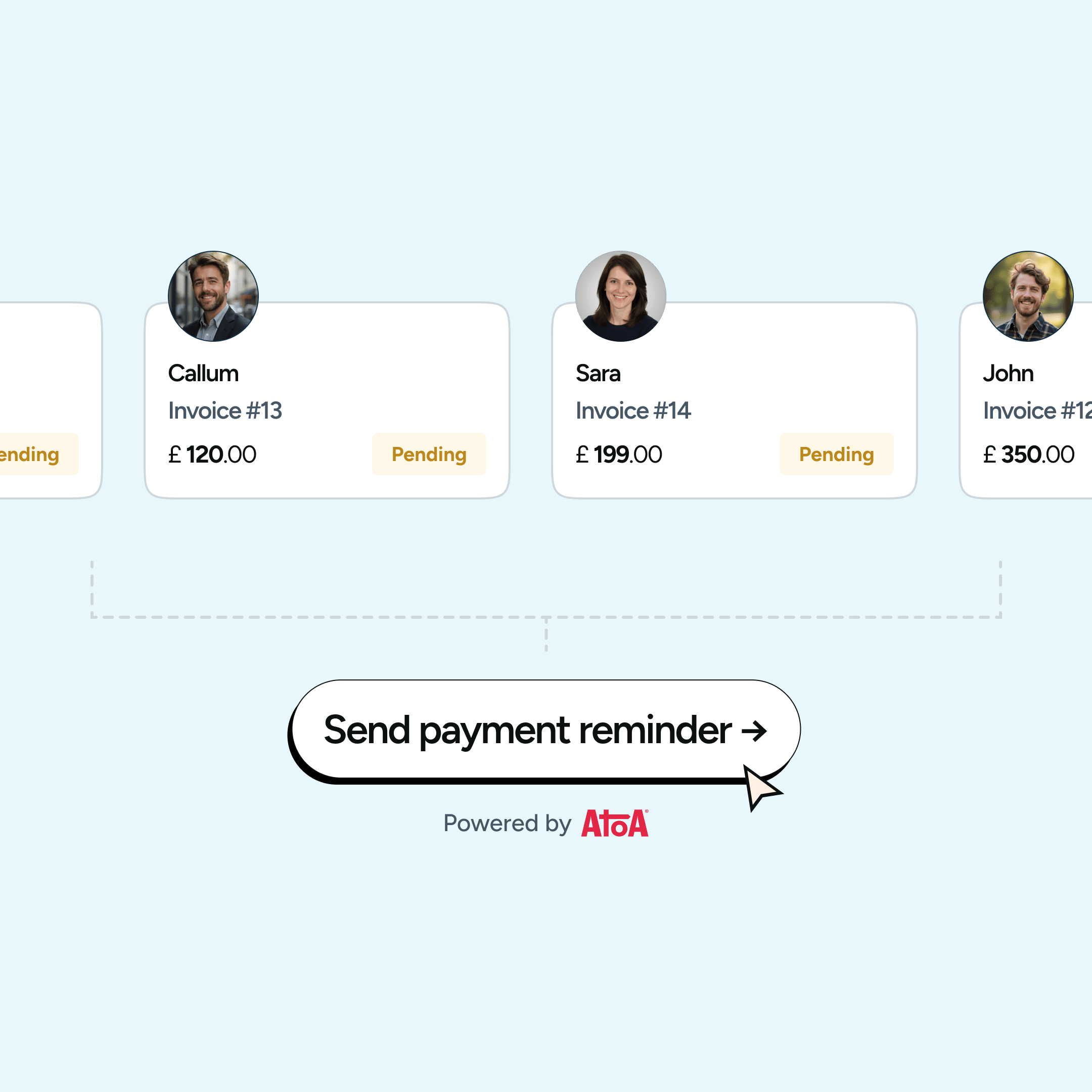
Pay by Bank earns its place most clearly on one-off and ad-hoc Xero invoices, where the speed and lower cost make an immediate difference. Add a pay-now link to an invoice, the customer approves it in their banking app, and the money is in your account in seconds. The invoice reconciles automatically in Xero because the payment carries the reference.
It also suits higher-value invoices where a card fee would be significant, and any situation where chargeback risk matters. A bank-approved push payment cannot be charged back, which removes both the financial exposure and the admin of managing disputes.
Pay by Bank and VRP for Xero users: The practical approach
For most Xero users, the best setup is not a choice between one method and the other, it is knowing which to use when.
Use Pay by Bank for one-off and ad-hoc invoices where instant settlement and lower fees matter. The pay-now link does the work, and Xero reconciles the payment automatically.
Use Direct Debit for fixed, predictable recurring billing where customers are already comfortable with the mandate model and the Direct Debit Guarantee matters to them.
Watch VRP as it rolls out for your sector. When it becomes available for your use case, it offers the speed and lower cost of Pay by Bank on a recurring arrangement without asking the customer to approve each payment individually.
Running Atoa alongside another payment provider on Xero covers both jobs cleanly: Pay by Bank for one-off invoices, Direct Debit for recurring clients, and VRP when it lands for your sector.
See Atoa for Xero and our guide on how to compare Pay by Bank providers.
FAQs
What is the difference between Pay by Bank and Direct Debit?
Pay by Bank moves money instantly when the customer approves it in their Bank app. Direct Debit pulls an agreed amount on a schedule, in batches, clearing over a few working days.
Is Pay by Bank cheaper than Direct Debit?
Often it is lower cost on a percentage basis, and it settles far faster. Compare it against your own Direct Debit costs and volumes, since the best choice depends on how you bill.
Is VRP replacing Direct Debit?
Not yet. Commercial VRP is live and rolling out in the UK and is well suited to recurring open banking payments, but it is early in its wider rollout and complements Direct Debit for many businesses rather than replacing it at this stage.
Which is better for Xero recurring payments?
It depends on what you are billing. For fixed, predictable amounts on a set schedule, Direct Debit is proven. For instant settlement, lower fees, and customer-managed control, Pay by Bank and VRP are worth comparing as VRP becomes available for your sector.
Sources
- Direct Debit Guarantee and scheme mechanics: Bacs, the Direct Debit Guarantee
- Commercial VRP rollout in the UK: PSR, Commercial VRP
- Atoa for Xero: paywithatoa.co.uk/xero
- Atoa Variable Recurring Payments: paywithatoa.co.uk/variable-recurring-payments
SHARE ARTICLE
Share link copied!