
Ready to get started?
Easily integrate next-generation payments and financial data into any app. Build powerful products your customers love.
SHARE ARTICLE


 Share link copied!
Your practice just collected £2,000 from a patient paying for their Invisalign treatment. Except… the card processor just took £60 of it. And you won’t actually see that money for another three days. And there’s a small chance the patient might dispute it in two months, clawing back the entire amount.
Welcome to the joys of card payments. They work, sure. But they’re expensive, slow, and come with a permanent question mark hanging over every transaction.
The real cost of “convenient” card payments
Most dental practices accept the 1.5% to 3% card processing fee as just another cost of doing business. It’s become so normal that nobody really questions it anymore. But let’s do some quick maths on dental invoice payments.
If your practice processes £30,000 in patient payments monthly at a 2% card fee, that’s £600 gone every single month. £7,200 a year. On a practice processing £100,000 monthly? You’re looking at £24,000 annually just to receive money that’s already yours.
And that’s before we talk about chargebacks. A patient disputes a charge six weeks after their treatment, and suddenly you’re fighting to prove you actually did the work. Even if you win, you’ve lost hours dealing with it.
The shift towards bank payments isn’t just happening in dental practices. According to research by The Payments Association, healthcare providers show strong potential for adoption, with 43% believing Pay by Bank would be suitable for their practices. The appeal? Lower fees and faster settlements that directly improve cash flow.
Enter Pay by Bank dental invoice payments
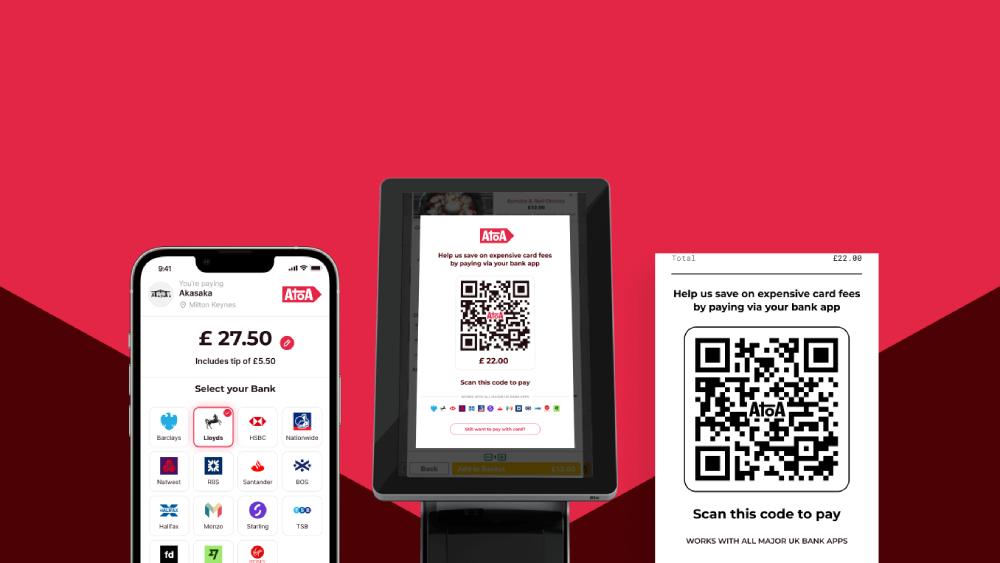
Pay by Bank flips the entire model. Patients pay directly from their bank account using open banking technology. They click a payment link, select their bank, approve with Face ID or fingerprint in their banking app, and done. The money lands in your account within seconds.
No card networks taking their cut or three-day settlement waits. No chargebacks because the payment is authenticated through their actual bank with the same security they use for checking their balance.
For bank transfer dental payments, the fees are typically a fraction of card processing costs. Some providers charge a flat fee per transaction, others a much smaller percentage. Either way, you’re keeping significantly more of what patients pay you.
Let’s revisit that earlier example. A practice processing £30,000 monthly through Pay by Bank instead of cards could save anywhere from £300 to £500 monthly depending on their provider. That’s £3,600 to £6,000 back in your practice every year.
The “but what about patients who want cards?” question
Here’s where practices sometimes hesitate. “My patients are used to paying by card. Won’t this confuse them?”
Fair concern. But here’s the thing: you don’t need to choose. The smartest approach for low fee dental payments isn’t replacing cards entirely. It’s offering both.
Some patients prefer cards and the points they earn. Others are perfectly happy paying from their bank account when they understand it’s instant and secure. By offering both options, you let patients choose while benefiting from lower costs whenever they pick Pay by Bank.
Think of it like this: if even half your patients opt for bank transfer dental payments, you’re still cutting your processing costs roughly in half. That’s thousands back in your practice without losing any patient convenience.
Making it actually work in your practice
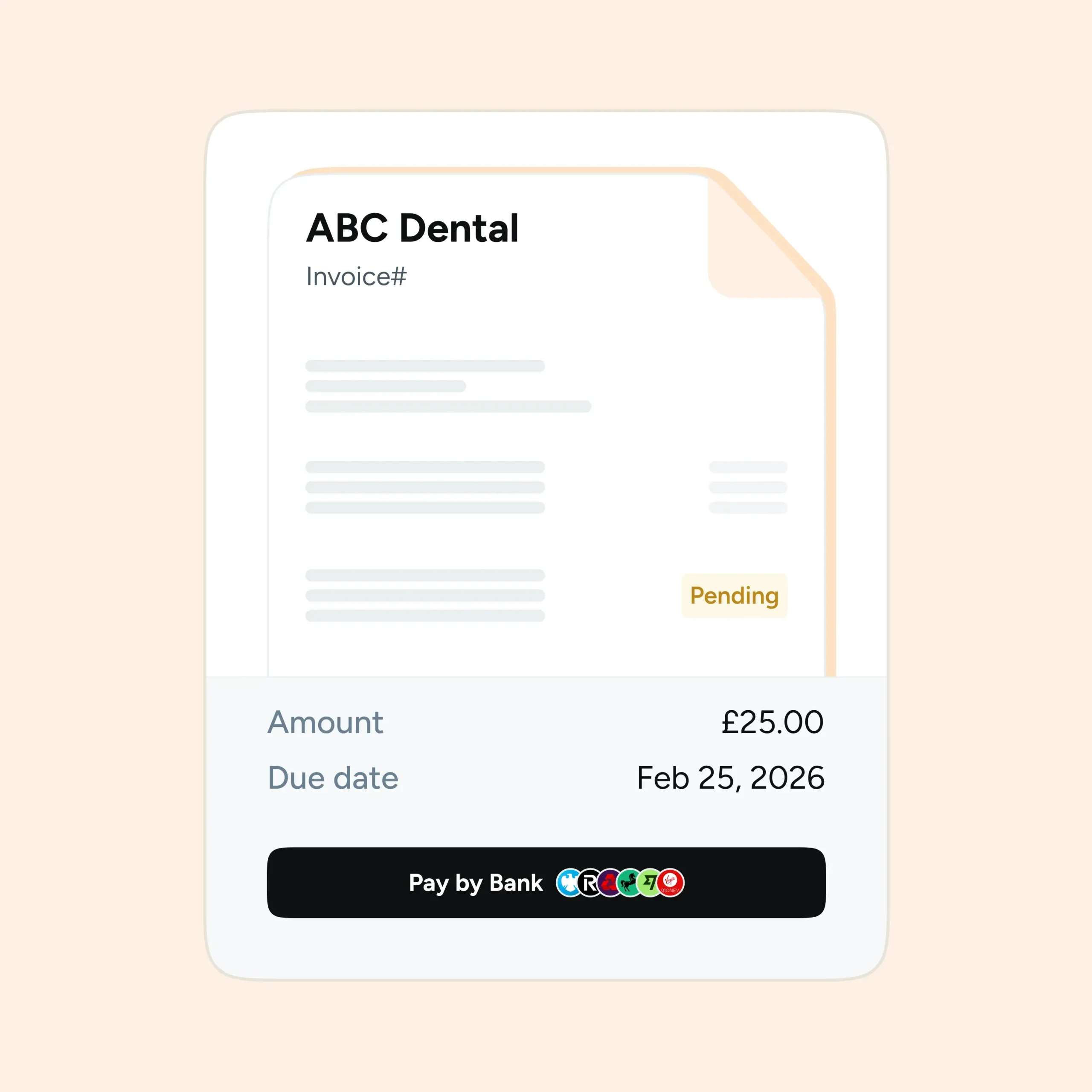
The key is making both payment methods equally easy. When you send a payment link for dental invoice payments, patients should see clear options: “Pay by Bank (instant)” or “Pay by card.” No complicated setup. No making them create accounts or remember passwords.
Many dental practices using dental payment plans structure for ongoing treatments find that patients paying monthly instalments actually prefer bank transfers once they realise it’s simpler than entering card details each time.The best part? Modern payment platforms like Atoa put both Pay by Bank and card payments in one system. Your team doesn’t juggle multiple payment providers. Patients get genuine choices. And your practice keeps more of what it earns.
SHARE ARTICLE
Share link copied!