
Ready to get started?
Easily integrate next-generation payments and financial data into any app. Build powerful products your customers love.
SHARE ARTICLE


 Share link copied!
January is no longer a quiet month for ecommerce. The UK ecommerce market is now valued at $265.14 billion and is projected to grow rapidly towards $900 billion by 2030, driven by strong digital infrastructure and widespread adoption of digital payments. Mobile shopping already accounts for more than half of online checkouts, and faster mobile experiences continue to raise expectations around speed and convenience.
For UK Shopify merchants, this creates a clear reality. As customer expectations rise, every part of the checkout experience carries more weight. It is a pressure point where preparation, performance, and payment experience directly shape outcomes.
The reality of January shoppers
January shoppers behave differently from December shoppers. They are more price-conscious, take longer to decide and are more likely to abandon a checkout that feels clunky or uncertain. Many are shopping on mobile, often while multitasking. Trust and ease matter more than novelty.
This is where the checkout experience quietly becomes a competitive advantage. When two products are similar and price is tight, the smoother journey often wins.
Where card-only checkouts start to struggle
Card payments work. But January tends to expose their limitations. Margins are already under pressure due to discounts and promotions, which makes percentage-based fees more painful. Failed card payments increase customer support tickets. Authentication issues create confusion. Refunds and disputes rise as return volumes grow. Settlement delays make stock planning harder at the exact time businesses need agility.
None of these are dramatic on their own. Together, they add friction during a month where every conversion matters.
Why Pay by Bank fits January behaviour better
Pay by Bank aligns well with how people already behave in January. Most customers use their banking apps daily. Paying directly through their bank feels familiar and controlled. There are no card details to type in on a small screen. The payment is confirmed clearly inside the banking app. That sense of visibility and reassurance matters more when people are watching their money closely.
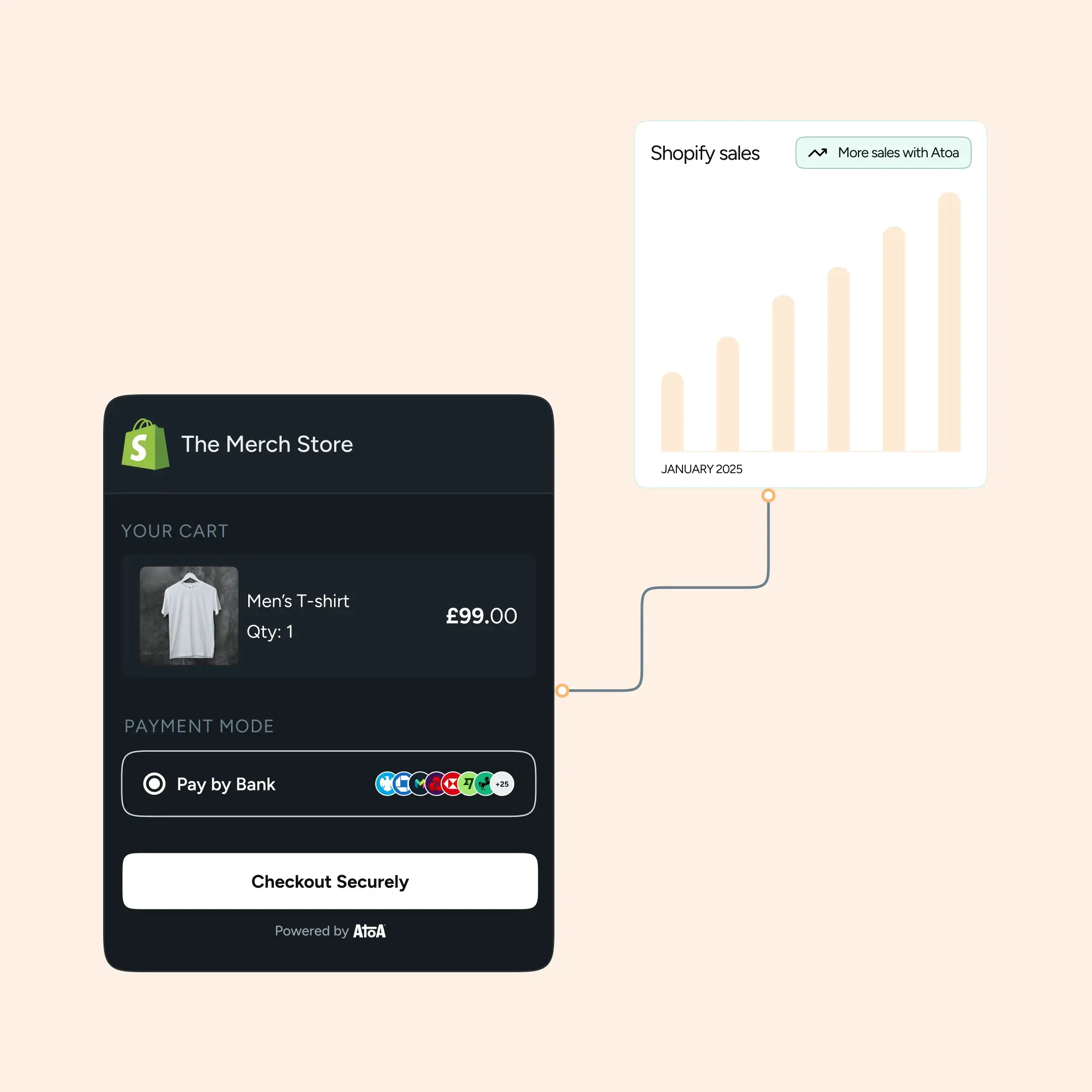
For merchants, the operational benefits are practical. Fees are typically lower than card payments, which helps protect margin during discount periods. Settlement is faster, which supports cash flow when replenishing stock. And the payment journey feels clean rather than fragile. This is not about replacing cards. It is about giving customers another option that often feels more natural in the moment.
Why timing matters
The biggest mistake merchants make with checkout changes is waiting until performance starts to dip. Payment improvements work best when they are implemented before traffic spikes, not during them. Adding Pay by Bank ahead of the January surge gives stores time to observe how customers use it, review conversion behaviour, and make small refinements without pressure. That breathing room matters.
It also allows internal teams to get comfortable with the new flow. Customer support, operations, and finance teams can understand how the payment option works before enquiry volumes rise. When questions do come in, they are handled confidently rather than reactively.
From a customer perspective, timing matters too. When a payment method is introduced calmly as part of a well-prepared checkout, it feels like a standard option. When it appears suddenly during peak trading, it can feel experimental or temporary. The difference is subtle, but the impact is real.
Merchants who prepare their checkout early are not just adding another button. They are strengthening the underlying infrastructure of their store. Payments become part of the foundation rather than a last-minute fix for abandoned carts and rising support tickets. That is where the real advantage sits.
Final thoughts
January does not reward businesses that scramble. It rewards those that prepare. While many merchants focus on campaigns, stock, and discounts, the checkout experience is often overlooked, even though it plays a direct role in whether revenue is realised or lost. Pay by Bank is not a cosmetic change. It is a practical improvement to how customers experience payment, how merchants manage costs, and how cash flow behaves during one of the most sensitive trading periods of the year.
For UK Shopify stores, adding Pay by Bank before the January sales surge is less about chasing a trend and more about making a sensible, forward-looking infrastructure decision.
Book a demo with the Atoa teamto experience how Pay by Bank works in practice with a reliable UK payment provider and see how it can strengthen your checkout ahead of peak trading.
SHARE ARTICLE
Share link copied!