
Ready to get started?
Easily integrate next-generation payments and financial data into any app. Build powerful products your customers love.
SHARE ARTICLE


 Share link copied!
Think about the last time you paid for something significant. A flight, a home appliance, a hotel. Chances are you did it on your phone, in under a minute, without speaking to anyone. Now think about the last time a client paid a legal bill. The two experiences are probably quite different.
That gap is not just an inconvenience. According to Clio’s research published by the Law Society, 40% of UK legal clients say they would not hire a firm that did not offer a simple online payment method. Clients are not asking for something extraordinary. They are asking for the same experience they already get everywhere else.
Law firm online payments are no longer a nice-to-have. For many clients, they are a condition of instruction.
What remote payment actually means for legal work
Remote payment in a legal context covers a few distinct scenarios, each with its own dynamic.
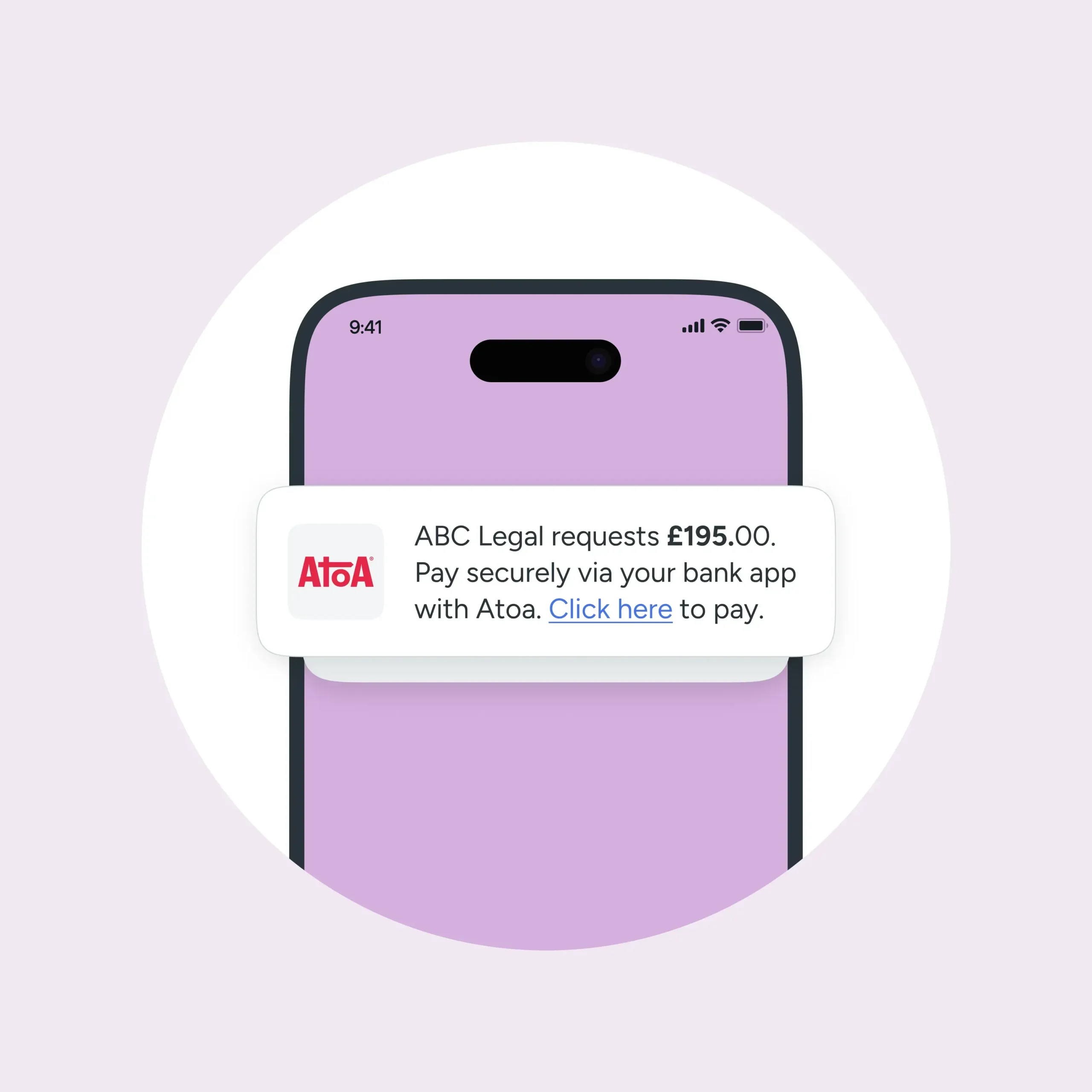
Paying a retainer before work begins. Clients should not have to come into the office or read out card details over the phone to hand over money before a matter has even started. A secure payment link sent by SMS or email handles this entirely. The client taps the link, chooses to pay by card or directly from their bank app through Pay by Bank, and the retainer is secured before the first piece of work is done.
Paying interim invoices during a matter. Longer matters generate billing throughout their life. Clients who receive an invoice by email with no payment button attached tend to set it aside. Clients who receive a payment link tend to act on it. The path of least resistance usually wins, which is why embedding an online payment link for legal invoices directly into the email changes behaviour.
Paying final bills remotely. Not every client is available to come in and pay at the end of a matter. Emergency completions, clients who have moved, clients who are simply busy, all real scenarios where a virtual payment for legal services sent to a phone is more practical than any other option. For large final invoices, Pay by Bank is particularly well suited. It settles quickly, carries no chargeback risk, and costs the firm less per transaction than card processing.
Out-of-hours payments. Legal matters do not always conclude at convenient times. A payment link sent at 6pm on a Friday can be paid at 9pm on a Saturday. A card terminal in an empty office cannot.
Why Pay by Bank suits legal billing
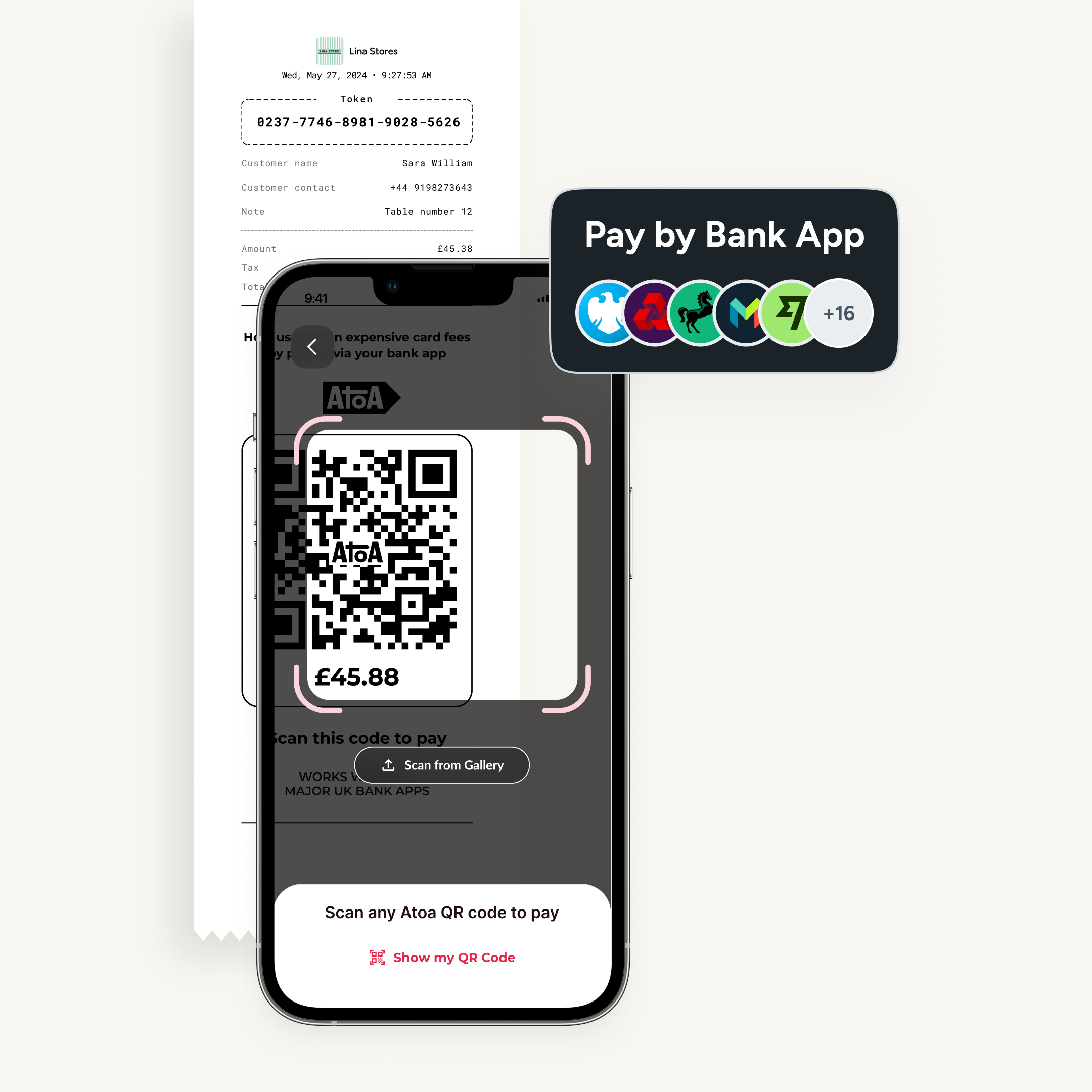
Pay by Bank moves money directly between bank accounts through the Faster Payments network. The client authenticates inside their own bank app using Face ID or a fingerprint, which means the payment is genuinely confirmed by their bank rather than just a card number being entered online.
For law firms, this matters in two ways. First, there are no chargebacks. A disputed card payment on a legal invoice becomes an administrative headache that nobody needs. Pay by Bank removes that risk entirely. Second, for higher-value transactions, which are common in legal work, the savings on card processing fees add up meaningfully over a year of billing.
Payment links that support both card and Pay by Bank from the same link give clients the choice without the firm needing to manage two separate systems.
The practical starting point
Law firm online payments do not require a complicated technology project. Solicitor remote payment links can be sent in seconds, without any change to existing practice management software. Clients receive a professional link and pay on their own terms, by card or by bank, wherever they are.
For firms that want to collect more quickly, reduce admin, and meet the expectations clients already have, this is the most direct route available.
If you want to see how Pay by Bank works for digital invoicing and remote payments in practice,book a demo with the Atoa team.
SHARE ARTICLE
Share link copied!