
Ready to get started?
Easily integrate next-generation payments and financial data into any app. Build powerful products your customers love.
SHARE ARTICLE


 Share link copied!
When a customer collects their car after a £900 clutch replacement or a £1,800 engine repair, the last thing you want is friction at the till. Yet for many garages, the real squeeze isn’t parts or labour. It’s payment fees.
The UK automotive repair and maintenance market is growing rapidly. Industry projections show the sector valued at around £18.5 billion in 2024 and expected to reach £34.2 billion by 2033, reflecting steady demand for servicing and repairs across the country. As transaction values increase and workshops handle more high-ticket jobs, even small percentage-based payment fees can have a noticeable impact on margins.
If you are reviewing your auto repair payment methods, it is worth comparing Pay by Bank with traditional card payments.
The most common garage payment options today
Most UK garages accept a mix of:
- Cash, although usage continues to decline
- Card payments including chip and PIN and contactless
- Mobile payments such as Apple Pay and Google Pay
- Manual bank transfers
- Pay by Bank through open banking
Card and contactless payments are convenient and familiar. But for independent workshops working on tight margins, the associated fees can quietly eat into profit.
The real cost of card payments for mechanics
Card payments usually involve a percentage fee plus a fixed transaction charge. On a £70 service, this may feel minor. On a £1,500 repair, it is far more noticeable.
Garages also face:
- Settlement delays depending on their provider
- Chargeback risk if a customer disputes a transaction
- Extra admin when reconciling payments
Contactless payments for mechanics and mobile payments as auto repair payment methods are fast, but they still rely on card networks. That means network fees apply every time.
What is Pay by Bank for auto repair shops?
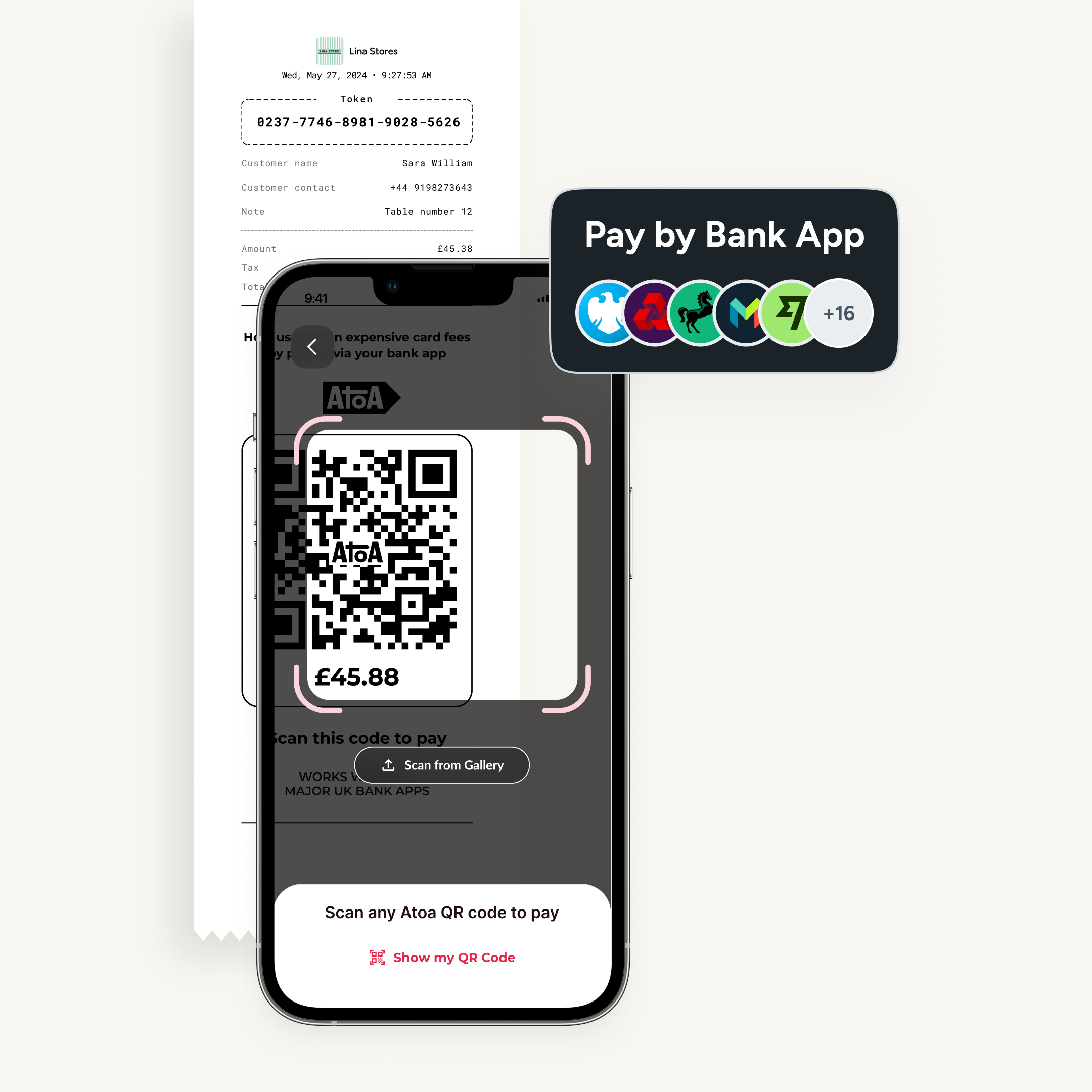
Pay by Bank is an account-to-account payment powered by open banking. Instead of entering card details, the customer:
- Scans a QR code at your reception desk
- Or clicks a secure payment link sent by SMS or email
- Selects their bank
- Approves the payment in their banking app
This makes it easy to collect remote payments securely. If a customer wants to settle their car service payment before collection, or pay a deposit for upcoming work, you can send a link and they can approve it directly in their bank app.
Funds move directly from their bank to yours, often within seconds. No card numbers are stored and no manual bank transfers are needed.
Why Pay by Bank works well for small garages
Lower fees
Pay by Bank typically costs less than traditional card processing. On higher-value repairs, that difference can protect your margins.
Faster access to funds
Payments often settle instantly, improving day-to-day workshop cash flow.
Reduced chargeback risk
Because customers authenticate payments inside their banking app, disputes linked to card fraud are significantly reduced.
Ideal for deposits and staged payments
For larger jobs, you can collect a deposit upfront and settle the balance later. Brands like Atoa offer partial payment facilities, allowing customers to pay in stages using the same link. This works well for engine rebuilds, specialist parts orders and major bodywork.
Simple for customers
Most drivers already use their banking app regularly. Paying this way feels secure and straightforward.
Choosing the right payment setup for your garage
Card payments are not going away. Some customers will still prefer contactless or mobile wallets. The key is not replacing one method with another, but improving your mix.
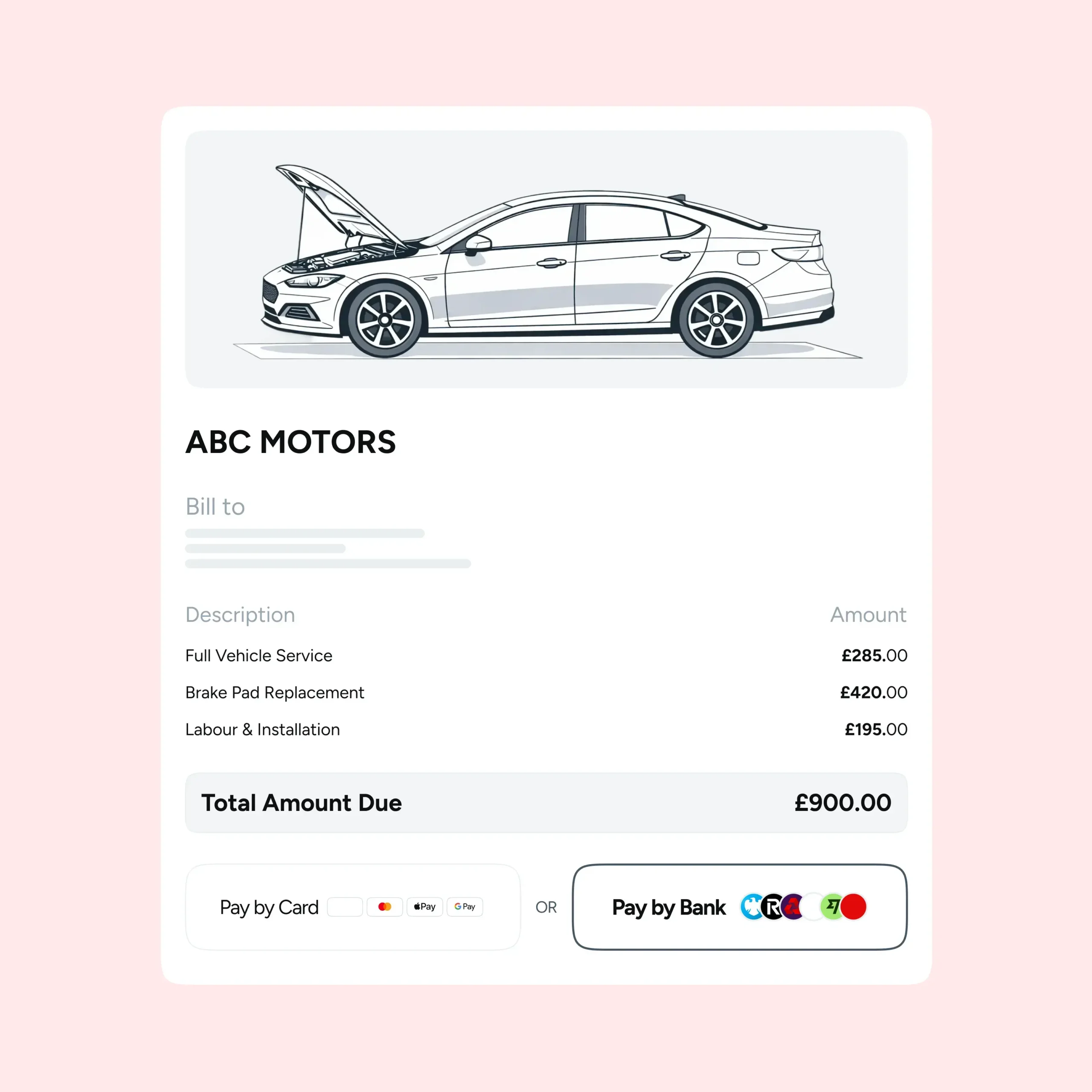
By offering both Pay by Bank and card payments as auto repair payment methods can:
- Reduce fees on higher-value jobs
- Improve settlement speed
- Offer secure remote payment options
- Provide flexible payment options for customers
When repair values are rising and margins matter more than ever, reviewing your garage payment options is not just operational. It is strategic. The way you take payment directly affects profitability, cash flow, and risk exposure.
Garages that modernise their payment setup are not just making checkout easier. They are protecting revenue and building a more resilient business model for the years ahead.
Book a demo with the Atoa team to see how you can upgrade your garage payment setup with secure Pay by Bank and card options.
SHARE ARTICLE
Share link copied!